

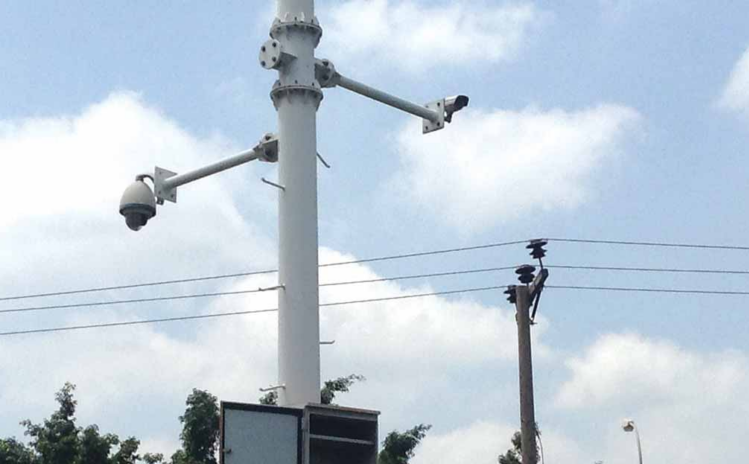
THE Federal Government has come under fresh scrutiny after admitting that it has no detailed records identifying local contractors involved in the controversial $460 million Abuja CCTV Project, a development that has triggered renewed pressure from the Socio-Economic Rights and Accountability Project (SERAP) for full disclosure of all beneficiaries linked to the security contract.
The revelation emerged in the Federal Ministry of Finance’s response to ongoing contempt proceedings initiated by SERAP over alleged failure to fully comply with a Federal High Court judgment ordering disclosure of details surrounding the National Public Security Communication System project, popularly known as the Abuja CCTV Project.
According to the Ministry of Finance, records obtained from the Ministry of Police Affairs showed that although local subcontractors “may have been engaged” during the implementation of the project, there were no detailed records identifying specific Nigerian companies that directly received funds from the Chinese loan used to finance the project.


The disclosure was contained in a letter dated May 15, 2026 obtained by News Point Nigeria, signed by the Permanent Secretary of the Federal Ministry of Finance, R. O. Omachi.
Reacting to the development, SERAP described the absence of records as alarming and inconsistent with transparency and accountability standards expected in a project funded with public borrowing that Nigerians continue to repay.
In a letter dated May 23, 2026, signed by its Deputy Director, Kolawole Oluwadare, SERAP expressed concern that the Ministry only began releasing some information after contempt proceedings were initiated and a Notice to Show Cause was served in January 2026.
“We are concerned that although the judgment was delivered in May 2023, the Ministry only released some information after we commenced contempt proceedings and served a Notice to Show Cause in January 2026,” SERAP stated.
The organisation insisted that Nigerians still do not know the identities of local contractors connected to the project, stressing that the lack of such information raises serious concerns over record keeping, contract administration, transparency, and accountability.
“Nigerians still do not know exactly the names of local contractors for the project. The absence of this information raises serious concerns about record keeping, transparency and accountability, and whether the project was implemented in a manner consistent with the public interest,” the group said.

SERAP recalled that on May 15, 2023, the Federal High Court ordered the Ministry of Finance to disclose the total amount paid under the Abuja CCTV loan arrangement, the identities of local and Chinese contractors involved, the status of implementation of the project, and details surrounding the N1.5 billion reportedly paid for the Code of Conduct Bureau headquarters project.
The organisation, however, argued that the information released by the Ministry amounted only to partial compliance with Justice Emeka Nwite’s judgment.
“Key questions remain unanswered, and further clarification is needed to ensure full and effective compliance with the judgment,” SERAP noted.


The group demanded that the requested details be made public within 48 hours, warning that failure to do so would lead to continuation of contempt proceedings against the Ministry of Finance.
“We would be grateful if the requested details are provided within 48 hours of the receipt and/or publication of this letter. If we have not heard from you by then, SERAP shall proceed with our contempt proceedings against the Federal Ministry of Finance for failure to fully and effectively comply with the judgment of the Federal High Court,” the letter added.
While acknowledging that the Ministry had provided some information regarding the Chinese loan drawdown, counterpart funding arrangements, and records relating to equipment deliveries, SERAP maintained that critical gaps still remained unresolved.
The group queried the whereabouts of 6,035 equipment items reportedly unaccounted for in the project inventory.
“However, there is still no explanation regarding the missing 6,035 items as part of the status of implementation of the project. It remains unclear whether the items were subsequently delivered, whether payment was made for them, whether the contractor defaulted, whether Nigeria suffered any financial loss, and whether any steps were taken to recover public funds,” SERAP stated.
It further questioned the operational status of the CCTV infrastructure and whether the project delivered value for money.
“The Ministry lists items reportedly delivered in 2013. However, it has failed to clarify how many cameras were installed, if any; where they were installed; whether the cameras are currently operational; and whether the project delivered value for money,” the organisation added.
SERAP said the inability or refusal to disclose full records raises significant public interest concerns about public expenditure and accountability.
“For a project financed through public borrowing—debt Nigerians continue to repay—full transparency over all beneficiaries, foreign and domestic, is essential. Nigerians have the right to know how public funds were spent, who received them, and what was delivered in return,” it said.
The organisation stressed that compliance with court judgments remains fundamental to constitutional governance and the rule of law.
“Government agencies cannot selectively comply with judicial orders or release partial information while withholding records central to public accountability,” SERAP said.
It added that complete implementation of Justice Emeka Nwite’s ruling was necessary to uphold citizens’ right to information and strengthen confidence in public institutions and the judiciary.
SERAP also warned that continued failure to fully comply with the judgment risks weakening democratic accountability and undermining public trust.
The organisation linked the urgency of disclosure to Nigeria’s worsening security crisis, particularly insecurity in Abuja where the CCTV project was originally designed to improve surveillance, public safety, and emergency response capabilities.
“The urgency of full disclosure is heightened by the continuing security crisis across Nigeria, including persistent insecurity in Abuja, where the project was specifically intended to strengthen surveillance, public safety, and emergency response,” SERAP stated.
It noted that residents of the Federal Capital Territory and states such as Benue and Oyo continue to suffer from abductions, violent crimes, and widespread insecurity despite the huge investment made in the surveillance project.
“Against this backdrop, Nigerians are entitled to know whether the Abuja CCTV project was fully delivered, whether it became operational, whether the infrastructure is functional, and whether the huge public investment achieved the promised security outcomes,” the organisation said.
SERAP argued that accountability becomes even more critical where hundreds of millions of dollars were borrowed in the name of national security.
“Nigerians deserve clear answers about what was delivered, who benefited financially, whether the project became fully operational, and whether the funds invested improved security in Abuja and across the country,” it stated.
The organisation urged the Federal Government to seize the opportunity to fully comply with the court judgment and reassure Nigerians that public resources allocated for security were lawfully and effectively utilised.
Meanwhile, the Ministry of Finance disclosed that the Federal Government received $399.5 million from the Export-Import Bank of China for the Abuja CCTV Project.
According to the Ministry, the funds were drawn in ten instalments between March 2011 and December 2013, while the Federal Government contributed an additional $70.5 million as counterpart funding through the Ministry of Police Affairs.
The naira equivalent reportedly paid stood at ₦10.68 billion at an exchange rate of ₦150 to one dollar, including a one per cent commission paid to the Central Bank of Nigeria.
The Ministry also confirmed that the principal contractor handling the project was China’s ZTE Corporation, with payments processed through the Bank of China, Shenzhen Branch.
However, despite acknowledging that local subcontractors may have participated in the project, the Ministry insisted it possessed no detailed records identifying the Nigerian companies involved.
According to the Ministry, equipment including GOTA phones, data cards, PC servers, LED monitors, cables, and communications infrastructure were delivered under the project.
Inventory records reportedly showed that 61,970 units were delivered out of an expected 68,005 units, leaving 6,035 items outstanding.
The Ministry further clarified that the ₦1.5 billion mobilisation payment linked to the Code of Conduct Bureau headquarters project was not part of the Chinese loan arrangement.
SERAP, however, maintained that full disclosure remains necessary and demanded publication of the names of all Nigerian companies, subcontractors, consultants, and vendors connected to the Abuja CCTV Project.