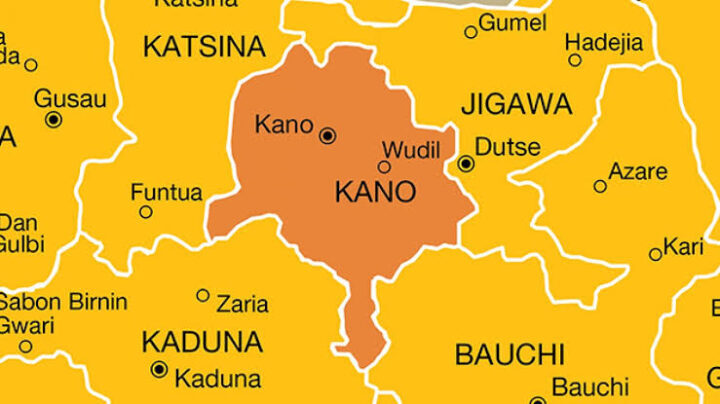
LAST week, something happened that I almost scrolled past out of sheer habit. Kano State came first in the results released by the National Examination Council (NECO). Not a fluke, not a one-off. This is back-to-back, the second year running. I had to read it twice.

For a state in a region that has carried the unfortunate reputation of having the highest number of out-of-school children in the country, this is not a small story. It is, frankly, the kind of story we should be shouting from rooftops instead of letting it drown in the daily noise of insecurity, subsidy removal fallout and political horse-trading.

Read also: Nigerians’ Mental Health Is Under Siege – By Boma West

Let’s put the scale of the problem in context first, because good news only means something when you understand the hole it’s climbing out of. The North West geopolitical zone has long accounted for the largest share of Nigeria’s out-of-school children, a crisis I have written about on this page before, one that feeds directly into the insecurity pipeline.


An uneducated, idle population of young people is fertile recruitment ground for banditry and extremism. Education is not a soft issue in the North. It is a security issue dressed up as a social one.
So when a northern state posts the best results in the country, two years running, it deserves more than a passing mention. It deserves scrutiny of how it happened, because if it can be replicated, it should be replicated, loudly and urgently.
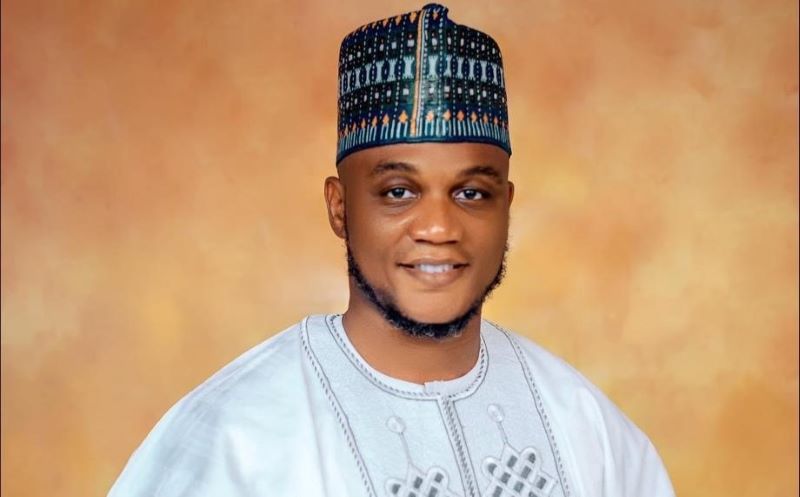
The man at the centre of this is Governor Abba Kabir Yusuf, and the number that explains the result is not complicated: Kano State has committed over 30 percent of its budget to education. Compare that to the UNESCO-recommended benchmark of 15 to 20 percent of national budgets for education, a benchmark most Nigerian states, north and south, have historically ignored while pouring resources into less urgent priorities. Kano didn’t just meet the benchmark. It doubled it.
This is what leadership with the right priorities looks like. Not grand pronouncements at conferences, not commissioning ceremonies for buildings nobody will maintain, but a sustained budgetary commitment to the one sector that determines whether a region climbs out of poverty or keeps producing fresh recruits for insurgency and crime.
Contrast this with the all-too-familiar pattern across much of the North, where education budgets exist largely on paper, cut-off marks for admission into unity schools sit scandalously low to mask the scale of underperformance, and teachers go unpaid for months while governors commission flyovers nobody asked for. I have criticised that pattern extensively on this page in the past, and I stand by every word of it.

Kano’s results matter precisely because they show the alternative is not theoretical. It is achievable, measurable, and already happening two local government areas away from states still stuck in the old pattern.
I will say this clearly: other northern governors need to study this model and replicate it. There is no mystery here, no secret formula that requires a committee or a retreat in Dubai to unpack. You allocate the money, you build the classrooms, you pay and retain the teachers, you enforce enrollment, and the results follow. It really is that straightforward, even if the execution is not.
Now, to the data that genuinely surprised me. A recent report on internally generated revenue growth from 2023 to 2025, compiled from National Bureau of Statistics figures and published via TheCableIndex, ranked the ten states with the fastest IGR growth in the country.

Enugu led the pack with a staggering 246.59 percent compound annual growth rate, moving from N33.86 billion in 2023 to N406.77 billion in 2025. That is a genuinely remarkable number and credit belongs squarely to Governor Peter Mbah’s administration for that performance
But look closer at the rest of the list. Niger State came second with 74.99 percent growth. Gombe fourth at 70.18 percent. Kano fifth at 65.40 percent. Kebbi sixth at 63.12 percent. Taraba seventh at 60.96 percent. Jigawa ninth at 55.67 percent. Katsina tenth at 54.43 percent.
Read also: Kano Shuts Nine Private Schools For Failing To Meet Registration Requirements
Do the arithmetic. Seven of the ten fastest-growing states in internally generated revenue between 2023 and 2025 are northern states. Seven out of ten. That is not a rounding error or a statistical fluke you can explain away. That is a pattern, and patterns tell a story that loud opinions on social media rarely bother to check.
For years, the narrative around the North has been fixed and largely unflattering: a region content with federal allocation, uninterested in internally generated revenue, more comfortable waiting for Abuja’s monthly cheque than building its own tax and revenue base. I have been guilty of repeating versions of that narrative myself in columns on this very page. The data suggests that narrative needs urgent revision, at least for this current crop of governors.
Is it either that we now have a genuinely sharper set of northern governors, or that we have spent years feeding on a lazy misconception about an entire region? I suspect it’s a bit of both, honestly. There has always been capacity in the North. What has often been missing is the political will and, let’s be honest, the personal integrity to direct that capacity toward productive ends rather than toward the usual channels of patronage and primitive accumulation.
To be fair, and this column is nothing if not fair, strong CAGR percentages off a small base can flatter a state’s performance more than the raw naira figures suggest. Kebbi moving from N11.74 billion to N31.23 billion is commendable, but it is still a modest absolute figure next to Lagos or Rivers. Growth rate and scale are two different conversations.
What the data actually proves is more modest and, I’d argue, more important: that a meaningful number of northern governors are now taking the basics of governance, revenue mobilisation and education funding seriously, in a way their predecessors largely did not.
I would also caution against reading IGR growth alone as a proxy for good governance. A state can grow its internally generated revenue through aggressive and sometimes punishing taxation of small businesses and informal traders who can least afford it, without that revenue translating into visible improvements in schools, hospitals or roads.
Before northern governors start taking victory laps on the back of this report, the follow-up question Nigerians should be asking in each of these seven states is simple: where exactly is the new revenue going? Kano has at least shown its working, 30 percent of the budget traceable to classrooms and results you can measure on a national exam table. The other six owe their citizens the same transparency.
I also think it’s worth asking why this shift is happening now. Part of it is almost certainly the brutal fiscal reality post-subsidy removal, where federal allocations alone can no longer sustain state budgets and governors who fail to grow internal revenue will simply struggle to pay salaries, let alone fund development.
Necessity has a way of concentrating the mind. Part of it may also be generational, a newer set of state executives less tied to the old patronage habits of their predecessors, more conscious that performance, not just loyalty to a godfather, now shapes political survival in an era of louder, more connected electorates.
Whatever the mix of reasons, the direction matters more than the motive. If fear of fiscal collapse is what finally pushed some northern governors toward serious revenue mobilisation and education investment, so be it. Good outcomes born of necessity are still good outcomes.
None of this means the North’s problems have been solved. The security situation in states like Zamfara, Katsina and Sokoto remains dire, and no amount of IGR growth erases the reality of communities still living under the shadow of banditry.
Out-of-school numbers across the zone, while improving in pockets like Kano, remain unacceptably high overall. This is not a column declaring victory. It is a column insisting that credit be given where the data earns it, and that the rest of the region be pushed, loudly, to catch up.
Read also: How Ten-Man United’s Champions League Defeat To Atletico Sparked Martinez Outburst
What Kano and Enugu and Niger and Gombe are proving, each in their own lane, is that competent, focused governance is not a southern monopoly or a northern impossibility. It is a choice available to any governor willing to prioritise classrooms over commissioning plaques and revenue mobilisation over monthly dependency on Abuja.
The rest of the northern governors watching these numbers from the sidelines have no excuse left. The blueprint is sitting right there in Kano and Gombe and Jigawa. Copy it, improve on it, or explain to your people why you didn’t.
- Nda-Isaiah is a political analyst based in Abuja and can be reached on jonesdryx@gmail.com. His syndicated column appears on News Point Nigeria newspaper on Saturday.