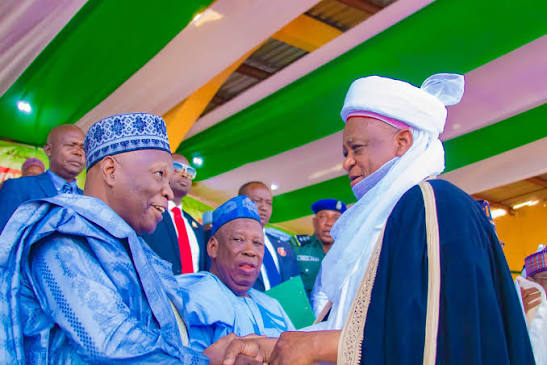

THE Sultan of Sokoto, Alhaji Sa’ad Abubakar III, has cautioned politicians and public office holders against sponsoring pilgrimages to the holy lands of Mecca and Jerusalem with stolen public funds, saying God would not accept acts of worship financed with corruption.
The Sultan gave the warning on Wednesday at the opening ceremony of a stakeholders’ meeting organised by the Nigeria Inter-Religious Council (NIREC) in Abuja, where he urged religious leaders to actively collaborate with anti-corruption agencies in tackling systemic corruption in the country.
Read also: ‘Your Integrity Is Your Crown’, EFCC Chairman Warns Nigerian Girls Against Sextortion

Addressing participants, the Sultan said religious leaders had a responsibility to fight corruption and support efforts by institutions such as the Economic and Financial Crimes Commission (EFCC) to hold offenders accountable. “We, as religious leaders, must fight corruption because God Almighty doesn’t like corruption.


“You cannot steal money and send people to Jerusalem or Mecca with corrupt funds and think God will accept your deeds. God is not corrupt, so you cannot use corrupt money for Hajj or anything else,” he said.
The Sultan urged the EFCC to deal decisively with individuals involved in corruption, irrespective of their political, religious or personal affiliations, stressing that nobody should be shielded from the law because of his or her position in society.
“Whoever is involved—our brothers, sisters, fathers, or friends should face the law. When someone is facing the law, do not tell me he is the pastor of so-and-so church or the chief imam of so-and-so mosque. We do not want to hear that,” he said.
He also called on the anti-graft agency to discharge its responsibilities without political interference, while stressing the need for religious leaders to support efforts aimed at strengthening accountability and public morality.
Abubakar highlighted the importance of national unity and described NIREC as a unique platform for promoting dialogue and understanding between Christians and Muslims, saying regular interaction among religious leaders was essential to peace, stability and national development.

He urged religious leaders to move beyond mere tolerance and instead pursue genuine mutual understanding as a basis for peaceful coexistence and cooperation.
Read also: Why Nigeria Should Not Restore Petrol Subsidy, IMF Warns
“I keep telling people that I don’t want you to just tolerate me, because tolerance means enduring something you have no choice about. But if you understand me, we can work together because we know who we are to each other,” he said.
The Sultan also cautioned clerics to be mindful of their utterances from the pulpit, particularly during election periods, urging them to pray for national leaders rather than use religious platforms to incite division or attack public office holders.
He paid tribute to the outgoing Executive Secretary of NIREC, Prof. Cornelius Omonokhua, commending his eight-year tenure and contributions to transforming the council into a vibrant national platform for interfaith engagement.
Abubakar further urged participants to discuss national issues openly during the meeting and avoid spreading rumours when they returned to their respective communities.
In an overview of the Interfaith Anti-Corruption Manuals Project, the Chairman of the Interfaith Anti-Corruption Advisory Committee (IAAC), Prof. Adedibu Ojerinde, described the manuals as a joint strategic initiative between the EFCC and Nigeria’s religious leadership to address the country’s moral crisis.
Ojerinde said the project emerged from the outcome of the 2007 National Interfaith Forum on Corruption and was designed to mobilise the pulpit and minbar to transform public morality through dedicated preaching manuals anchored in biblical and Qur’anic texts.
He said the manuals, originally inaugurated in 2014 and re-inaugurated in January 2024 by President Bola Tinubu, had been expanded to address contemporary challenges, including youth-related vulnerabilities, cybercrime and money laundering within religious institutions.
Read also: Exclusion Of Candidates From INEC List: CD Cautions INEC Against Manipulation By Politicians
According to him, the formal handover of the manuals to NIREC marked a transition from publication to practical implementation, with religious leaders expected to integrate anti-corruption messages into Friday sermons and Sunday worship messages.
The opening ceremony was attended by Christian and Muslim leaders, government officials, security representatives and members of the media.