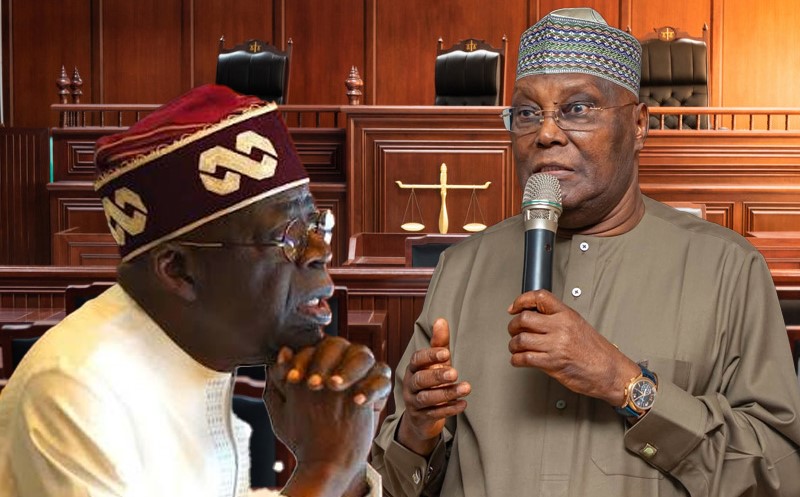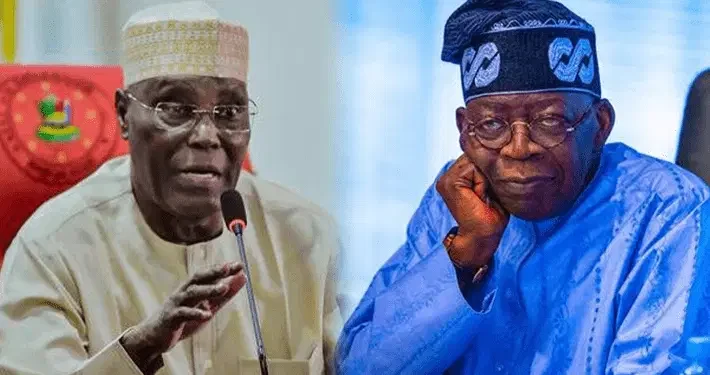

THE Minister of Aviation and Aerospace Development, Festus Keyamo, has accused the presidential candidate of the African Democratic Congress, Atiku Abubakar, of hypocrisy over his comments on the state of the country, citing the liquidation of Nigeria Airways and the unpaid entitlements of its former workers.
News Point Nigeria reports that Keyamo made the allegations in a post shared on his X handle on Wednesday, claiming that the administration in which Atiku served as vice-president liquidated the national carrier in September 2004, leaving thousands of workers jobless and without their pensions and gratuities.

Read also: Atiku, ADC Demand Answers From INEC Over Ballot Printing Contracts, Fresh Staff Transfers

“Your Excellency, Atiku Abubakar, this is hypocrisy at its peak! Let me just talk only about the sector that I head, Aviation,” the minister wrote.


Keyamo claimed that the former Nigeria Airways workers were left to struggle for their entitlements, which he said amounted to billions of naira.
The minister said President Bola Tinubu had approved and released N36bn to settle outstanding payments owed to the former workers, adding that beneficiaries had started receiving payment alerts.
“Twenty-two years later, after many of them have died out of frustration, President Bola Ahmed Tinubu is now clearing the mess you left behind,” he stated.
“Over a month ago, Mr President approved and released the total sum of N36bn to bring succour to these families. They have started receiving alerts and praying for Mr President. In fact, the President was given an award for this by the workers’ union a few weeks ago,” Keyamo added.
The minister accused the former vice-president of attempting to mislead younger Nigerians who might be unfamiliar with the history of the defunct national carrier.
“Yet you sit down there and pontificate? It’s only the younger ones who don’t know your history you can attempt to hoodwink, but we will expose you to them,” he wrote.
Keyamo further accused Atiku of taking credit for decisions made by the administration he served in when politically convenient, while distancing himself from responsibility at other times.
Read also: Musawa Celebrates Keyamo, Calls Aviation Minister Her ‘Ride Or Die’, ‘Partner In Crime’
“When it is convenient for you, you claim some credit for the Obasanjo-Atiku government, and when not convenient, you say Obasanjo was in charge and not you as Vice-President,” he said.
This newspaper had earlier reported that Atiku criticised the rising cost of living and insecurity in Nigeria, promising to make life affordable and restore security if given the opportunity to lead the country.
Atiku made the pledge in a post on his official X account on Wednesday, where he urged registered voters to collect their Permanent Voter Cards ahead of the next general election.ulnerable households to cushion the impact of rising energy costs.
News Point Nigeria reports that the Fund said blanket petrol subsidies are expensive, often disproportionately benefit higher-income consumers and worsen fiscal pressures, particularly amid rising borrowing costs.
The Director of the IMF’s Fiscal Affairs Department, Rodrigo Valdés, stated this during a press briefing on the Fiscal Monitor at the 2026 Annual Meetings of the IMF and World Bank in Bangkok.
His comments followed a question on how the Fund could recommend allowing energy prices to reflect scarcity when higher fuel prices in Nigeria could increase transportation costs, worsen inflation and deepen poverty, especially as the government faces calls to restore the petrol subsidy ahead of an election year.
“Protecting people is not the same as protecting the price of fuels,” Valdés said.
He explained that fuel subsidies, or measures that prevent prices from fully adjusting to an energy shock, had cost countries between one per cent and 1.5 per cent of gross domestic product (GDP) in 2026.
Read also: Court Fixes November 20 To Decide Atiku’s Bid To Amend Tinubu Disqualification Suit
Rather than restoring a broad subsidy, Valdés said the government should rely on social safety nets and household data to identify people who need assistance and ensure that support reaches those most affected by rising energy costs.
The Federal Government recently announced a 30-day petrol discount at Nigerian National Petroleum Company (NNPC) Limited retail stations, with priority given to public transport operators, as part of efforts to cushion the impact of rising fuel prices.