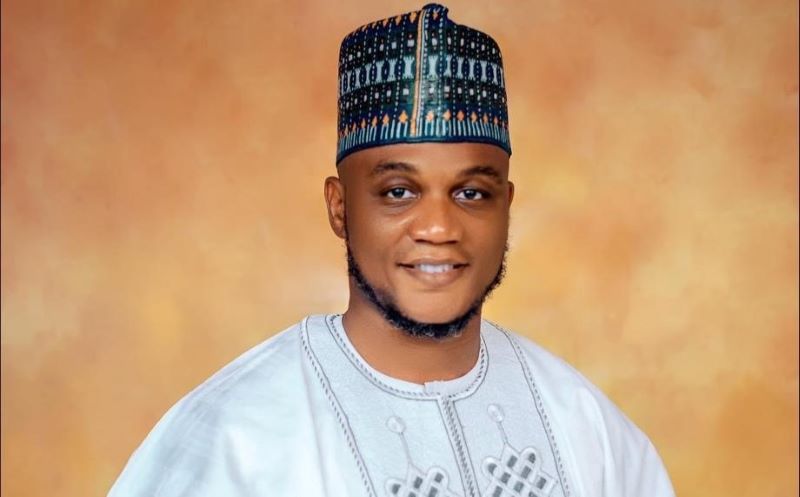
LET me start with a name. Ibrahim Pilasar Mbaya. Twenty-five years old. University of Jos graduate. Model. Known to his friends as Ibee. On Sunday, July 26, 2026, a group of young men beat him to death near Ring Road in Jos, Plateau State, because someone at a social outing couldn’t find their iPhone. Not because Ibrahim had the phone. Not because there was any credible evidence he took anything. Just because someone pointed a finger and a mob did the rest. He was rushed to the Jos University Teaching Hospital unconscious. He was pronounced dead on arrival.
That story should stop you in your tracks. A 25-year-old man with his whole life in front of him dead over a missing phone that may not even have been stolen. And the most painful part? This is not a new story in Nigeria. We have been here before. Many times.
Read also: When Will Nigerian Leaders Build Worthy Stadiums? – By Martins Oloja

The Aluu Four. October 5, 2012. Four University of Port Harcourt students ,Chiadike Lloyd, Tekena Elkanah, Ugonna Obuzor and Wali Michael beaten, tortured and burnt alive by a mob in Rivers State. Also accused of theft. Also innocent. Deborah Samuel in Sokoto, May 2022 stoned to death and her body set on fire over a WhatsApp message. David Imoh in Lagos, same month a sound engineer beaten and burnt alive by commercial motorcyclists over a transport fare argument.


In Uromi, Edo State, just March 2025, a mob killed 16 travellers they suspected of being kidnappers. Killed them. Not arrested them. Killed them. The list goes on. Bridget Agbahime in Kano. Anthony Okpahefufe in Cross River. Usman Buda in Sokoto. Tope Olorunfemi in Ondo. Godwin Okon in Oyo. Every state. Every region. Every tribe. Every religion. The mob does not discriminate.
So let me ask the question plainly. Who gave these people the right? Who gave a group of young men in Jos the authority to investigate, try, convict and execute a human being in the street? Even if Ibrahim had stolen the phone even if he was caught red-handed with it in his pocket ,what law in this country gives any civilian the right to torture a man to death? The answer is none. There is no such law. What these young men did was murder. Plain, cold, premeditated murder. And the Plateau State Police Command should ensure that every single person caught on that viral video including the one seen striking Ibrahim with a large wooden plank faces the full weight of the law. Not a plea bargain. Not a quiet settlement. The full weight.
Mind you, I know how this usually goes in this country and I am not going to pretend otherwise. There is outrage for a week. Civil society issues statements. NANS condemns it. The family cries on camera. A few suspects are arrested and in this case, Rinji Daniel Fwanji, Emmanuel Newyear and Nensemka Fwanji have been named by the Plateau State Police Command, which is commendable. Then slowly, the news cycle moves on to the next tragedy.
Three months later, the case is somewhere inside the Nigerian court system collecting dust and being adjourned for the fourteenth time. Nobody is following up. The journalists have moved on. The civil society groups are at another press conference about another atrocity. The families of the Aluu Four eventually got some measure of justice several perpetrators were convicted, years later. But that is the exception in this country, not the rule.
In most jungle justice cases, the mob acts, the cameras roll, the outrage flares for its allotted news cycle and then nothing. The perpetrators go home, eat supper, sleep, wake up the next morning and carry on with their lives as if they did not kill a man. And because nothing happens to them, the next mob feels equally untouchable. That is the cycle we are trapped in. Impunity breeds repetition. Every single time.

Read also: Rule Of Law, Nigeria’s Only Hope Of Survival (1) – By Dr Hassan Gimba
The question I want us to sit with is this: why are we like this? What produces a human being who can beat another human being to death over a phone? I have thought about this a long time and I keep arriving at the same uncomfortable answer. It is the collapse of trust in institutions. When people believe correctly, in many cases that the police will not investigate properly, that courts will take seven years to reach a verdict, that the guilty will buy their way out and the victims’ families will be left holding the anger alone they take justice into their own hands.
The mob is, in a deeply twisted way, a symptom of institutional failure. That does not excuse it for one second. There is no excuse. But if we want to end it, we have to reckon honestly with what feeds it. A country where the criminal justice system is functional where thieves are arrested, properly tried and consistently punished does not produce mobs that burn people alive over allegations. The mob fills the vacuum that broken institutions create. It has always been that way. Fix the institutions and you begin to shrink the mob.


But there is another side to this that we need to talk about honestly. Because the mob has not stayed in the street. It has moved very comfortably to social media. And on social media, the mob wears a different costume but it is the same animal with the same instincts. If you dare express an opinion about Wizkid or Davido that the wrong person reads, the mob will descend on you like you insulted their ancestors going back seven generations.
If you say something that a certain presidential candidate’s supporters don’t like, they will call you every name from here to Anambra and back. I have watched people get hounded off platforms, harassed in their DMs, doxxed and threatened all because they held an opinion that the mob did not share. The social media mob does not beat you with a plank. It uses screenshots. It uses coordinated pile-ons. It uses fake accounts and trending hashtags designed to humiliate. The instrument is different. The instinct is identical destroy anyone who challenges the group.
We are a nation that has not yet learned to disagree without wanting to destroy. That is the real problem. The street mob and the social media mob are children of the same parent a culture that treats any challenge to the group’s position as an existential threat that must be eliminated. It starts small. It starts with the mob on your timeline that cannot tolerate a dissenting view. It ends with young men in Jos who cannot conceive of a world where someone accuses a person and that person is not immediately punished. The mentality is the same. Only the stakes are different.
What do we do? Three things. First, prosecute these cases to the fullest extent possible and make the convictions public and loud. Let the Plateau State case go all the way all the way to sentencing, all the way to the Supreme Court if necessary, and let the sentences be reported on the front page of every newspaper in this country. Mob justice thrives in a culture of impunity. The moment potential perpetrators start watching their colleagues go to prison for ten, fifteen years, the calculation changes sharply.
Second, the National Orientation Agency and our schools need to treat this as the civic emergency it actually is not an occasional campaign but a sustained, serious, curriculum-level intervention that teaches from primary school upward that no individual or group has the right to appoint themselves judge, jury and executioner.
Read also: Igbokoda: Is Our Sky Unsafe For Nigerian Air Force Planes? – By Kazeem Akintunde
Third, our religious and community leaders the ones whose voices actually travel inside wards and quarters and markets where government campaigns never reach need to make this a regular sermon topic. Not just when the cameras are present. Regularly. Consistently. Every Friday. Every Sunday.
Ibrahim Mbaya was someone’s son. Someone’s friend. He had a degree, a career ahead of him, a face his mother could recognise. He was robbed of everything he would ever become by people who decided that a missing phone a missing phone was worth a human life. God forbid that we normalise this. God forbid that his name joins that long, growing, shameful list and we hold a candlelight vigil, post a few graphics on Instagram and move on in two weeks as if nothing happened. We owe Ibrahim better than that. We owe ourselves better than that.
- Nda-Isaiah is a political analyst based in Abuja and can be reached on jonesdryx@gmail.com. His syndicated column appears on News Point Nigeria newspaper on Saturday.