

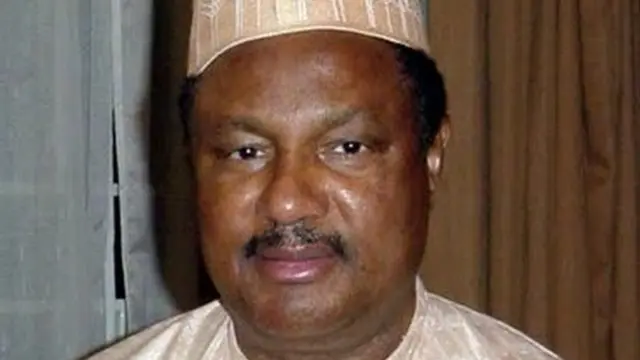
TODAY, Saturday, April 4, 2026, marks sixteen (16) years since the passing of Muhammadu Abubakar Rimi—the first democratically elected Governor of Kano State (present-day Kano and Jigawa States).
Rimi was a visionary progressive, an astute administrator, and a courageous politician who stood firmly by his convictions. He was charismatic, fearless, outspoke, a populist leader and master mobiliser whose political effectiveness and administrative acumen left an enduring imprint, despite the short and turbulent period he served.
His tenure unfolded in one of Kano’s most volatile moments, including the Maitatsine uprising, which held the city hostage, and the tragic July 10th 1981 Rampage, which saw the assassination of his political adviser, Dr. Bala Muhammad. Yet, even amidst these contrived crises, Rimi’s government remained focused and delivered meaningfully to the people especially the Talakawa.


His administration’s populist reforms such as the abolition of Jangali (cattle tax), Poll Tax, and even the scrapping of laws enforcing crash helmets within the city—symbolised compassion, responsiveness, and a deep commitment to the common man. These bold interventions came to define what was later described as the “Three Faces of a Silent Revolution,” a phrase immortalised by the government’s Research Directorate.
Rimi served from October 1, 1979, to early 1983, leaving the final six months of his tenure to his deputy, Abdu Dawakin Tofa. He would later serve Nigeria in various national capacities, including as a Minister.
Widely regarded as the architect of modern Kano, Rimi built upon the strong foundations laid by Abdu Bako. Together, their legacies define much of the visible public infrastructure across Kano and Jigawa today.
In just three and a half years, Rimi advanced the vision of a “Greater Kano,” long nurtured by generations of leaders, Sarakuna, and Emirs. Under his leadership, Kano became a vast, bustling development site an open-air workshop marked by major strides in electricity, potable water, education, healthcare, and public works.
From a handful of electrified towns in 1979, Rimi expanded access to well over 100 towns. The same transformative progress was recorded in water supply and other essential services. He assumed office at just 39, one of the youngest governors of the 1979–1983 political class.
In a rare display of political principle, Rimi voluntarily resigned to seek a fresh mandate. His departure from the People’s Redemption Party followed internal crises that weakened the party.

The subsequent military intervention of 1983 triggered by bad governance, corruption and more critically widespread electoral malpractice led to the banning of all political parties.
When partisan politics resumed, the evolving political landscape gave rise to the Social Democratic Party and its counterpart, the NRC.
For the SDP, Rimi was a foundational pillar, an anchor whose influence and credibility helped energise the party nationwide.


Today, we celebrate his life, his legacy, and his enduring contributions. We also mourn his loss especially at a time when Nigeria stands in dire need of principled leadership.
We live in an era where politics is too often devoid of principles, fidelity, and commitment to the electorate. Yet, we remain grateful to Allah for a life well spent, a life that helped shape a party with a clear mission and progressive vision, one that still reflects the ideals Rimi stood for.
We pray that Allah (Ar-Rahman) grants Muhammadu Abubakar Rimi Aljannatul Firdausi and honours him among those who resisted greed and corruption in public life.
We call on politicians and citizens alike especially the Talakawa of Kano, Arewa, and Nigeria to draw inspiration from Rimi’s life and legacy. His record remains a benchmark, a rallying point for those seeking a just and people-centred political order.
For us in the SDP, Kano and the wider Arewa remain central. It was here that progressive politics took root from NEPU to PRP, and ultimately to the SDP. That legacy continues.
As we extend our prayers and solidarity to the good people of Kano—workers, students, women, youth, artisans, and labour unions we urge Nigerians to be deliberate and discerning in their political choices.
There is a palpable hunger for change—for a new way of doing things. The SDP stands ready to provide that alternative, inspired by the ideals and sacrifices of leaders like Rimi.
- Prof Sadiq Gombe is the National Chairman, Social Democratic Party (SDP) and Founding National Secretary (Fourth Republic).