

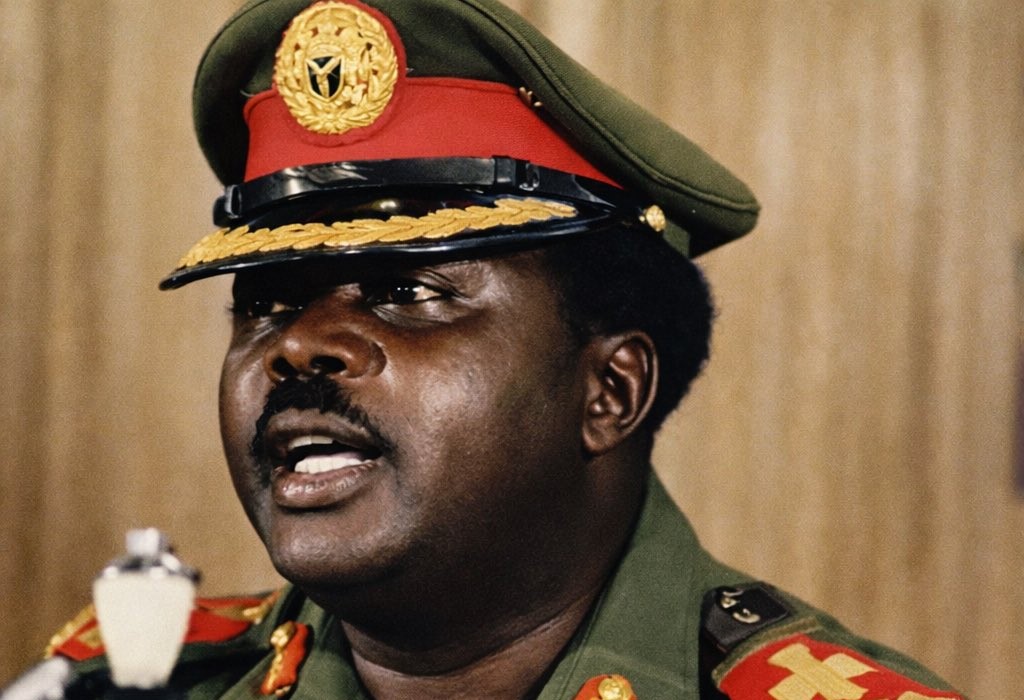
ON the morning of February 13, 1976, gunfire shattered the calm of Lagos and altered the course of Nigeria’s history. In traffic near the Federal Secretariat in Ikoyi, Nigeria’s Head of State, Murtala Ramat Muhammad, sat in his car like every other commuter.
He did not travel with a long convoy. He did not clear the roads with sirens. Within minutes, he was dead, 37 years old and barely 200 days in office.
Half a century later, as Nigeria reflects on that fateful Friday, the story of the young general who ruled in a hurry remains one of the most dramatic and consequential chapters in the nation’s history. In this special weekend feature, News Point Nigeria revisits his final hours, his life, the reforms, the coup that brought him to power, the bullets that cut him down, and the legacy that continues to shape the Nigerian imagination.


Born on November 8, 1938, in Kurawa Quarters, Kano City, Murtala Ramat Muhammed grew up in a family rooted in royal and clerical tradition. His lineage, family members insist, traces deeply into Kano’s judicial and Islamic scholarly heritage.
He attended Barewa College in Zaria before proceeding to the prestigious Royal Military Academy Sandhurst in England. Instructors reportedly described him as sharp-minded, outspoken and unafraid to express strong views.
He saw action early in his military career serving in the Congo during the United Nations peacekeeping mission and later becoming a central figure during the Nigerian Civil War. His audacity on the battlefield earned him the nickname “Monty of the Midwest.” By age 33, he was already a brigadier general, one of the youngest in Nigeria.
Though not a principal actor in the January 1966 coup, he was associated with the counter-coup that followed. But it was July 29, 1975, that would define him politically.
While then Head of State Yakubu Gowon attended an Organisation of African Unity summit in Kampala, Uganda, a group of young officers moved against his government. Among those said to have been involved in planning were then Colonel Joe Garba, Colonel Ibrahim Taiwo, Muhammadu Buhari, T.Y. Danjuma, Major Shehu Musa Yar’Adua and Ibrahim Babangida.
Muhammed himself, family sources say, was initially in London summoned back with an urgent verbal message reportedly delivered through Yar’Adua. On hearing of the plot’s advancement, he is said to have shaken his head and remarked repeatedly: “These young people.”

He returned home and was selected to lead what became a bloodless coup. At 37, he became Nigeria’s fourth Head of State.
From his first broadcast on July 29, 1975, his tone was unmistakable.
“All members of the Federal Executive Council are hereby dismissed with immediate effect.”


The phrase “with immediate effect” became his signature. He dismissed more than 10,000 civil servants across the public service, judiciary, police, armed forces and public corporations. To many Nigerians, it was a bold strike against corruption and stagnation. Critics argued the purge was sweeping and lacked due process.
Within months, he decongested the Apapa ports, set a clear timetable for return to civilian rule by 1979, and on February 3, 1976, created seven new states bringing the total to 19.
He also announced plans to relocate Nigeria’s capital from overcrowded Lagos to a new Federal Capital Territory in the country’s centre, following recommendations by a panel led by Justice Akinola Aguda. That vision would later materialise as Abuja.
Beyond Nigeria, he forcefully supported African liberation movements in Angola, Namibia and South Africa positioning Nigeria as a continental power with moral authority.
Friday began like any other in Lagos. Murtala was on his way to work at Dodan Barracks. He did not reside in a heavily fortified presidential palace. His dark-coloured Mercedes-Benz was unarmoured, bearing staff flags at the bonnet and the Coat of Arms at the rear.
At a traffic bottleneck near George Street, close to the Federal Secretariat in Ikoyi, plainclothes gunmen who had waited at a nearby filling station emerged. They knew his route. They knew he travelled light.
They lifted their flowing agbada garments and produced AK-47 rifles.
Master Warrant Officer Michael Otuwe, who survived the attack, later recounted how the driver, Sergeant Adamu Michika, was shot in the head. The assassins initially thought their targets dead and moved toward the Nigerian Broadcasting Corporation to announce a takeover. But spotting movement in the car, they returned and emptied more bullets into the vehicle.
Muhammed was shot multiple times in the head, chest and abdomen. Also killed were his aide-de-camp, Lieutenant Akintunde Akinsehinwa, and his driver.
The coup attempt was led by Lieutenant Colonel Bukar Suka Dimka. His radio broadcast from the Federal Radio Corporation of Nigeria was incoherent, reportedly delivered under heavy intoxication. He declared a daytime curfew from 6am to 6pm despite broadcasting between 7:30am and 9am, plunging Lagos into chaos.
Forces loyal to the government, including Major Ibrahim Babangida, rallied quickly. The coup failed. Dimka was captured in Abakaliki and later executed.
But the loss was irreversible.
As Lagos reeled, tragedy unfolded in Ilorin. Colonel Ibrahim Taiwo, military governor of Kwara State and a close ally of Muhammed, was abducted and murdered by disgruntled soldiers, reportedly including Major Kefas.
Taiwo was taken to a bush near Amberi along Ajase Ipo/Offa Road and shot. He was buried in Ogbomoso.
The Dimka coup was not merely an assassination attempt, it exposed deep fissures within the military hierarchy.
Across Nigeria, panic spread.
Former Information Minister Alhaji Dasuki Nakande recalled being a student at Kaduna Polytechnic, stunned as he listened to Dimka’s broadcast. Veteran broadcaster John Aduku described confusion at the Broadcasting Corporation of Northern Nigeria. Yakubu Dati remembered martial music on the radio while he was in primary school in Jos.
Unlike the coups that ended the lives of Abubakar Tafawa Balewa and Johnson Aguiyi-Ironsi, Muhammed’s assassination shocked because of its suddenness. There had been no visible signs of imminent upheaval.
Muhammed’s deputy, Olusegun Obasanjo, who had also been pencilled for assassination, was sworn in as Head of State.
Obasanjo would later describe Muhammed’s greatest achievement as preparing a successor capable of continuity. On October 1, 1979, he handed over to a democratically elected civilian government, Nigeria’s first voluntary military-to-civilian transition.
In Kano, Muhammed’s tomb remains a pilgrimage site. The Murtala Muhammed International Airport bears his name. So do roads, hospitals and institutions nationwide.
His son, Risqua Murtala Muhammed, says his father stood for anti-corruption, integrity and equity. His daughter Aisha has often remarked that his simplicity travelling without heavy security made him vulnerable.
His sister, Hajiya Balaraba Ramat Yakubu, remains vocal about his Kano roots, tracing family lineage through generations of judges and clerics.
The Chief Imam of the Murtala Muhammed Mosque in Kano notes that prayers are offered for him every Friday and especially each February.
Former Foreign Affairs Minister Ambassador Aminu Wali, his cousin, described him as a man who “died penniless,” recounting how Muhammed would sometimes show him an empty wallet.
He ruled for less than seven months. Yet he created seven states, initiated Abuja, set a firm transition date, purged corruption, restored discipline, and reoriented foreign policy toward Africa.
He died at 37, the second youngest Nigerian leader after Yakubu Gowon.
Approximately 20 percent of Nigeria’s 220 million people today are under 50, meaning many know him only through history books and oral accounts. Yet his name continues to evoke a peculiar nostalgia, a belief that Nigeria once had a leader who moved with urgency and clarity.
Fifty years after the gunfire in Ikoyi, the questions linger: What might Nigeria have become had he ruled longer? Would the trajectory of governance, discipline and reform have been different?
But in Kano, every Friday, prayers still rise over his grave.
And in traffic across Lagos where sirens now wail and convoys clear the roads, the memory remains of a head of state who once sat quietly among ordinary Nigerians, until the bullets came.