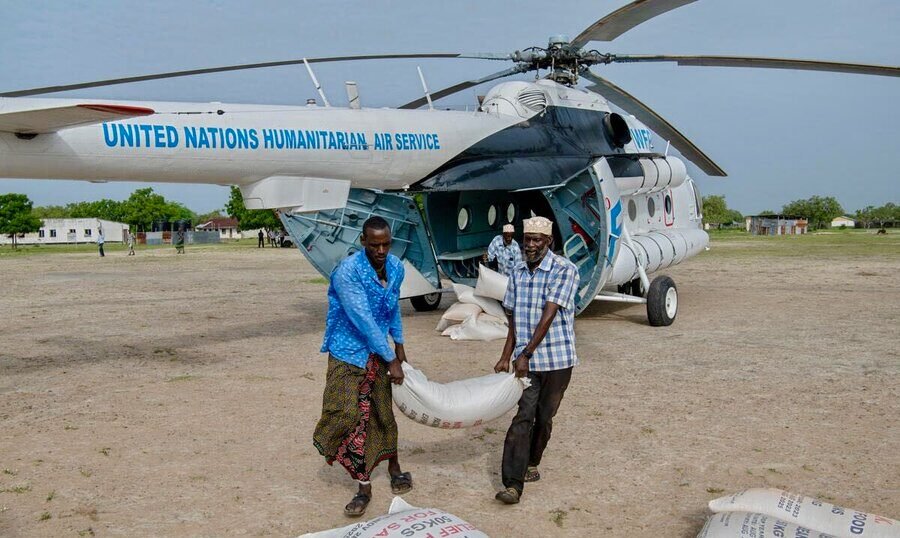
THE United Nations has shut down a vital humanitarian air service in North East, citing severe funding shortages that threaten to cripple aid delivery in one of the country’s longest-running humanitarian emergencies.

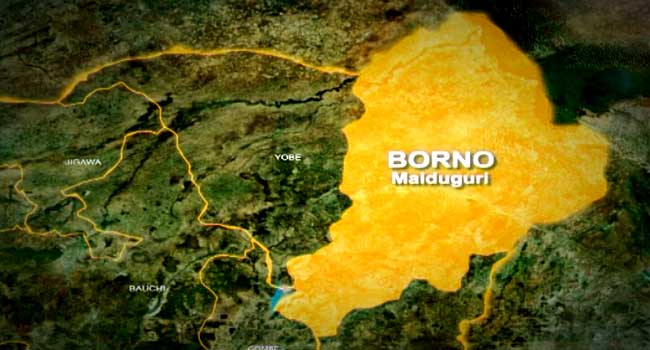
News Point Nigeria reports that the U.N. Humanitarian Air Service (UNHAS), operated by the World Food Programme (WFP), ended its fixed-wing operations last week after nearly a decade of flying aid workers and supplies into hard-to-reach areas of Borno and Yobe States.

Read also: Boko Haram Attacks Military Base In Borno, Seven Soldiers Feared Killed
U.N. spokesperson Stéphane Dujarric confirmed the closure on Thursday in New York, warning that “the humanitarian response in northeast Nigeria risks being cut off from the very people it is meant to serve.”

For nine years, UNHAS has transported thousands of humanitarian personnel, medical supplies, and essential cargo to communities cut off by 16 years of conflict and insurgency.
Road travel in many areas remains extremely dangerous due to insurgent attacks, ambushes, and improvised explosive devices, making air transport indispensable.


“In 2024, UNHAS fixed-wing flights carried more than 9,000 passengers. Already this year, 4,500 humanitarian staff have relied on the service to reach affected areas,” Dujarric said.
He stressed that without an immediate injection of funds, “critical aid pipelines will collapse,” leaving aid workers stranded and vulnerable communities without relief.
Read also: Army Chief Arrives Maiduguri After Tinubu Orders Nationwide Rescue Of Kidnap Victims

The WFP says it needs $5.4 million to keep the air service operational for the next six months. Without this funding, not only are flights grounded, but emergency food and nutrition programs are also under threat.
In July 2025, WFP had already warned that it might suspend aid to 1.3 million people in northeast Nigeria due to financing shortfalls.
Margot van der Velden, WFP’s Regional Director for West and Central Africa, described the situation as “a race against time,” urging donors to step in before the humanitarian situation worsens.


The UN noted that although the Nigerian government has become the largest financier of relief efforts in the northeast, international donor contributions remain crucial to sustain large-scale humanitarian operations.
“Without air links, humanitarian workers lose safe access to remote conflict-affected communities, where millions are already grappling with hunger, displacement, and violence,” the UN said in a statement.
Aid officials warn that the consequences could be devastating: families facing worsening hunger may be forced into desperate measures such as unsafe migration, child labour, or falling prey to extremist recruitment.
Read also: Many Feared Dead, 10 Injured As Fuel Tanker Explodes On Benin-Lagos Road
The closure of UNHAS operations in Nigeria comes as humanitarian agencies worldwide grapple with shrinking donor budgets, driven by global economic pressures and competing crises in Gaza, Sudan, Ukraine, and beyond.
For Nigeria’s northeast, home to over 2 million internally displaced persons, the grounding of the air service threatens to further isolate vulnerable populations at a time when they can least afford it.