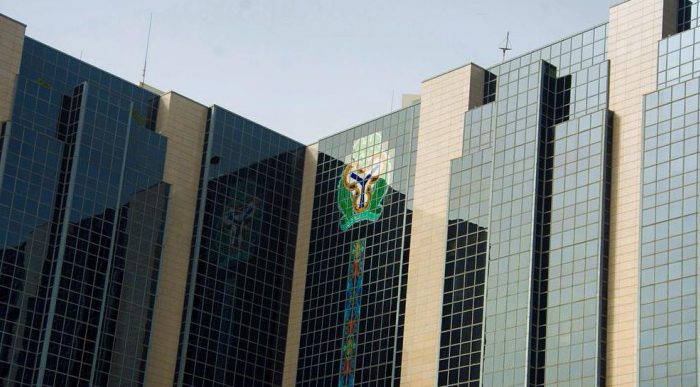
THE Socio-Economic Rights and Accountability Project (SERAP) has sued the Central Bank of Nigeria (CBN) over its alleged failure to account for $6.23 million in election-related funds and more than ₦1.63 trillion in other public funds flagged in the Auditor-General of the Federation’s 2023 annual report.
The report, published on August 7, 2026, identified several financial transactions and unrecovered loans from different periods between January and December 2023.

Read also: Benue Seals Schools After Parents’ Complaints Over Compulsory Textbook Purchases
The funds include $6.23 million linked to an allegedly fraudulent election-funding request purportedly made by former President Muhammadu Buhari; ₦1.252 trillion in unrecovered intervention loans to state governments; ₦116.18 billion in loans to distressed and liquidated banks; and ₦262.86 billion disbursed under the Anchor Borrowers’ Programme.
In the suit, numbered FHC/ABJ/CS/2450/2026 and filed last Friday at the Federal High Court in Abuja, SERAP is seeking an order of mandamus compelling the CBN to account for the funds and disclose details of their disbursement, beneficiaries, repayment status and recovery efforts.
The organisation is also asking the court to compel the bank to disclose the findings of its internal investigation into the alleged election-funding fraud, identify the officers and other persons responsible for approving and disbursing the funds, and state any disciplinary or administrative action taken.
SERAP further wants the CBN to account for seven boxes of currency notes awaiting examination, abandoned and unserviceable vehicles at its Lagos branch, and an unserviceable bullion van at its Abeokuta branch.
According to the Auditor-General’s report, the CBN failed to investigate an alleged fraud involving $6.23 million at its Abuja branch.
The report stated that the bank’s internal audit had disclosed that the money was spent following a request for election funding purportedly made by Buhari.

However, the CBN reportedly failed to provide the audit team with the investigation report for scrutiny and confirmation.
The Auditor-General expressed concern that the money might have been lost through fraudulent payments and recommended its recovery and remittance to the treasury.
SERAP argued in the suit that the findings required a credible investigation to establish the facts, identify those responsible and recover any public funds found to have been unlawfully lost.

“The CBN has legal obligations to account for each amount identified by the Auditor-General, explain the basis for each transaction, identify the persons or entities that received or benefited from the funds, and disclose measures taken to investigate, reconcile and recover any amount found to have been improperly paid or lost,” the organisation said.
The Auditor-General also reported that the CBN failed to recover ₦1.252 trillion in intervention loans granted to various state governments in 2023.
The report raised concerns that the funds might have been diverted to private purposes and recommended that they be recovered and remitted to the treasury.
Another ₦116.18 billion in loans granted to distressed and liquidated banks was reportedly unrecovered.
The CBN also allegedly failed to provide its 2023 audited or draft financial statements and a schedule of recoveries and outstanding balances on the loans for the audit team’s scrutiny.
Read also: Gunmen Kill Two Security Operatives, Expatriate At Kebbi Road Project
On the Anchor Borrowers’ Programme, the report identified ₦262.86 billion spent under the initiative designed to support farmers and boost food production.
According to the Auditor-General, the funds remained in the hands of some programme anchors, raising concerns that the money might not have achieved its intended food-security objectives.
The report also stated that the CBN failed to provide a list and number of beneficiaries or evidence of the programme’s impact for audit assessment. It recommended the recovery of the funds and raised concerns about possible diversion to private purposes.
The Auditor-General’s report also flagged seven boxes of currency notes awaiting examination, which the CBN reportedly failed to account for.
The report warned that the situation could lead to an increase in outstanding currency notes awaiting examination and possible mismanagement of funds. It recommended sanctions for gross misconduct.
At the CBN’s Lagos branch, the report identified abandoned unserviceable vehicles, warning that their condition could affect the branch’s operations and delay critical currency-related activities.
It called on the bank to provide evidence of the vehicles’ disposal or replacement.
A similar concern was raised over an unserviceable bullion van abandoned at the CBN’s Abeokuta branch. The vehicle reportedly remained on the branch’s records, with the Auditor-General also requesting evidence of its disposal or replacement.
SERAP argued that the findings raised fundamental questions about the custody, expenditure, accounting, safeguarding and recovery of public resources.
“The accountability of public institutions, including the CBN, is a crucial pillar of Nigeria’s constitutional democracy,” the organisation said.
It maintained that the CBN’s institutional independence did not exempt it from constitutional audits, statutory accounting requirements, public financial oversight or investigations into credible allegations of fraud and financial misconduct.
SERAP also cited Sections 13 and 15(5) of the 1999 Constitution, as amended, as well as provisions of the CBN Act 2007 governing the bank’s accounts, assets, financial reporting and management.
The organisation further referenced Nigeria’s obligations under the United Nations Convention against Corruption, particularly provisions relating to anti-corruption policies and the proper management of public funds.
In its argument, SERAP said identifying those responsible, ensuring accountability and recovering any missing or unaccounted-for funds would serve the public interest.
The suit was filed on SERAP’s behalf by its lawyers, Kolawole Oluwadare, Kehinde Oyewumi, Andrew Nwankwo and Kelechi Anwu.
No date has been fixed for the hearing.