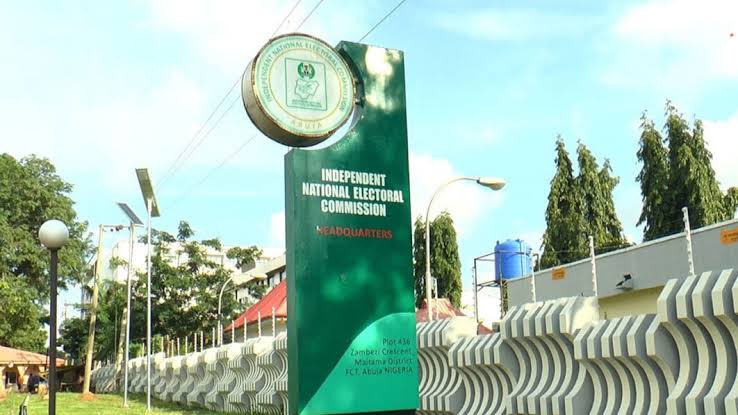

AS Ladi Adebutu’s absence from Ogun’s final list raises questions about opposition participation, the omission of Isa Ali Pantami in Gombe and Aminu Abdussalam Gwarzo in Kano has widened the debate over transparency, electoral compliance and the credibility of the road to 2027.

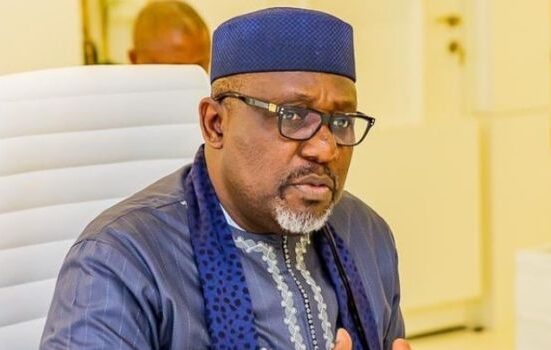
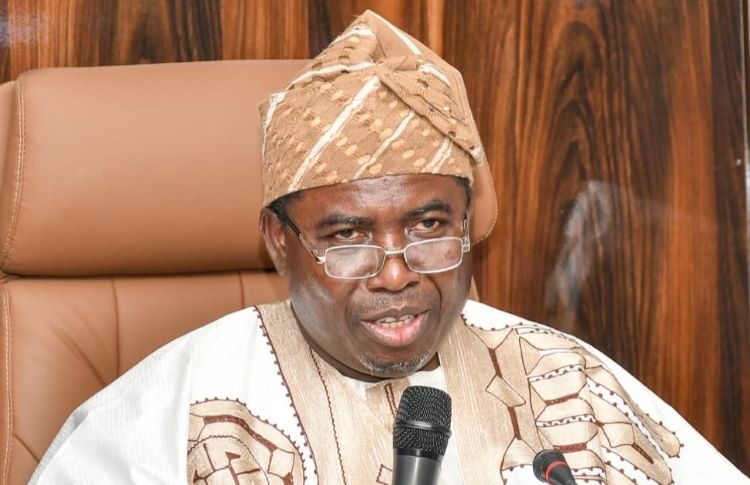
The release of the final list of governorship candidates by the Independent National Electoral Commission (INEC) was expected to provide clarity for political parties and aspirants preparing for the February 6, 2027 elections. Instead, the omission of three prominent opposition figures — Ladi Adebutu in Ogun State, Professor Isa Ali Ibrahim Pantami in Gombe State and Comrade Aminu Abdussalam Gwarzo in Kano State has raised fresh questions about the electoral process and the place of opposition parties in the forthcoming contests.

Read also: 2027: Pantami, Adebutu Missing As INEC Releases Final Governorship Candidates’ List
In this Sunday Political Features, News Point Nigeria dissects and analyses the situation, examining the circumstances surrounding the omissions, the responses from the affected political camps, the legal questions confronting the parties and the broader implications for public confidence in INEC as the country moves towards another election cycle.
The central question is not simply why three politicians are missing from the published lists. It is whether the commission can adequately explain the circumstances surrounding their absence, demonstrate that the same electoral standards are being applied to all political parties and assure Nigerians that the process is governed by transparent rules rather than political considerations.
Of the three cases, the omission of Adebutu and his running mate, Yemi Sowunmi-Kolapo, from the Ogun State list is particularly consequential for the 2027 election neutrality and the Peoples Democratic Party (PDP), given Adebutu’s established political following and his sustained contest against the ruling All Progressives Congress (APC).
Adebutu is widely regarded as a major opposition figure not just in Ogun politics but Nigeria as a whole. His political appeal, party structure and previous governorship campaign have made him an important part of the PDP’s efforts to challenge the APC’s hold on the state.
His absence from the final list therefore raises questions beyond the administrative status of an individual candidate. It places the PDP’s participation in the Ogun governorship contest under a cloud of uncertainty and leaves supporters wondering whether the party’s candidate will eventually appear on the ballot.
INEC’s published list, signed by its Secretary, Rose Oriaran-Anthony, contains candidates from 13 political parties in Ogun State. Adebutu and Sowunmi-Kolapo are absent, while the APC’s governorship candidate, Solomon Adeola, popularly known as Yayi, and his running mate, Kudirat Abiodun Balogun, are listed.

Jimi Lawal, an ally of former Kaduna State Governor Nasir El-Rufai, is also listed as the African Democratic Congress (ADC) governorship candidate in Ogun.
Other parties represented on the list include the Action Alliance, Action Democratic Party, Allied Peoples Movement, Allied Peoples Party, Boot Party, New Democratic Party, New Nigeria Peoples Party, National Rescue Movement, Social Democratic Party and Young Progressives Party, among others.
The absence of the PDP ticket is therefore not a minor omission in a document that otherwise identifies the candidates expected to contest the election. It raises a fundamental question about the party’s place in the governorship race and whether the issue can be resolved within the applicable legal and electoral timetable.
For a candidate with Adebutu’s political profile, the consequences could extend beyond the party’s internal affairs. His supporters, party members and political associates would naturally want to know whether their preferred candidate will be allowed to participate in the election, particularly after the party has invested in building its campaign around his candidacy.


It is important, however, to distinguish political significance from legal eligibility. A candidate’s popularity, political organisation or perceived strength does not exempt him from electoral requirements. Equally, compliance with those requirements must be assessed through transparent and consistent procedures rather than speculation about a candidate’s political standing.
That is why the explanation for Adebutu’s omission matters.
The Ogun State PDP has rejected the circumstances surrounding Adebutu’s absence from the final list, accusing the ruling APC of mounting undue pressure on INEC out of fear of losing the election.
In a statement, the party urged residents to remain calm, insisting that Adebutu’s name would be published and that he would emerge as governor after the 2027 election.
The party maintained that Adebutu had remained a member of the PDP and had duly completed the required digital membership registration within the designated period. It said his membership card had been printed, verified and submitted to INEC within the stipulated time.
The PDP consequently argued that its candidate had met the relevant requirements and should not be denied the opportunity to contest.
“We state emphatically that our candidate, Hon. Oladipupo Adebutu, who has never left the Peoples Democratic Party at any time duly registered as a member of the party within the designated period of the digital registration with his party membership card printed, verified and submitted to INEC at the stipulated time,” the statement said.
The party further urged its supporters not to be distracted from its political objective of defeating the APC, declaring that it remained confident of victory in Ogun State.
“No amount of desperate manipulation, political witch-hunts, or calculated distractions can alter the mandate of the people of Ogun State who are overwhelmingly eager for true leadership and positive change,” it said.
The allegations of political pressure remain the PDP’s position and have not been established by the omission alone. INEC’s published list does not explain why Adebutu and his running mate were excluded, making an authoritative clarification from the commission particularly important.
The PDP’s confidence in its candidate is also reflected in the campaign he had begun building before the final list was released.
At a media chat with journalists in Abeokuta, the Ogun State capital, Adebutu unveiled his proposed programmes for the state, supported by Sowunmi-Kolapo, three PDP senatorial candidates and some House of Representatives candidates.
Adebutu described his desire to serve the people as a calling, saying he had suffered financial losses over the years in pursuit of his political ambition but remained committed to improving the welfare of Ogun residents.
He argued that anyone who genuinely wished to serve the people must be prepared to make sacrifices, disclosing that some of his business fortunes had been committed to the political cause. He also urged journalists to report fairly and not allow themselves to be intimidated.
His seven-point agenda covered insecurity, grassroots development, urban planning, economic development, education, healthcare, and women and sports development.
On security, Adebutu described insecurity as one of Nigeria’s major challenges and promised that addressing it would be central to the PDP’s governance agenda if the party returned to power in Ogun.
He emphasised the need to improve the welfare of security personnel, arguing that better conditions would enable them to perform their duties more effectively.
He also reiterated his support for local government autonomy, saying that strengthening the third tier of government would improve service delivery and allow development to reach rural communities rather than placing the entire burden on state governments.
“We must ensure local government autonomy if we want credible performance at the grassroots,” he said, adding that decentralisation would strengthen accountability and development outcomes.
The existence of a detailed campaign agenda does not settle the question of eligibility, but it illustrates what is at stake for a party that has already presented its candidate and policy proposals to the public.
For Adebutu’s supporters, the immediate concern is whether that political programme will have a candidate through whom it can be presented to voters.
In Gombe State, the omission of former Minister of Communications and Digital Economy, Professor Isa Ali Ibrahim Pantami, has created a similar uncertainty for the PDP, although the circumstances surrounding his candidacy include a series of legal disputes over the party’s primary election.
Pantami defected from the APC to the PDP on May 19, 2026, before emerging as the party’s governorship candidate. His initial victory was challenged in court by Ahmed Mailantarki Mailantarki, one of the aspirants who contested for the PDP ticket.
A Federal High Court sitting in Gombe subsequently nullified the primary election and directed the party to conduct a fresh exercise. Pantami won the subsequent primary, but his name was nevertheless absent from INEC’s final list.
The commission’s list contains 16 governorship candidates and their running mates in Gombe State. Those listed include Bala Bello Tinka of the ADC, Jamilu Isyaku Gwamna of the APC and Babayo Ardo Kumo of the Nigeria Democratic Congress (NDC).
Other candidates include Zubairu Mu’azu Halilu of the Labour Party, Lamela L. Silas of the Allied Peoples Movement, Ibrahim Jalo Abubakar of the Peoples Redemption Party and Adamu Mohammed Ma’aji of the Social Democratic Party, among others.
Pantami’s absence is significant because he had appeared on the provisional list published on August 29, before disappearing from the final document.
The development has also brought renewed attention to the legal requirements governing party membership and candidate nomination.
Read also: INEC Writes DSS, Police Over Fake APC Primary Result Naming Okorocha Winner
On September 24, the Supreme Court restored Sections 77(5), (6) and (7), as well as Section 84(2), of the Electoral Act 2026. These provisions concern political party membership registers and the eligibility of parties to nominate candidates, including requirements relating to the submission of membership records to INEC within the stipulated period.
The ruling has raised questions about candidates whose membership records may not satisfy the statutory requirements. INEC National Commissioner Mohammed Haruna had also indicated during an appearance on Trust TV’s Daily Politics that some political parties might not field candidates in the forthcoming elections in line with the judgment.
Against that backdrop, Pantami’s exclusion cannot be assessed solely through the political importance of his candidacy. The relevant questions include whether the PDP complied with the applicable legal requirements, how the commission assessed the party’s submissions and what specific grounds, if any, informed the omission.
Those questions require evidence and an explanation from the relevant authorities rather than assumptions about the motives behind the decision.
Pantami’s camp calls for calm
Pantami has reacted to the omission through a statement shared on his personal social media handles, assuring supporters that efforts were underway to resolve the matter.
The statement, signed by Professor Suleiman Mohammed Gombe, acknowledged that the development had raised concerns among PDP members and the Pantamiyya Movement in Gombe State and beyond.
It described the omission as a temporary challenge rather than a final determination of Pantami’s political future, urging supporters to remain calm, hopeful and committed to the movement.
“We are aware of the people working behind the scenes to frustrate good and responsible leadership in Gombe State,” the statement said.
According to the statement, the candidate’s legal and liaison teams were engaging with relevant organs of the PDP and INEC to secure compliance with the court order and ensure that the omission was corrected within the period permitted by law.
The camp expressed confidence that the issue would be resolved and encouraged supporters to continue their mobilisation and remain committed to what it described as the movement’s ideology of service to humanity.
It added that the PDP and the Pantamiyya Movement remained united and committed to the political aspirations of their supporters.
“No distraction will derail our course, in sha Allah,” the statement added.
The response indicates that Pantami’s camp is pursuing administrative and legal channels rather than treating the omission as the end of its political ambition. Whether those efforts will succeed depends on the applicable law, the relevant documentation and any further action taken by the commission or the courts.
The situation in Kano presents a different dimension. The NDC’s governorship candidate, Aminu Abdussalam Gwarzo, is also absent from INEC’s final list, but the party has attributed the omission to what it described as a computer problem.
The list signed by INEC Secretary Rose Oriaran-Anthony contains 17 governorship candidates and their running mates in Kano State. It includes Governor Abba Kabir Yusuf of the APC, Abacha Muhammed Sani of the PDP and candidates from the ADC, Labour Party, SDP and several other political parties.
The Action Alliance, African Action Congress, Action Democratic Party, All Progressives Grand Alliance, Allied Peoples Movement and New Democratic Party are among the parties represented. The document provides candidates’ names, parties, ages, genders and educational qualifications.
However, neither Gwarzo nor any other NDC candidate appears on the list.
Unlike the Ogun PDP, which alleged that political pressure was responsible for its candidate’s exclusion, the Kano NDC has said the problem did not originate from the party’s nomination process.
Yusif Fasaha, the party’s public relations officer, said in Kano that party officials had consulted INEC and were told that a computer-related problem was responsible for the omission.
“I want to assure you that as the PRO of the party, the problem is not from us,” he said. “We have consulted the INEC and they told us that the problem was from computer, and they will rectify it. “So, everybody should remain calm, as from now to Monday, another list containing his name will be out.”
Fasaha maintained that Abdussalam Gwarzo had fulfilled the requirements for the election within the stipulated period.
“We have seen it and will continue with consultation on the matter,” he said.
The NDC’s explanation, if confirmed by the commission, would place the Kano case on a different footing from a deliberate decision to exclude a candidate on legal grounds. But that distinction needs to be clarified officially.
A claim that a computer problem caused the omission should be verifiable through the commission’s records and any corrected publication. Until the matter is resolved, the published list remains the document available to the public, and uncertainty persists over the NDC’s participation in the Kano governorship contest.
INEC has not stated in the published document why Gwarzo’s name is missing.
The three cases share a common feature: the absence of prominent opposition candidates from the final lists, but they do not necessarily share the same cause.
For the opposition, the immediate challenge is to establish the status of their candidates through the appropriate legal and administrative channels. For INEC, the challenge is to demonstrate that decisions affecting candidates are based on clear rules, verifiable records and consistent application of the law.
INEC must also avoid allowing uncertainty to persist where an explanation can be provided. Silence does not establish wrongdoing, but it can leave room for speculation, deepen political suspicion and make it harder for the public to distinguish an administrative error from a decision based on statutory requirements.
The questions surrounding the three candidates arrive at a sensitive point in the preparations for the 2027 elections. Political parties are expected to organise their campaigns, present their programmes and prepare supporters for the ballot. Uncertainty about whether major candidates will be listed complicates that process.
For the Ogun PDP, the immediate concern is Adebutu and Sowunmi-Kolapo’s absence and the party’s assertion that its candidate complied with the membership-registration requirements. For Pantami’s camp, the priority is to establish how the fresh primary and the relevant court orders relate to the final list. For the Kano NDC, the central issue is whether the alleged computer problem will be corrected as promised.
In each case, the outcome must be determined by the law and the evidence available to the commission, not by the size of a candidate’s following or the political pressure exerted by supporters.
At the same time, electoral transparency requires more than the publication of a final list. Where significant discrepancies arise, clear communication is essential to prevent avoidable confusion and protect confidence in the process.
The affected parties also have a responsibility to provide accurate documentation, pursue lawful remedies and avoid presenting allegations as established facts before the evidence is available. Political leaders can defend their interests forcefully without undermining the need for due process.
Ultimately, the central issue is not whether INEC should favour the opposition or the ruling party. It is whether every political party and candidate is treated according to the same legal standards, and whether the commission can explain its decisions convincingly.
The omissions of Adebutu, Pantami and Abdussalam-Gwarzo have therefore placed an important question before INEC: can it resolve the uncertainty surrounding the three candidates in a way that is transparent, legally defensible and understandable to the public?
Until the commission clarifies the circumstances surrounding each omission, the controversy is likely to remain part of the political conversation ahead of 2027.
For Ogun, Kano and Gombe, the immediate concern is the status of the affected candidates. For the wider electorate, the larger question is whether the process will inspire confidence that the rules governing participation in the election are clear, consistent and applied without political favour.
That is the standard by which the commission’s handling of the matter will ultimately be judged.