

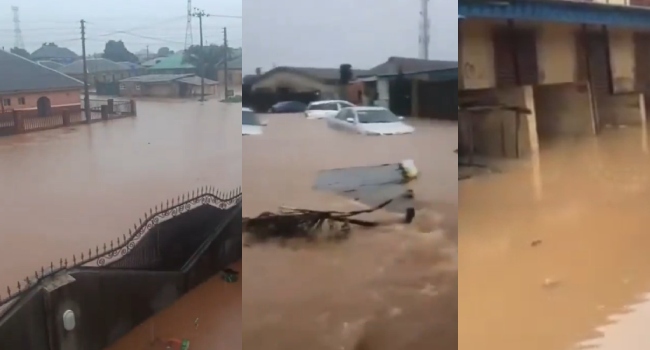
SEVERAL parts of Lagos State were left submerged on Monday after a marathon downpour that began late Sunday and continued uninterrupted well into the evening, crippling movement, flooding homes, and halting business activities.

News Point Nigeria reports that the widespread flooding affected areas such as Ijede in Ikorodu, as well as Lekki, Ajegunle, Eti-Osa, Agege, Surulere, and Alimosho. Viral videos on social media showed residents wading through waist-deep water, with vehicles stalled and entire streets transformed into rivers.

The torrential rain overwhelmed already-clogged drainage systems and canals, highlighting longstanding infrastructure gaps in the state’s flood management system.

“It’s like living in a lagoon now,” one resident in Lekki posted on X (formerly Twitter), sharing a video of submerged cars. “Even Uber drivers are canceling trips because no one wants to risk the water.”


With roads rendered impassable and shops shuttered, many Lagosians were forced to stay indoors, grinding economic activities in Nigeria’s bustling commercial capital to a halt.
The flooding wasn’t limited to Lagos. Heavy rains also battered Niger State, flooding communities in Lapai, Paikoro, and Mokwa local governments and destroying farmlands. Just last week, eight communities in Adamawa State were similarly submerged.
Reacting to the crisis, Lagos State Commissioner for the Environment and Water Resources, Tokunbo Wahab, acknowledged the hardship faced by residents and assured that the government had deployed flood-resilient infrastructure across the city.
In a statement on Monday made available to News Point Nigeria, Wahab referenced a fresh advisory from the Nigerian Meteorological Agency (NiMET), which warned of continued rainfall and thunderstorms over the next 72 hours.
“Some parts of the state may experience flash flooding due to the major collectors’ inability to cope with the runoff from such heavy downpour,” he said.

Wahab emphasized Lagos’s vulnerability as a low-lying coastal city, noting that climate change has intensified weather unpredictability. However, he urged residents not to panic, assuring them that mitigation efforts are ongoing.
He also issued a strong warning to residents who habitually dump refuse into drainages, stating that such actions worsen flooding and would not be tolerated.
“When you throw refuse into the gutters during rainfall, you’re directly contributing to flooding. The consequences affect all of us,” he said.


With children on school holidays, Wahab called on parents and guardians to keep them indoors during storms and avoid areas close to open drains or flood-prone roads.
The commissioner added that the state would intensify year-round desilting and drainage maintenance, urging the public to cooperate and report blocked channels.