IN a season when Nigeria’s economic story is often told through statistics, projections and policy statements, a quieter but compelling narrative is unfolding, one that blends ambition, cross-border opportunity and the evolving face of Nigerian entrepreneurship.

News Point Nigeria reports that this story leads from the ancient commercial corridors of Kano to the corporate meeting rooms of Riyadh, where a Nigerian firm has just secured a landmark Saudi franchise deal with implications far beyond business headlines.

At the centre of the deal is Badamasi Burji, a Kano-based journalist-turned-businessman whose journey from media engagement to international trade reflects a broader shift in how Nigerians are positioning themselves within the global economy.


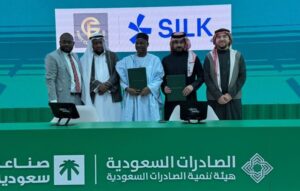
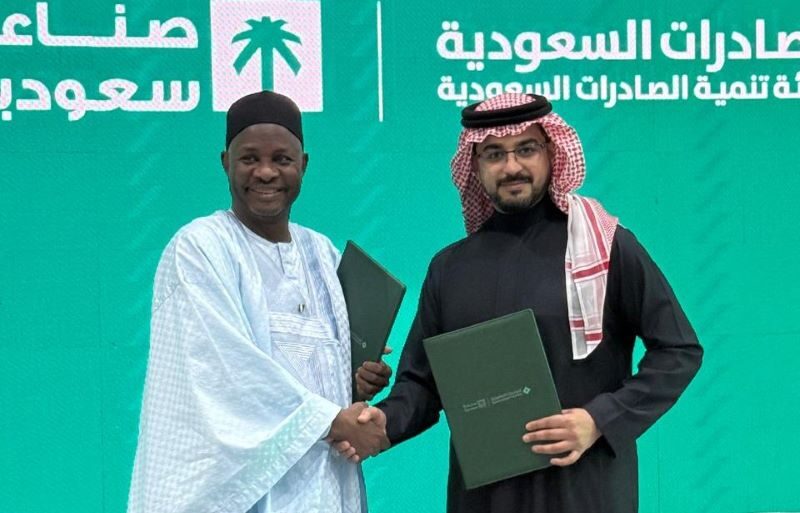
Through First Class Refreshment Limited, Burji has helped broker a strategic partnership with Silk United Company of Saudi Arabia, formalised through the signing of a Memorandum of Understanding in Riyadh.
The agreement grants the Nigerian firm franchise rights to operate Silk United’s business model in Nigeria, with Lagos designated as the operational hub for marketing, distribution and trade facilitation. But beyond the paperwork and signatures lies a story of timing, trust and the deliberate pursuit of relevance in a rapidly changing global market.
For First Class Refreshment Limited, the deal represents more than market access. Under the arrangement, the company will promote and distribute high-quality, non-oil Saudi products within Nigeria, while also coordinating logistics, customs clearance and market entry processes. This dual role places the firm at a critical junction between producers and consumers, and between two economies seeking new pathways for growth beyond oil.
Industry watchers say the partnership is poised to strengthen Nigeria’s import-export value chain, improve access to internationally certified products and deepen private sector participation in global trade. Yet, its significance also lies in how it mirrors the policy direction Nigeria has been trying to pursue in recent years.
President Bola Ahmed Tinubu’s trade and investment agenda, anchored on economic diversification and private-sector leadership, has placed renewed emphasis on non-oil trade, export expansion and Nigeria’s emergence as a regional distribution hub. The Saudi franchise deal fits squarely into this vision, offering a practical example of how Nigerian businesses can leverage international partnerships to drive growth.
As a certified Authorized Economic Operator, First Class Refreshment Limited is also strategically positioned to look outward, with plans to expand the export of traditional Nigerian snacks to global markets.

This two-way trade bringing Saudi products into Nigeria while pushing Nigerian goods beyond its borders—adds depth to the company’s ambitions and reinforces Nigeria’s role in cross-border commerce.
The timing of the deal is equally symbolic. It aligns with Saudi Arabia’s Vision 2030, the Kingdom’s far-reaching economic diversification programme aimed at reducing dependence on oil and expanding global trade links. By choosing Nigeria as a franchise base, Silk United is effectively betting on Africa’s largest economy as a gateway to wider continental markets.
Sources familiar with the agreement describe it as a sustainable commercial bridge between Nigeria and Saudi Arabia one built not just on goods and logistics, but on shared economic aspirations. Lagos, long regarded as West Africa’s commercial nerve centre, is expected to serve as the operational anchor, streamlining distribution and strengthening market access.


With preparations underway for the Lagos office to become operational in the coming weeks, expectations are high that First Class Refreshment Limited will play a growing role in shaping Nigeria–Saudi trade relations. For Badamasi Burji, the deal marks a defining moment in a career that has evolved from telling stories to actively shaping them.
In a global economy where influence increasingly belongs to those who can connect markets, cultures and opportunities, the Saudi franchise agreement offers a glimpse into a new kind of Nigerian success story—one driven by initiative, partnerships and the confidence to compete beyond borders.
As News Point Nigeria observes, it is a reminder that amid the noise of economic challenges, quieter victories are being secured often by individuals willing to step beyond familiar terrain and reimagine what Nigerian enterprise can achieve on the world stage.