THERE are moments in life when doing nothing is not weakness but wisdom. When silence is not evasion but care. This, sadly, was one of those moments. I say this without malice, and certainly without joy: Aisha Buhari did not need to do what she has done. And because she did not need to do it, the consequences now feel heavier.
In our cultural and religious imagination, death is not an invitation to speech; it is a summons to restraint. The Qur’an repeatedly leans toward satr, concealment, over exposure. We are reminded that Allah is As-Sattar, the One who covers, not the One who unveils. The dead, especially, are owed this covering. Islam does not ask the living to explain the departed; it asks them to pray for them. Du‘a, not disclosure. Rahma, not recollection.
Read also: Atiku’s Demagoguery In The Face Of Tinubu’s Logical Policies – By Sunday Dare

When a man dies, especially a man who carried power, controversy, and contradiction, something fragile settles over his memory. It is not praise. It is not absolution. It is a pause. A moral waiting room where time, not impulse, decides what survives.


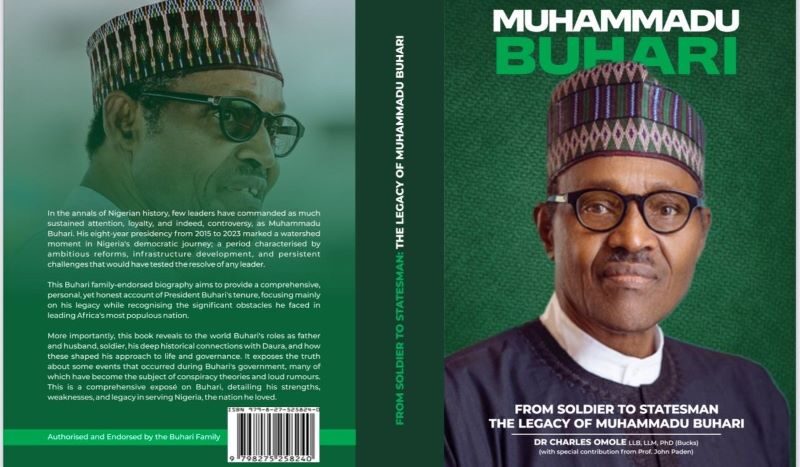
That pause was broken too quickly. The book facilitated about Muhammadu Buhari does not feel like remembrance eased by grief; it feels like a decision taken in haste. Not wicked haste but human haste. The kind the Qur’an gently warns against when it reminds us that “al-insan ‘ajul” – the human being is prone to haste. But even understandable haste can do lasting harm.
What troubles me most is not that a book was written, but how and through whom it was written. Aisha Buhari had choices. She knew this. Writers from the North, people formed by the same silences that shaped Buhari himself. Voices from Adamawa, her own home, where grief still knows restraint and memory still fears excess. Even family-aligned chroniclers who would have written carefully, guided by the Prophetic warning that whoever believes in Allah and the Last Day should speak good, or remain silent. She passed over all of them.
In doing so, she stepped outside a cultural logic deeply reinforced by faith: that memory is a trust (amanah) before it is a narrative. In our societies, who tells the story matters as much as the story itself. Islam does not treat memory as private property; it treats it as a responsibility that must not be betrayed by convenience.
Instead, she chose an author drawn from her newer circle, alliances built late, quickly, and without shared moral history with the Buhari name. That choice changed everything. It turned what could have been an act of guarded remembrance into something closer to exposure. And exposure, when the subject can no longer speak, is never neutral.
Read also: Court Dismisses Aisha Achimugu’s ₦10bn Suit Against EFCC

Our religious instincts recoil here for a reason. The dead cannot consent. They cannot correct, clarify, or object. Classical scholars were emphatic on this point: that speaking unnecessarily about the dead, especially in ways that neither benefit them nor warn the living, is a form of injustice. Silence, in this sense, is not ignorance; it is ‘adl.
I do not pretend that Muhammadu Buhari was an easy man to defend. History will argue with him for a long time, and rightly so. But even judgment in Islam is governed by measure. The Qur’an warns against excess even in truth. Balance requires distance. What death demands is not praise, but fairness. Not silence forever, but silence long enough.
By acting so soon, Aisha Buhari has complicated her own place in this story. To herself, she has done something quietly damaging: she has mistaken closeness for authority. Marriage gives access to a man’s life, not ownership of his meaning. Widowhood invites compassion, not monopoly over truth. Our moral tradition is clear: proximity does not cancel limits. Once private access becomes public license, dignity begins to thin.


To her children, the cost may be more enduring. Children deserve to inherit a father whose story settles before it is contested. What they may now inherit instead is argument, permanent clarification, permanent defence, permanent explanation. Islam teaches that the deeds of the dead continue through du‘a’, charity, and good legacy, not through endless debate. This inheritance could have been quieter, kinder.
To the wider Buhari family, the family she joined at eighteen, absorbing its codes of restraint and inwardness, this moment introduces discomfort that need not have existed. Families shaped by conservative moral discipline do not negotiate memory in public. They resolve it inwardly, imperfectly perhaps, but together. Acting alone has fractured that moral consensus.
And then there is the man himself. Muhammadu Buhari was many things, but he was not theatrical. He mistrusted publicity. He disliked explanation. Even his flaws were carried with an austere stiffness that resisted display. His faith, whatever its limitations in practice, leaned toward modesty and concealment. The Prophet ( SAW) warned against loving fame and feared it even for the righteous. To place such a man under a bright posthumous light, without consent, without correction, feels misaligned with the moral temperament he lived by. I suspect he would not have liked this.
Read also: When Will Nigerian Leaders Build Worthy Stadiums? – By Martins Oloja
This is not about regions, or gender, or loyalty. It is about timing, restraint, and taqwa, the awareness that not everything permitted is wise, and not everything possible is lawful in spirit. History is patient. Faith is patient. People are not. But when people rush what history and religion prefer to unfold slowly, they often weaken what they hoped to preserve.
Some acts do not reveal their weight immediately. They reveal it later, in unease, in quiet family distance, in the lingering sense that something sacred was handled too casually. Silence, when chosen wisely, is not emptiness. It is mercy. And this was a mercy worth extending a little longer.
- Abdullahi, a Public Affairs Commentator, Social Critic is of #GaskiyaAlliance – Truth. Accountability. Civic Courage.