

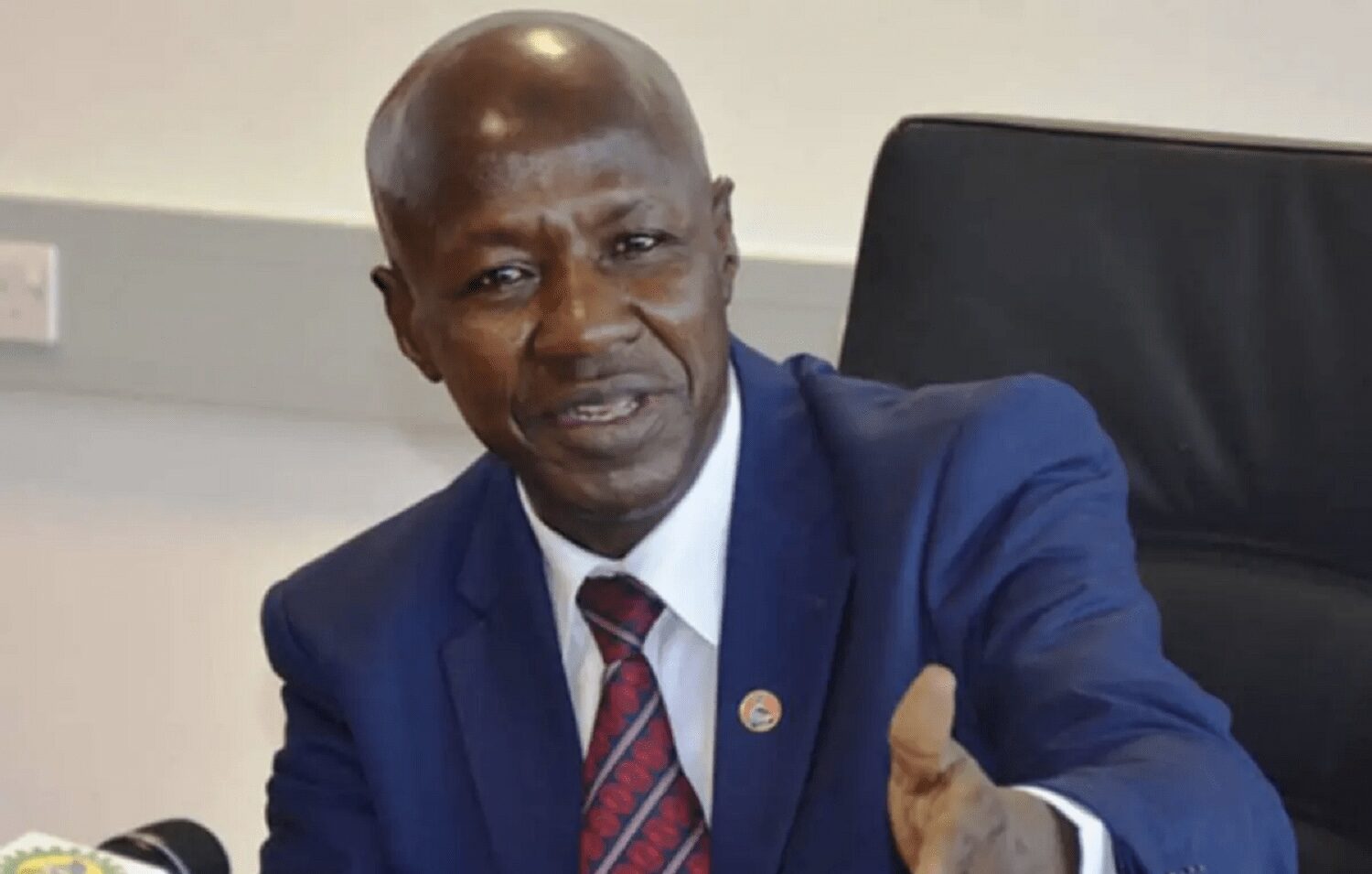
FORMER Chairman of the Economic and Financial Crimes Commission (EFCC), Ibrahim Magu, has revealed why former President Goodluck Jonathan was never invited for questioning over the controversial $2.1 billion arms procurement scandal that rocked Nigeria’s political landscape after the 2015 general elections.

According to Magu, documentary evidence and internal memos available to investigators showed that the disbursement of the funds was not officially approved for campaign purposes, making it difficult for the anti-graft agency to directly implicate Jonathan.
The revelation is contained in a newly released book titled “From Soldier to Statesman: The Legacy of Muhammadu Buhari,” authored by Dr. Charles Omole. The book was recently launched at the Presidential Villa, Abuja, and chronicles the life, military career, and political journey of the late former President Muhammadu Buhari.


Omole recounts that the handling of the $2.1 billion arms funds generated deep tension within the Peoples Democratic Party (PDP) and the Jonathan administration, particularly between then National Security Adviser (NSA), Sambo Dasuki, and key government officials.
According to the author, the concentration of procurement powers and sensitive security functions in the Office of the NSA led some political actors to view Dasuki as a “co-president” alongside Jonathan.
“Tensions reportedly simmered between NSA Dasuki and Defence Minister Aliyu Gusau as procurement authority and other vital functions gravitated to the NSA, leading some to see Dasuki as a ‘co-president’ alongside Jonathan,” Omole wrote.
The book further details how the EFCC’s investigation triggered panic within the PDP hierarchy, as several party leaders were summoned for questioning over alleged diversion of the arms funds for political purposes.
By early 2016, according to Omole, then PDP National Chairman, Adamu Mu’azu, went into hiding after he was sought by investigators. Former PDP spokesman, Olisa Metuh, was also arrested after allegedly receiving N400 million linked to the deal.
Metuh was quoted as saying he would rather starve than refund the money, a statement that became symbolic of the fierce resistance encountered by investigators at the time.

Also arrested was former Director-General of the Nigerian Maritime Administration and Safety Agency (NIMASA), Patrick Akpobolokemi, who reportedly jumped bail before being rearrested. His surety lawyer was detained, while six PDP zonal chairmen allegedly claimed ignorance of the source of funds used for party activities.
Omole disclosed that when Magu was questioned about the possibility of inviting former President Jonathan for interrogation, the EFCC boss ruled it out based on documentary evidence.
“Magu explained that memos and documents showed the disbursements were not officially approved for campaigns,” the author wrote.


Magu also lamented the challenges faced by anti-corruption agencies, particularly the use of well-funded legal teams to frustrate prosecutions.
“Politicians who steal N10 billion keep N5 billion for litigation. They hire senior advocates and exploit any investigative gaps,” Magu was quoted as saying.
The book further reveals that numerous case files involving senior PDP members accumulated during the period, with many suspects alleging political witch-hunts.
Following recommendations by the Military Procurement Audit Committee, President Buhari reportedly directed the EFCC to investigate 17 serving and retired military officers, many of them from the Nigerian Air Force.
Among those named were the late Air Chief Marshal Alex Badeh (rtd), Air Marshal Mohammed Umar (rtd), Air Marshal Adesola Amosu (rtd), Major-General E. R. Chioba (rtd), and several Air Vice Marshals and commanders.
While most were questioned and released, Badeh was later charged with money laundering, criminal breach of trust, and corruption, including allegations that he diverted N1.4 billion from Air Force accounts to purchase a mansion in Abuja.
Omole added that the committee’s second report flagged 21 companies for EFCC investigation over contracts linked to the Air Force and the Office of the NSA. The companies were accused of issues ranging from unspecified contract costs to the transfer of public funds for unidentified purposes.
The book sheds new light on one of Nigeria’s most controversial corruption cases, offering rare insight into the internal dynamics, legal hurdles, and political complexities that shaped the EFCC’s actions during the arms deal investigations.