
IRANIAN protesters demonstrating over economic hardship and a plummeting currency attempted to break into a local government building as the unrest continued for a fourth day.
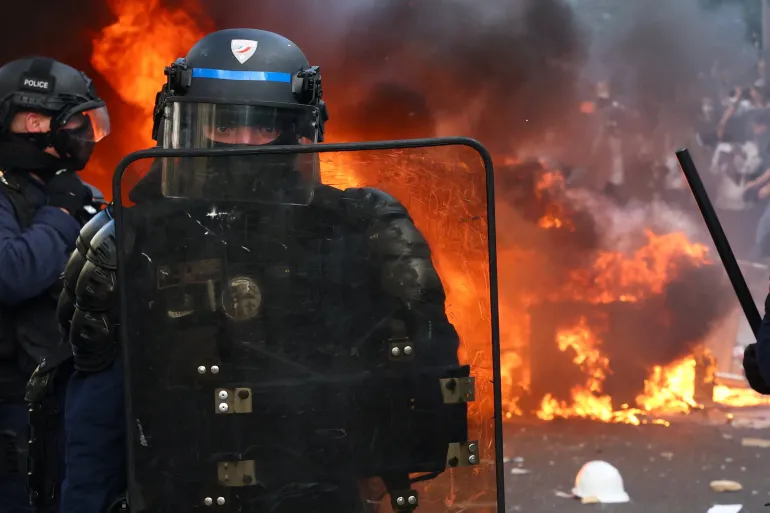
State media reported on Wednesday an organised group of “rioters” attempted to get into the local governorate building in Fasa in the southern province of Fars. Footage broadcast showed a group of people trying to break open the gate of the building.

Read also: Iran Says Two Tankers Catch Fire After Hitting Mines In Strait Of Hormuz
“Their attack failed with the intervention of security forces,” state media said. “The leader of these rioters, a 28-year-old woman, was arrested.”

The semi-official Tasnim news agency cited a local official as saying three members of the security forces were wounded during the incident while four “attackers” had been detained.
The demonstrations marked the fourth consecutive day of protests in Iran since shopkeepers in Tehran took to the streets on Sunday as the rial plunged to record lows against the US dollar, exacerbating economic hardship amid high inflation and rising living costs.


The protests have since spread to several other cities. On Tuesday, students took to the streets in Tehran while protests also broke out at universities and institutions in the cities of Isfahan, Yazd and Zanjan, Iran’s state-run IRNA news agency reported.
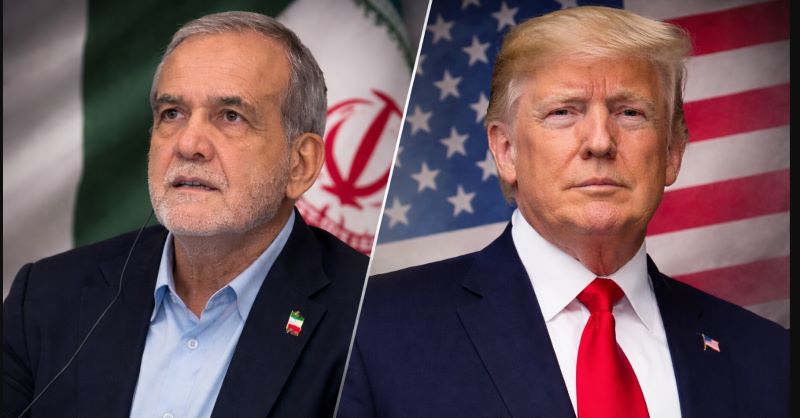
Speaking at a business forum in Tehran on Wednesday, President Masoud Pezeshkian suggested foreign interference was involved in the unrest.
“We are in a situation where external pressures are being exerted by the country’s enemies and, unfortunately, within the country as well. Instead of synergy and support, some positions and actions at times lead to weakening and harm,” said Pezeshkian.

“In such an environment focusing on the positive aspects of performance and strengthening solidarity is a fundamental requirement for overcoming the existing crises and pressures.”
While Iran’s government has said it is establishing a “dialogue mechanism” with protest leaders to listen to their concerns, Iran’s prosecutor general pledged a “decisive response” if protests prompted by the plummeting currency and dire economic conditions destabilise the country.
Read also: Israeli Drone Attacks Kill Six Palestinians Across Gaza Despite ‘Ceasefire’


In comments reported by Iranian state media on Wednesday, Mohammad Movahedi-Azad said peaceful protest was legitimate, but warned that attempts to create insecurity would draw a harsh reaction.
“Peaceful livelihood protests are part of social and understandable realities,” Movahedi-Azad said.
“Any attempt to turn economic protests into a tool of insecurity, destruction of public property, or implementation of externally designed scenarios will inevitably be met with a legal, proportionate and decisive response.”
The rial has been rapidly declining over recent weeks as the United States and its Western allies pile on sanctions and diplomatic pressure, and was trading at about 1.42 million rials to the US dollar when protests broke out on Sunday, compared with 820,000 rials a year ago.
The country’s economy, battered by decades of Western sanctions, has been under further strain since late September, when the United Nations reinstated international sanctions that had been lifted 10 years ago, linked to the country’s nuclear programme.
Inflation stands at about 50 percent, while the depreciating currency has forced up import prices, adding further pressure to living costs.
Responding to the growing protests, a government spokesperson said earlier the government will listen to the concerns of the demonstrators.
“The government will listen patiently even if there are harsh voices because we believe our people are patient enough, and when their voices are raised the pressure that is being put on them is high,” Fatemeh Mohajerani said at a news conference in Tehran.
Read also: Three Dead As Istanbul Recovers From Heaviest Rainfall In 80 Years
“The government’s job is to hear the voices and help them reach a common understanding to solve the problems that exist in society.”
She said the government recognised the right to peaceful assembly. “We see, hear, and recognise officially all the protests, the difficulties, and the crises.”