

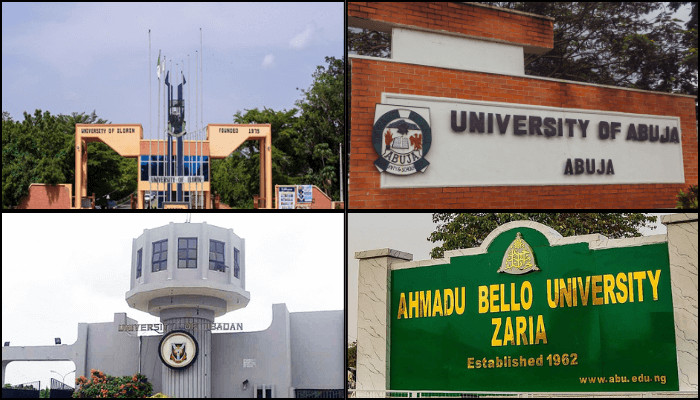
BUDGETARY personnel allocations to several federal universities have recorded a sharp increase following the Federal Government’s approval of a 40 per cent salary increase for academic staff and the introduction of new and enhanced allowance packages.

An analysis of the Federal Government’s 2026 budget estimates by News Point Nigeria shows that personnel cost allocations to the top 20 federal universities rose from ₦438.85 billion in 2025 to ₦533.1 billion in 2026, representing an increase of ₦94.25 billion, or about 22 per cent within one fiscal year.

The surge in personnel spending follows a landmark agreement reached on Wednesday between the Federal Government and the Academic Staff Union of Universities (ASUU), which ended a 16-year stalemate over the renegotiation of the 2009 FGN–ASUU agreement.

The deal has raised expectations of improved staff welfare, funding stability and industrial harmony within Nigeria’s public university system, which has been plagued by repeated strikes over unresolved welfare and funding disputes.


As part of the agreement, the Federal Government approved a 40 per cent salary increase for lecturers across federal institutions and introduced a new “professorial cadre allowance,” which will grant professors a monthly top-up of more than ₦140,000.
The Minister of Education, Dr Tunji Alausa, confirmed that provisions had already been made to fund the enhanced remuneration package.
Speaking on Politics Today on Channels Television on Thursday, Alausa explained that the funding covered both the salary adjustment and the restructuring of long-standing academic allowances.
“A professor will now receive a monthly top-up of over ₦140,000, as President Bola Tinubu has approved a new category of allowance for academic staff, known as the professorial cadre allowance,” the minister said.
“Today, we have the funding to support the 40 per cent salary increase granted to our lecturers across all institutions, as well as the nine enhanced Earned Academic Allowances, which are now properly structured.”

According to him, the allowances captured under the agreement have been clearly defined, addressing demands that ASUU had pushed for over several years.
In the 2026 fiscal plan, the Federal Government allocated ₦3.52 trillion to the education sector, representing 6.1 per cent of the ₦58.18 trillion national budget.
A breakdown of the education vote shows that ₦113.764 billion was earmarked for targeted education interventions, ₦42 billion for the National Home Grown School Feeding Programme and ₦35 billion to address the out-of-school children crisis.


Other allocations include ₦28 billion for security infrastructure across the 118 Federal Unity Colleges and ₦5.2 billion for the upkeep of 1,532 Nigerian students studying abroad under the Bilateral Education Programme.
Under Nigeria’s federal budgeting system, personnel cost—also known as personnel emoluments—forms a major component of recurrent (non-debt) expenditure for Ministries, Departments and Agencies, including the Federal Ministry of Education.
Personnel costs cover salaries, allowances, pensions, gratuities and related expenses and are centrally managed through the Integrated Personnel and Payroll Information System (IPPIS), which verifies staff records, eliminates ghost workers and ensures timely payments.
Although the full breakdown of recurrent and capital expenditure within the education vote is yet to be released, figures from the Budget Office indicate a marked increase in personnel costs across leading federal universities.
Institutions captured include the University of Ibadan (UI), University of Lagos (UNILAG), University of Nigeria, Nsukka (UNN), Ahmadu Bello University (ABU), Obafemi Awolowo University (OAU), University of Benin (UNIBEN), University of Jos (UNIJOS), University of Calabar (UNICAL), University of Ilorin (UNILORIN) and the University of Abuja.
Others are the University of Port Harcourt (UNIPORT), Abubakar Tafawa Balewa University (ATBU), Federal University of Technology, Owerri (FUTO), Federal University of Technology, Akure (FUTA), Modibbo Adama University, University of Uyo, University of Maiduguri, Nnamdi Azikiwe University, Bayero University, Kano, and Usman Dan Fodio University, Sokoto.
Of the institutions reviewed, the University of Ibadan recorded the highest increase, with personnel costs rising from ₦25.13 billion in 2025 to ₦37.52 billion in 2026—an increase of about ₦12.4 billion.
Ahmadu Bello University followed closely, with its personnel allocation increasing from ₦34 billion to ₦44.5 billion, a rise of ₦10.5 billion, or roughly 31 per cent.
Other increases include UNILAG (₦1.32 billion), UNN (₦6 billion), OAU (₦2.2 billion), UNIBEN (₦3.16 billion), UNIJOS (₦9.2 billion), UNICAL (₦5.5 billion), UNILORIN (₦5.26 billion), UNIABUJA (₦3.5 billion) and UNIPORT (₦2.3 billion).
Further adjustments show ATBU with a ₦4.87 billion increase, FUTO (₦5.24 billion), FUTA (₦1.5 billion), Modibbo Adama University (₦720 million), University of Uyo (₦211 million), University of Maiduguri (₦6.2 billion), Nnamdi Azikiwe University (₦6 billion), Bayero University (₦4.6 billion) and Usman Dan Fodio University (₦3.47 billion).
When contacted for clarification on the higher personnel allocations to tertiary institutions, the Director of Press and Public Relations at the Federal Ministry of Education, Boriowo Folasade, said she would respond but had not done so as of the time of filing this report.
The new pay structure is expected to ease labour tensions in Nigeria’s university system and reduce the frequency of industrial actions that have disrupted academic calendars for decades.