

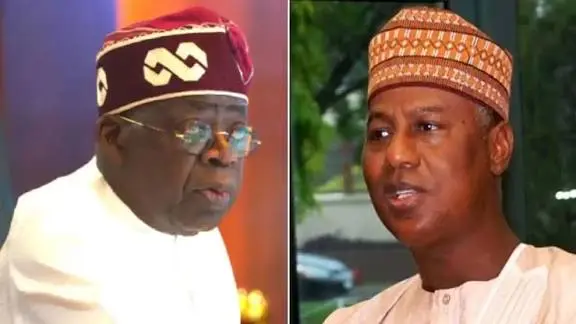
WHAT was meant to be a routine diplomatic posting turned into one of the most puzzling controversies in Nigeria’s recent governance history. In a span of just a few hours, the name of Usman Isa Dakingari Suleiman, former governor of Kebbi State, surfaced as Nigeria’s ambassador-designate to Turkey, only for it to be quietly removed in a subsequent presidential statement without a clear explanation of how it appeared in the first place.
For diplomats, legal experts, academics, and ordinary Nigerians who spoke to News Point Nigeria, the issue goes far beyond a simple administrative error.
At its core lies a troubling question: How did a name not confirmed by the Senate appear in an official State House press release as an ambassador-designate?


Controversy erupted after the Presidency, through an official State House press release, announced that President Bola Ahmed Tinubu had approved the posting of four ambassadors-designate out of the 68 nominees earlier confirmed by the Senate.
Among the four names listed was Usman Isa Dakingari Suleiman, a former governor of Kebbi State, named as ambassador-designate to Turkey, a strategic posting given that President Tinubu was scheduled to embark on a state visit to Turkey shortly after.
News Point Nigeria observed that Dakingari’s name was never part of the list of ambassadorial nominees submitted to, debated by, or confirmed by the Senate.
Yet, shockingly, his name appeared in a presidential memo instructing the Ministry of Foreign Affairs to notify the Turkish government in line with diplomatic procedures.
A review of the official Senate-confirmed list, obtained and verified by News Point Nigeria, shows that only two nominees from Kebbi State were confirmed, both of whom are career diplomats:
Abubakar Musa Musa (Kebbi)

Mohammed Idris (Kebbi)
Notably, no non-career nominee from Kebbi State was confirmed by the Senate.
Dakingari, a non-career political appointee, does not appear anywhere on the list acted upon by lawmakers.


In total, the Senate confirmed: 34 career ambassadors and 30 non-career ambassadors.
This newspaper further observed that this distinction is critical because career and non-career nominations are treated differently, and any posting must strictly align with what the Senate approved.
Hours after the initial announcement, the Presidency issued a second State House press release, this time stating that President Tinubu had approved the posting of only three ambassadors-designate, France, the United States, and the United Kingdom.
Turkey was conspicuously missing.
More puzzling was the language used: the statement did not explicitly withdraw or explain Dakingari’s earlier listing, nor did it clarify how his name found its way into the first announcement.
Instead, officials merely indicated that “Turkey’s appointment is still under review.” For many, that phrasing raised more questions than answers.
If the appointment was “under review,” critics asked, how did a specific individual’s name already appear in an official presidential release?
The Nigerian Constitution requires Senate confirmation before ambassadorial appointments can take effect. Any deviation, even if later corrected, risks undermining public confidence in institutional checks and balances.
According to Professor Bashir Haruna of Katsina University, the problem is not about posting timelines or diplomatic destinations, but about whether the confirmation process is being misrepresented or bypassed.
The lecturer who spoke to News Point Nigeria described the situation as “deeply troubling,” noting that it suggests either: a breakdown in coordination between the Presidency and the Ministry of Foreign Affairs, or a serious clerical or procedural lapse at the highest level of government.
Many Nigerians expressed disbelief that an ex-governor’s name could be inserted into an ambassadorial posting without Senate confirmation, only to be removed quietly without accountability.
Several respondents told News Point Nigeria that the silence surrounding the issue fuels suspicion and damages trust.
“This is not a small error,” said a political analyst, Oge Benson. “Ambassadorial postings represent Nigeria abroad. You can’t treat them casually.”
To put the controversy in context, News Point Nigeria reproduces the complete list of ambassadorial nominees submitted to and confirmed by the Senate, underscoring the absence of Dakingari’s name.
Full list retained exactly as provided:
Ambassador Ezenwa Chukwuemeka (Abia)
Maimuna Ibrahim (Adamawa)
Monica Ogochukwu (Anambra)
Ambassador Mohammed Mahmoud Lele (Bauchi)
Endoni Sindo (Bayelsa)
Ambassador Ahmed Mohammed Minguno (Borno)
Jane Adams Okon Michael (Cross River)
Clark Omeruo Alexandra (Delta)
Chimma Geoffrey Davies (Ebonyi)
Oduma Yvonne Ehinose (Edo)
Wasa Segun Ige (Edo)
Ambassador Adeyemi Adebayo Emmanuel (Ekiti)
Ambassador Onaga Ogechukwu Kingsley (Enugu)
Magaji Umar (Jigawa)
Mohammed Saidu Dahiru (Kaduna)
AbdulSalam Abus Zayat (Kano)
Shehu Barde (Katsina)
Aminu Nasiu (Katsina)
Abubakar Musa Musa (Kebbi)
Mohammed Idris (Kebbi)
Bako Adamu Umar (Kogi)
Sulu-Gambari Olatunji Ahmed (Kwara)
Ramata Mohammed (Lagos)
Shaga John Shama (Nasarawa)
Salau Hamza Mohammed (Niger)
Ibrahim Danlami (Niger)
Adeola Ibrahim Mopelola (Ogun)
Ruben Abimbola Samuel (Ondo)
Akande Wahab Adekola (Osun)
Adedokun Esther (Oyo)
Gedagi Joseph John (Plateau)
Luther Obomode Ayokalata (Rivers)
Danladi Yakubu Yaku (Taraba)
Bello Dogondaji (Zamfara)
As of now, no official explanation has been offered on: how Dakingari’s name appeared, who authorized its inclusion, or why the correction avoided directly addressing the discrepancy.
For many Nigerians, this silence is the most disturbing part of the episode. As one Lawyer, Barrister Amina Fatuhu told News Point Nigeria: “Mistakes can happen. What destroys trust is refusing to explain them.”
The Dakingari controversy may yet fade from headlines, but its implications linger. It has exposed cracks in communication, and raised questions about process.
For a country seeking to project seriousness and competence on the global stage, especially through its ambassadors, clarity and accountability are not optional they are essential.
For now, the name Usman Isa Dakingari Suleiman remains absent from the Senate’s records and emblematic of a controversy Nigeria is still trying to understand.