

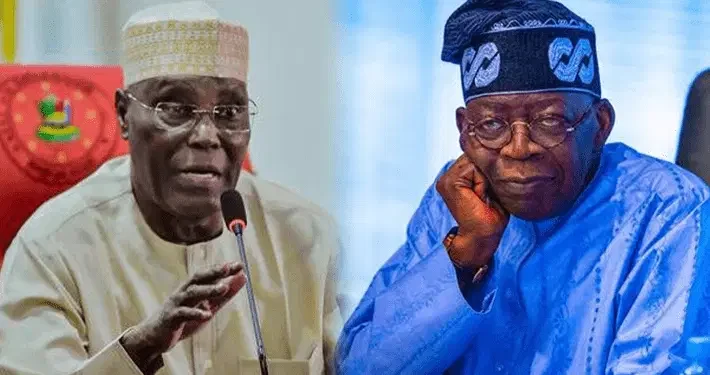
THE Presidency has criticised former Vice President Atiku Abubakar over his recent claim that Nigeria under President Bola Ahmed Tinubu is worse than the era of military rule, describing the comment as historically distorted, reckless, and deeply contradictory.
News Point Nigeria reports that Atiku made the remark while speaking at a political event organised by the African Democratic Congress (ADC), where he alleged that the current administration represents a form of governance more oppressive than Nigeria’s past military regimes.
Reacting to the statement, the President’s Special Adviser on Media and Public Communication, Sunday Dare, dismissed Atiku’s assertion as untenable and inconsistent with the realities of democratic governance.


According to Dare, the former vice president’s claim collapses under minimal scrutiny, noting that Atiku continues to enjoy full constitutional freedoms in the same political system he now brands as tyrannical.
“In the republic he describes as a dictatorship, Atiku Abubakar moves freely, holds political meetings, grants media interviews, and criticises the President daily without fear of arrest or persecution,” Dare said. “These liberties did not exist under military rule, where dissent attracted detention, exile, or death.”
The presidential aide stressed that equating an elected civilian administration with military dictatorship trivialises the suffering of Nigerians who were jailed, exiled, or executed under past regimes, adding that such comments amount to a sanitisation of a dark chapter in the nation’s history.
He further argued that Atiku’s comparison reflects a pattern of post-election grievance, pointing out that the former vice president has repeatedly questioned the legitimacy of democratic outcomes following his successive defeats at the polls.
Critics of Atiku’s remarks say the comparison between the economic reforms of the Tinubu administration and the authoritarian excesses of military regimes exposes what they describe as a deep contradiction—benefiting from democracy while undermining its outcomes.
“To suggest that a government produced through the ballot is worse than one imposed by force of arms is dangerous rhetoric,” Dare said. “It insults the legacy of June 12 and undermines the sacrifices made to entrench democracy in Nigeria.”

The Presidency also questioned whether Atiku genuinely believes his own claims or is merely reacting to diminishing political relevance, noting that his frequent movement across party platforms underscores a commitment to personal ambition rather than democratic principles.
Political analysts say such statements, when made by senior political figures, risk inflaming public sentiment and eroding trust in democratic institutions, particularly at a time when Nigeria continues to consolidate its civilian rule.
While Atiku has yet to issue a formal response to the Presidency’s criticism, the episode has reignited debate over the responsibility of political leaders to exercise restraint and historical accuracy when commenting on governance and democracy.


As the Presidency put it, Nigeria has moved beyond military rule and must resist narratives that blur the line between constitutional governance and authoritarianism, regardless of political grievances.