

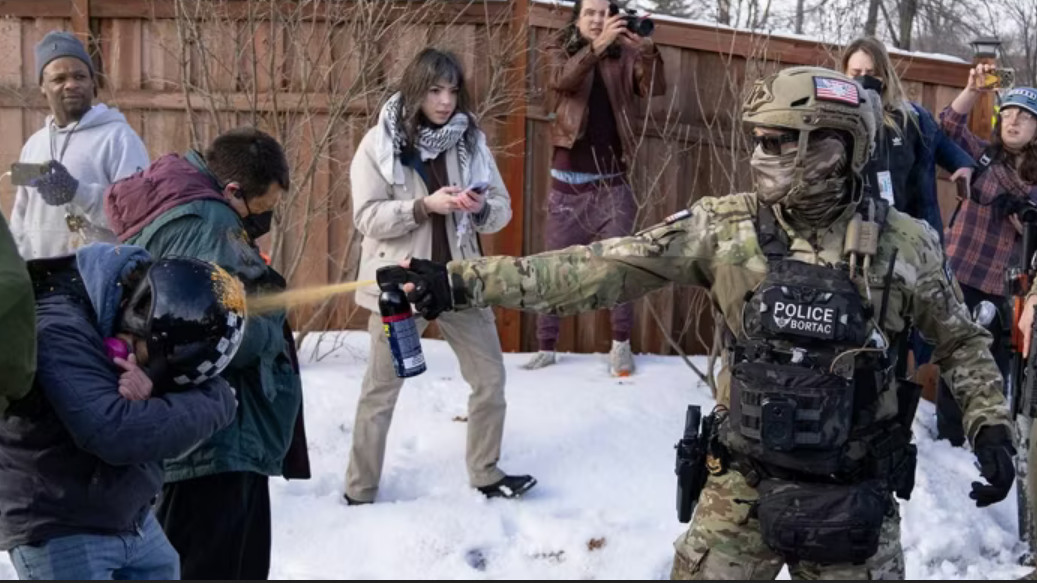
AN atmosphere of fear and uncertainty has gripped Nigerian immigrants in the United States as intensified immigration enforcement under President Donald Trump’s administration triggers what community leaders describe as a wave of self-deportation, job abandonment, and mass withdrawal from public life.

Findings by News Point Nigeria show that many Nigerians particularly undocumented immigrants and those with unresolved immigration status have stopped going to work, gone into hiding, or quietly returned to Nigeria as Immigration and Customs Enforcement (ICE) steps up aggressive raids across several states.

President Trump re-launched his hardline immigration policy immediately after his inauguration in January 2025, ordering federal agencies to arrest and deport undocumented immigrants without delay. Since then, ICE operations have expanded to include house-to-house raids, workplace arrests, and large-scale detention sweeps, sparking protests and international concern.


The crackdown has been overshadowed by reports of fatal encounters involving ICE officers. According to available data, at least 32 people died in ICE custody in 2025, making it one of the deadliest years in over two decades for immigration detention.
The Guardian UK further reported that no fewer than eight people have died in ICE-related encounters in 2026 alone, heightening anxiety among immigrant communities.
Particular outrage followed the killing of Renée Good, 37, who was fatally shot by an ICE agent during an enforcement operation in Minneapolis, Minnesota, on January 7. A medical examiner later ruled her death a homicide caused by multiple gunshot wounds.
Barely weeks later, Alex Pretti, also 37, an intensive care nurse at the Minneapolis VA Medical Center, was shot and killed during another federal immigration operation on January 24, 2026. Both incidents have become rallying points for critics of ICE tactics.
Nigerians living in the US told Saturday PUNCH that fear of arrest has forced many immigrants to abandon their workplaces, avoid public transportation, and limit social interaction.
Some, unable to cope with the anxiety, have opted for self-deportation, returning to Nigeria discreetly rather than risk detention.

A Nigerian woman, whose emotional Instagram video went viral, broke down in tears while describing the trauma gripping immigrants.
“It is very traumatising the way ICE people are treating immigrants,” she said. “President Trump, if you want immigrants to leave America, just come out and say it.”
Speaking later under the pseudonym “Senior Immigrant,” she said many Nigerians had turned to online trading and home-based businesses to survive.


“My shop assistant stopped coming to work since mid-December because ICE came to our area,” she said.
“People are staying indoors. Some families stopped factory work completely and now sell things from home.”
She added that community members had begun raising funds to support families who lost their income due to fear of raids.
Corroborating these accounts, Mrs Chris Ademiluyi, President of the Nigerian Community in Maryland, said many immigrants have chosen to go underground rather than return to Nigeria.
“Nigeria is not any better economically or security-wise,” she said. “Some people want to talk but are too afraid.”
She noted that Nigerian-Americans with legal status were less affected, but undocumented migrants were bearing the brunt.
In Texas, Lead Pastor of Lighthouse/Rejuvenation Church, Shola Adeoye, warned that fear was driving Nigerians out of the US prematurely.
“Some Nigerians are moving back home due to fear of this administration,” he wrote on Facebook.
“It’s not wise to bury yourself before death.”
His comments sparked heated debate online, with many Nigerians arguing that self-deportation was preferable to the trauma of arrest.
Meanwhile, the Nigerian Center, a non-profit immigration and cultural organisation based in Washington DC, said it has recorded a sharp increase in Nigerians seeking legal guidance.
Its Executive Director, Gbenga Ogunjimi, described the situation as “multi-layered,” citing not just ICE raids but visa bans and policy restrictions targeting Nigerians.
He explained that Nigeria had earlier been designated a Country of Particular Concern, leading to a partial visa ban in December 2025 that suspended several visa categories.
“What many Nigerians in America don’t know,” Ogunjimi said, “is that the ban also affects their ability to file for citizenship, green cards, work authorisation, and asylum.”
He disclosed that his organisation has been educating immigrants on policy changes and helping them evaluate their legal options.
“We’ve seen cases where people are already self-deporting,” he said. “Some just want to know if they can ever come back if they leave.”
Ogunjimi added that in some cases, the centre has advised immigrants not to leave, especially where legal remedies such as waivers were still available.
However, he admitted that there are no official figures yet on how many Nigerians have already returned home.
As ICE raids continue and deportation figures climb with about 70,000 detained and over 540,000 deported since the crackdown began many Nigerians in the US remain trapped between fear of arrest and uncertainty about returning home.