

WITNESSES appearing before the United States Congress have again warned that Nigeria risks descending into widespread Christian–Muslim violence, identifying the country as one of the most dangerous flashpoints in a rapidly worsening global crisis of religious freedom.
News Point Nigeria reports that warning is contained in written testimonies released ahead of a joint hearing of the House Foreign Affairs Committee scheduled for Wednesday (today), where some Nigerians and groups mentioned in the report, whose identities News Point Nigeria has withheld for safety and security reasons, cited recurring killings, mass displacement and persistent insecurity as indicators of a broader religious conflict taking shape in the country.
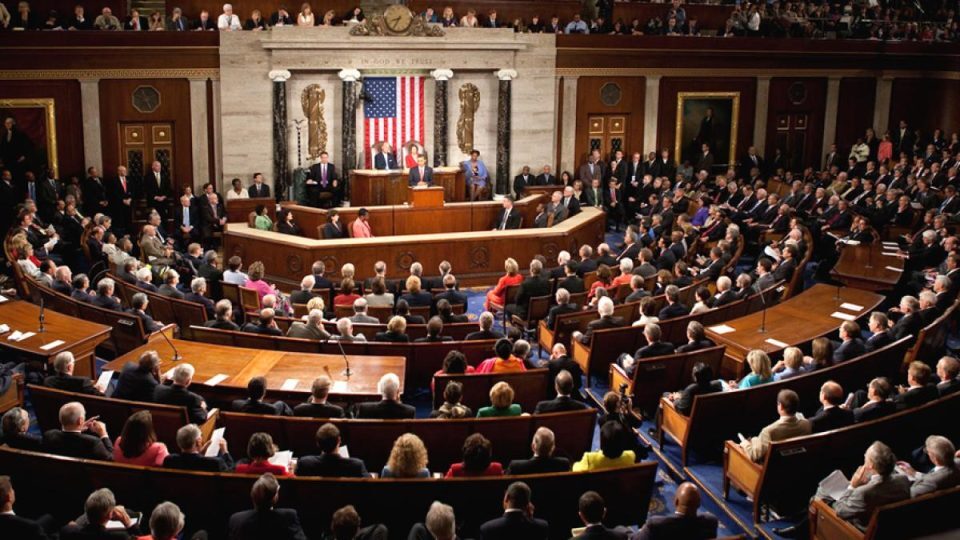
The hearing, titled “Defending Religious Freedom Around the World,” is being jointly convened by the House Subcommittee on Africa and the Subcommittee on the Western Hemisphere to examine what US lawmakers describe as mounting threats to religious freedom globally.

Written submissions by the witnesses were published on the committee’s website ahead of the session and are expected to form the basis of their oral testimonies.


Among those slated to testify are former United States Ambassador-at-Large for International Religious Freedom, Sam Brownback; Principal Advisor for Global Religious Freedom at the US State Department, Mark Walker; Grace Drexel, daughter of detained Chinese pastor Ezra Jin; and Dr Stephen Schneck, former chairman of the US Commission on International Religious Freedom (USCIRF).
In his prepared testimony, Brownback warned that radical militant movements were exploiting fragile states and weak institutions to impose religious dominance.
“Radical, militant Islam continues its purification efforts throughout the MENA region and beyond,” Brownback stated.
“Syria and Nigeria are key focus areas of opportunity for them in their quest for dominance, excluding all other faiths, even others within Islam,” he added.
Brownback described Nigeria as a major global flashpoint, characterising it as “the deadliest place on the planet to be a Christian,” and warned that patterns of violence across the country point to a deepening religious crisis with implications far beyond its borders.

“Early warning signs of a Muslim-on-Christian war are brewing across Africa,” he said, adding that Nigeria sits at the centre of that emerging danger.
The former envoy argued that religious freedom has become a central fault line in global politics, warning that authoritarian and totalitarian regimes increasingly view faith communities as threats to state control.
“Religious freedom is now one of our primary weapons against the dark alliance gathered against us,” he stated, calling on the United States to treat persecuted faith communities as key allies in the promotion of freedom.


Brownback also raised concerns about foreign involvement in Nigeria’s security environment, cautioning that support from countries such as China, Russia, Turkey and Saudi Arabia could further destabilise the situation if not carefully scrutinised.
He warned that failure to act decisively could allow violence in Nigeria to escalate into mass atrocities similar to those witnessed in Iraq.
In a separate submission, Schneck described freedom of religion or belief as being in a “historic crisis” worldwide, driven by rising authoritarianism, religious nationalism and state failure.
“Freedom of religion or belief is in crisis in the contemporary world,” Schneck wrote in his personal capacity, not on behalf of the commission.
“Whether measured structurally in culture, institutions and laws, or in the sheer number of incidents, persecution is increasing across the globe.”
He identified Nigeria, Syria and Sudan as countries where weak governance and widespread insecurity have created particularly dangerous conditions for religious communities.
“Nigeria, Syria and Sudan are current examples of such conditions threatening freedom of religion or belief,” Schneck stated.
“Both Nigeria and Syria are experiencing high levels of societal insecurity, and their respective governments have been unable to halt widespread violence against communities of faith.”
According to Schneck, such environments allow armed groups, insurgents and criminal networks to exploit religious identity, resulting in killings, displacement and long-term instability.
He also criticised the US government’s implementation of the International Religious Freedom Act (IRFA) of 1998, arguing that Washington has failed to match its rhetoric with sustained, effective action.
“If we are to take the International Religious Freedom Act as our measure, then the United States is not doing enough,” he said.
“We have been long on rhetoric and short on substance, consistency and effectiveness.”
Schneck expressed concern over delays in the release of the US State Department’s International Religious Freedom reports and the absence of updated designations of Countries of Particular Concern (CPCs).
He noted that Nigeria currently stands as the only country designated as a CPC, following a redesignation by former US President Donald Trump, while no countries are listed under the Special Watch List or Entities of Particular Concern.
“This is very concerning at a time when countries like China and Iran are engaged in ever more repressive actions against people of faith,” Schneck warned.
He further cautioned against narrowing international religious freedom advocacy to the persecution of Christians alone, stressing that human rights law protects people of all faiths and beliefs.
“International religious freedom, as defined in human rights law, is universal,” he said, adding that selective advocacy undermines both effectiveness and legitimacy.
Last year, the United States redesignated Nigeria as a Country of Particular Concern over alleged violations of religious freedom, a move accompanied by threats of possible US military intervention.
The US government later carried out airstrikes on suspected terrorist hideouts in Sokoto on Christmas Day.
However, the Nigerian government has consistently rejected claims of systemic religious persecution, insisting that insecurity affects Nigerians of all faiths and is driven largely by terrorism, banditry and criminal violence rather than religion.
On November 20, 2025, US Secretary of War Pete Hegseth hosted Nigeria’s National Security Adviser, Nuhu Ribadu, at the Pentagon for high-level talks on coordinated strategies to address insecurity.
In December, Ribadu disclosed that a US congressional delegation visited Abuja as part of ongoing consultations, focusing on counter-terrorism cooperation, regional stability and strengthening the strategic security partnership between Nigeria and the United States.
Last month, a plenary session of the Nigeria–US Joint Working Group on Nigeria’s CPC designation was also convened, as both countries continue diplomatic engagements over security and religious freedom concerns.