

FOR decades, the livestock sector in Nigeria has remained one of the country’s most under-leveraged economic assets; rich in potential, yet constrained by outdated production systems, weak infrastructure, climate stress and recurring conflicts. In Gombe State, however, a deliberate and structured effort is underway to change that narrative.
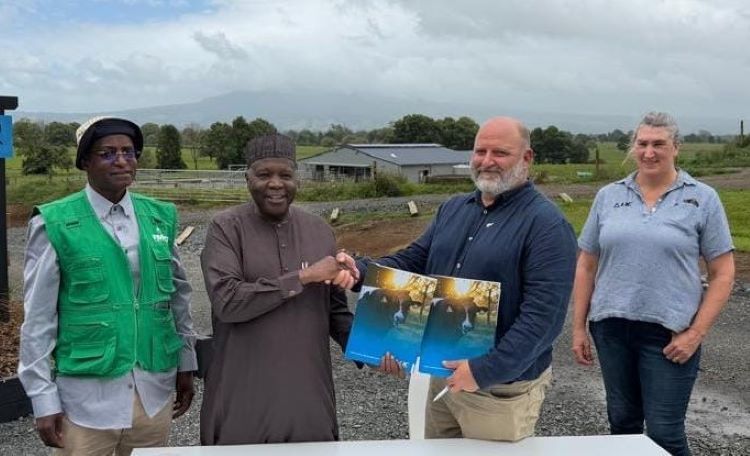
The recent signing of a Memorandum of Understanding (MoU) between the Gombe State Government and the Livestock Innovation Corporation (LIC) of New Zealand is a significant milestone in this transformation journey.
Concluded after a two-day technical engagement at LIC’s innovation facilities in Hamilton, the agreement demonstrates a clear policy direction by the administration of Governor Muhammadu Inuwa Yahaya, CON: that livestock development must be knowledge-driven, technology-enabled and economically integrated.


The MoU provides a framework for technical cooperation in modern livestock management. It commits both parties to the deployment of data-driven systems for herd performance tracking, animal health monitoring and productivity optimisation; the adoption of climate-smart and sustainable production practices; and structured capacity building through training, knowledge exchange and institutional strengthening.
The agreement also opens pathways for collaborative research and innovation, including partnerships with local academic institutions such as Gombe State University, and explores opportunities in genetics and biotechnology, particularly the possible introduction of high-performance dairy and beef genetics from New Zealand, subject to regulatory approvals.
Importantly, the MoU establishes a Joint Project Team to coordinate implementation, develop work plans, monitor progress and ensure that outcomes are measurable and aligned with Gombe State’s development priorities.
This emphasis on execution and accountability distinguishes the partnership from many well-intentioned but poorly implemented sector agreements.
Beyond the MoU itself, the partnership fits into a wider livestock reform architecture that Gombe State has been quietly but steadily building.
Central to this is the proposed Agro-Livestock Development Zone, a large-scale integrated hub designed to bring together key components of the livestock value chain.

The zone is expected to host an ultramodern abattoir, an international livestock market, meat processing facilities, leather tannery and factory, fattening centres, feed and grain markets, and supporting logistics infrastructure.
By clustering these activities, Governor Inuwa Yahaya aims to reduce post-harvest losses, improve quality and safety standards, attract private investment and create jobs, particularly for young people.
Complementing this project is the Muhammadu Buhari Industrial Park, which provides the industrial backbone required to support agro-processing and value addition.


Together, these projects signal a deliberate shift from subsistence-oriented livestock practices to an industrial, market-linked model capable of competing at regional and international levels.
Governor Inuwa Yahaya’s livestock reform agenda has also recognised a critical reality: productivity gains cannot be sustained without addressing farmer-herder relations and land-use pressures.
The revitalization of the Wawa-Zange Grazing Reserve, alongside efforts to protect stock routes and improve access to water and pasture, represents an attempt to restore order, reduce seasonal migration stress and promote more settled, productive livestock systems.
These interventions are strengthened by sustained dialogue mechanisms aimed at promoting harmony between farming and pastoral communities, an often overlooked but essential pillar of agricultural stability.
At the technical level, Gombe State’s engagement with the World Bank-supported Livestock Productivity and Resilience Support (L-PRES) Project has helped introduce modern veterinary services, improved breeding techniques, milk collection systems and enhanced disease surveillance.
These foundational investments are improving productivity while strengthening resilience against climate variability and market shocks.
What makes Gombe State’s experience noteworthy is not any single project, but the coherence of its strategy. Infrastructure development, technology adoption, institutional reform and conflict management are being pursued as interconnected objectives, rather than in isolation.
The LIC partnership adds an important international dimension, granting access to proven global models in herd improvement, data analytics and sustainable livestock production.
As Nigeria seeks to diversify its economy, enhance food security and create employment, livestock offers a viable pathway, if properly managed.
Gombe State’s evolving model suggests that with political will, strategic partnerships and long-term planning, livestock can move from the margins of policy to the centre of economic transformation.
- Misilli is DG Press Affairs, Government House, Gombe.