

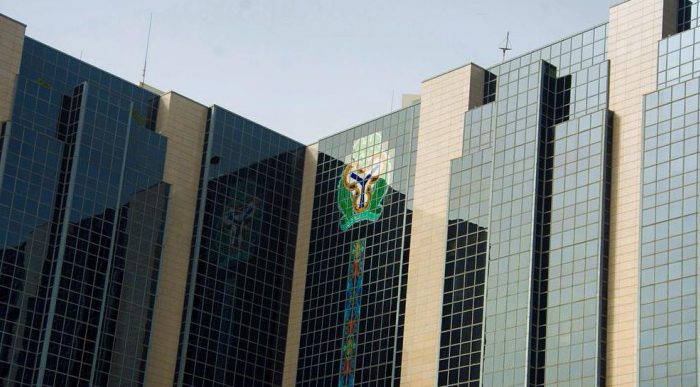
THE Court of Appeal sitting in Abuja has dismissed fresh attempts by the Central Bank of Nigeria (CBN) and Ahmadu Bello University (ABU), Zaria, to halt the payment of a ₦2.5 billion judgment debt awarded to 110 former ABU workers unlawfully dismissed in 1996.
News Point Nigeria reports that in two separate but unanimous judgments delivered by a three-member panel, the appellate court ordered the CBN to immediately release the ₦2.5 billion lodged in its custody since 2018 for onward payment to the affected workers, warning that severe sanctions would be imposed should the apex bank continue to obstruct execution of the judgment.

The lead judgments were delivered by Justice Okon Abang, who faulted both the CBN and ABU for what the court described as deliberate and unjustified attempts to frustrate the enforcement of a lawful court order.


The appeal court dismissed the contention by the CBN that the former workers could not initiate garnishee proceedings against it to recover the judgment sum, insisting that the argument had no basis in law.
Justice Abang also rejected the bank’s claim that the workers were required to obtain the consent of the Attorney-General of the Federation and Minister of Justice before payment could be effected, holding that such consent was unnecessary under the circumstances of the case.
The ₦2.5 billion judgment arose from a decision of the National Industrial Court, which found that the workers were unlawfully laid off in 1996 by the then Sole Administrator of ABU, General Mamman Kontagora, and ordered the university to pay their entitlements.
Both ABU and the CBN had challenged the judgment, particularly the use of garnishee proceedings to enforce payment from funds deposited by ABU with the CBN.
However, the appellate court dismissed both appeals in their entirety, describing them as lacking merit.
Justice Rakiya Haastrup of the Industrial Court had earlier, on January 27, 2022, issued a garnishee order absolute, directing the CBN to pay the judgment sum to the workers from ABU’s funds domiciled with the bank.

Upholding that decision, Justice Abang ruled that the workers were fully entitled under the law to institute garnishee proceedings against the CBN, which was merely holding the funds on behalf of ABU.
The court came down heavily on the apex bank for engaging lawyers and deploying public resources to frustrate payment to the workers, despite the fact that the funds were already in its custody.
“In this matter, it is not the duty of the CBN to play the role of an advocate but to implement the court judgment in the absence of any contrary order,” Justice Abang held.


He described the conduct of the CBN as reckless, reprehensible, and unethical, saying it had unnecessarily prolonged the hardship of workers who had already suffered years of injustice.
“The unfortunate action of the CBN prolonged the sufferings and hardships of the workers. This is cowardice. The bank took the matter personal against workers who have been suffering since 2013,” the judge said.
Justice Abang further criticised the legal counsel to the CBN, stating that a lawyer owed a duty not only to his client but also to the court, the country, and the aggrieved workers.
“How can the CBN ask that an order not made against it be vacated when it has been holding the workers’ money since 2018? The situation must not continue. There must be an end to it. The workers deserve the fruits of their labour,” the court declared.
In addition to affirming the ₦2.5 billion judgment, the Court of Appeal awarded ₦5 million against the CBN and another ₦5 million against ABU as costs of litigation, payable to the workers.
The ruling effectively brings to a close a nearly three-decade-long legal battle, reinforcing the right of unlawfully dismissed workers to enjoy the benefits of court judgments without obstruction by public institutions.