

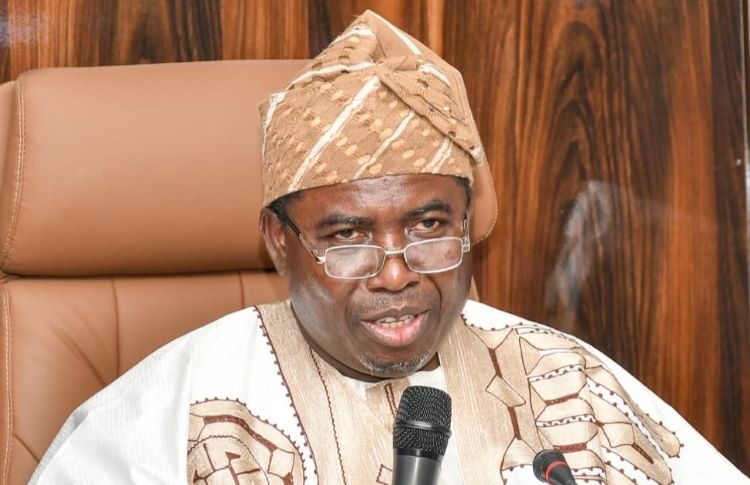
THE Supreme Council for Shariah in Nigeria (SCSN) has issued a strong clarification defending its controversial call for the removal and prosecution of the Chairman of the Independent National Electoral Commission (INEC), Prof. Joash Ojo Amupitan, insisting that its position is rooted in concerns over national unity, institutional integrity and constitutional responsibility not religion.
The clarification followed widespread public debate and political reactions triggered by resolutions adopted at the Council’s Annual Pre-Ramadan Conference and General Assembly held on Wednesday, January 28, 2026 (9th Sha‘aban 1447 AH). One of the resolutions, which called for the removal of the INEC Chairman, drew heightened national attention due to its political sensitivity.
In a press statement sent to News Point Nigeria by its Secretary General, Nafi’u Baba Ahmad, mni, the Council lamented what it described as deliberate misrepresentation and distortion of its position, prompting the need to set the record straight in the interest of national stability and public understanding.


According to the SCSN, its demand was never motivated by religious or sectarian considerations but by what it termed “grave concerns” over the antecedents, conduct, and publicly attributed views of the INEC Chairman, which it said pose a serious threat to national cohesion and the credibility of Nigeria’s electoral process.
The Council recalled Nigeria’s long electoral history since independence in 1960, noting that religion has never been a basis for accepting or rejecting leadership of electoral institutions.
It listed past electoral bodies including the Electoral Commission of Nigeria (ECN), Federal Electoral Commission (FEDECO), National Electoral Commission (NEC), and INEC arguing that leadership across these institutions had largely been accepted on grounds of legitimacy rather than faith.
The SCSN further noted that out of the thirteen individuals who have chaired Nigeria’s electoral institutions, the overwhelming majority have been Christians, with only two Muslims, Prof. Attahiru Jega and Prof. Mahmood Yakubu ever holding the position. It stressed that at no point in Nigeria’s history had Muslims mobilised opposition against an electoral chairman based on religion, describing claims of religious bias in the current matter as historically unfounded.
According to the Council, what sets Prof. Amupitan apart is not his religious affiliation but a documented record of conduct and expressed views allegedly incompatible with the neutrality required of an electoral umpire. Central to its concerns is a 2020 legal brief reportedly authored by the INEC Chairman, which has resurfaced in the public domain through what the Council described as credible sources.
The document allegedly contains inflammatory and prejudicial assertions against Nigerian Muslims, the historical Caliphate, and Northern Nigeria, including claims of a so-called “Christian genocide” and attempts to link present-day insecurity in the North to the 19th-century Jihad of Sheikh Uthman bin Fodio.

The SCSN described these claims as historically inaccurate, intellectually dishonest, and dangerously provocative, particularly in a fragile, multi-religious federation such as Nigeria. It warned that such narratives risk deepening division and undermining peaceful coexistence.
More troubling, the Council alleged that these claims were presented to foreign actors, thereby portraying Nigeria as a theatre of religious extermination and exposing the country to external pressure and interference based on false premises. Such actions, it said, amount to a breach of patriotic responsibility and are incompatible with the restraint and loyalty expected of the INEC Chairman.
Rejecting the narrative of a “Christian genocide,” the Council cited humanitarian data and international reports indicating that violence in Northern Nigeria is complex and driven by terrorism, banditry, criminality, poverty, governance failures, and social injustice not religious extermination.


It stressed that both Muslims and Christians have suffered, but available data show that Muslims constitute the majority of victims, particularly in predominantly Muslim states such as Borno, Yobe, Zamfara, Katsina, Sokoto, Kebbi, Niger, and parts of Kaduna State.
The Council argued that an individual whose documented writings reveal deep-seated prejudice and hostility toward a major faith community cannot reasonably command public trust in overseeing elections, which form the foundation of democratic governance.
It further noted that since the allegations became public, Prof. Amupitan has neither denied authorship of the document nor issued an apology or retraction. The Council claimed that the Federal Government has reportedly been forced to publicly debunk the allegations and expend significant diplomatic and financial resources to reassure foreign governments and institutions.
Media reports alleging that millions of dollars were paid to foreign lobbyists to counter the fallout, the SCSN said, underscore the scale of reputational damage and national embarrassment suffered by Nigeria.
“In any responsible society,” the Council stated, “such consequences alone would constitute sufficient grounds for resignation, removal, and legal accountability.”
Reiterating its stance, the SCSN maintained that its call is based strictly on character, conduct, and credibility, not religion. It reaffirmed its support for fair, just, and competent leadership irrespective of faith and urged the Christian community not to be misled by divisive narratives driven by personal or ideological agendas.
The Council concluded by reaffirming the Nigerian Muslim Ummah’s commitment to peaceful coexistence, justice, mutual respect, and the protection of the rights and dignity of all Nigerians.