

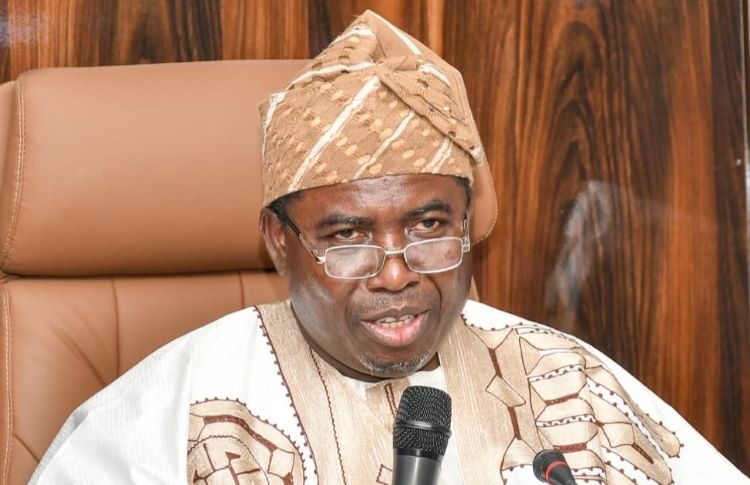
THE Independent National Electoral Commission (INEC) has proposed a total budget of N873.78 billion for the conduct of the 2027 general elections.
News Point Nigeria reports that the INEC Chairman, Prof. Joash Amupitan, presented the proposal on Thursday during a budget defence session before the joint Senate and House of Representatives Committees on Electoral Matters at the National Assembly.

The session was chaired by Senator Simon Bako Lalong and the Chairman of the House Committee on Electoral Matters, Hon. Adebayo Balogun.


Presenting the commission’s proposal, Amupitan disclosed that preparations for the 2027 polls had already commenced in compliance with statutory requirements mandating that funds for general elections be appropriated at least 360 days before the date fixed for the exercise.
He emphasised that early appropriation of election funds is crucial to guarantee adequate planning, procurement processes and smooth nationwide execution of the polls.
According to him, timely funding would enable the commission to avoid the logistical challenges and last-minute pressures that have historically accompanied major electoral exercises.
A breakdown of the proposed N873.78bn shows that election operations constitute the largest component of the budget.
Election Operations: N375.75 billion
Election Technology: N209.21 billion

Administrative Costs: N92.31 billion
Capital Expenditure: N154.90 billion
These four major components amount to N832.17 billion.


Additionally, the commission has earmarked N41.61 billion for miscellaneous expenses, bringing the total proposed budget to N873.78 billion.
The allocation of over N209 billion to election technology underscores INEC’s continued reliance on technology-driven processes in the conduct of elections.
In recent electoral cycles, the commission has deployed digital innovations such as the Bimodal Voter Accreditation System (BVAS) and the INEC Result Viewing Portal (IReV), aimed at enhancing transparency, credibility and efficiency.
The significant allocation to technology suggests plans to further strengthen these systems, upgrade infrastructure, and ensure improved logistics and real-time result management during the 2027 polls.
Amupitan noted that the capital component of the 2027 election budget is significantly higher than in previous election cycles.
He explained that several capital items that were either underfunded or not adequately captured in earlier appropriations have now been consolidated into the new proposal to ensure comprehensive coverage.
This, he said, reflects lessons learned from past elections and the commission’s determination to strengthen institutional capacity ahead of 2027.
The INEC chairman informed lawmakers that the full details of the proposed expenditure — including specific activities, procurement plans, operational logistics, and cost items were contained in the documents formally submitted to the National Assembly.
He appealed for the timely consideration and approval of the budget to enable the commission to adhere strictly to the electoral timetable and constitutional obligations.
The joint committees are expected to scrutinise the proposal and make recommendations before it proceeds through the legislative approval process.
With the 2027 general elections still nearly two years away, INEC’s early presentation of the budget signals the formal commencement of preparations for what is expected to be one of the largest electoral exercises in Africa.
Observers note that adequate funding and early release of resources remain critical to ensuring credible, transparent and hitch-free elections across Nigeria’s 36 states and the Federal Capital Territory.