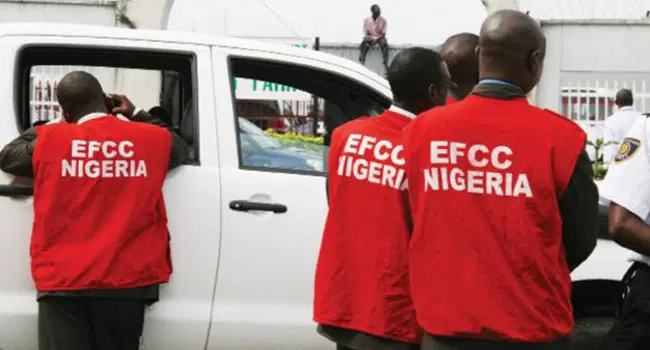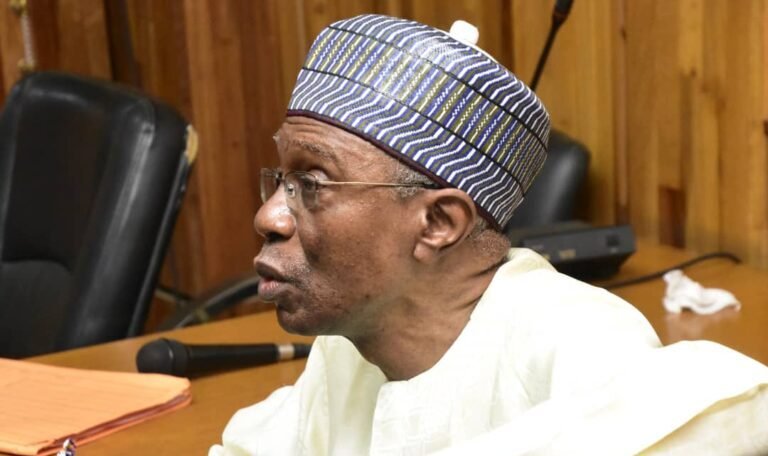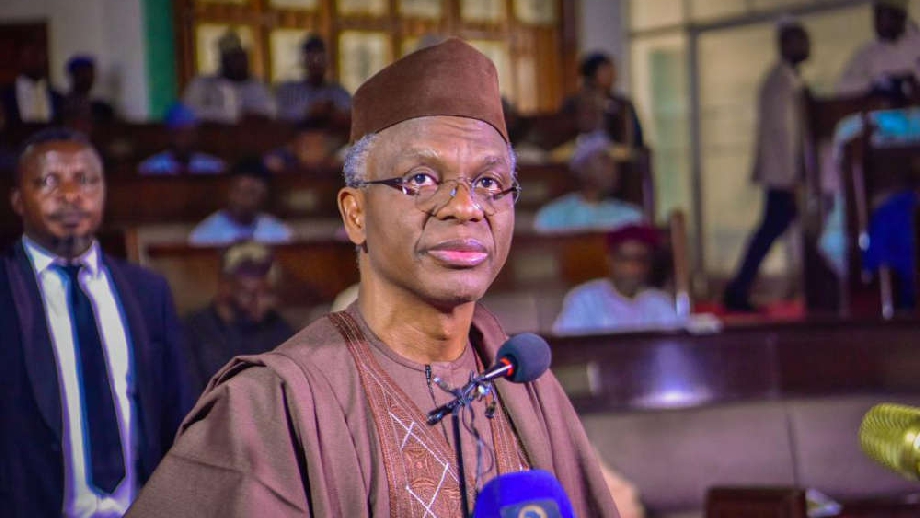
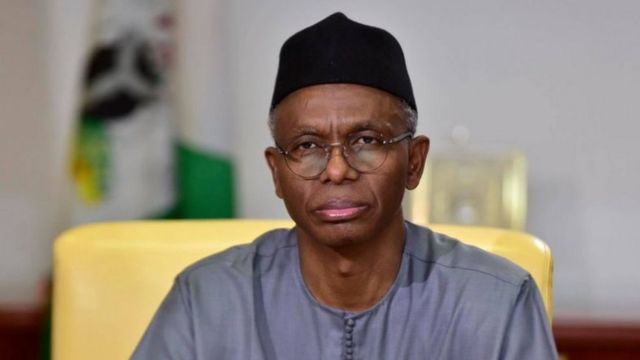
FORMER Kaduna State Governor, Nasir El-Rufai, on Tuesday spent a second night in the custody of the Economic and Financial Crimes Commission (EFCC) as investigations into an alleged N432 billion corruption probe intensify.
His lawyer, A.U. Mustapha (SAN), confirmed that the former governor remained with the anti-graft agency and is seeking his release on bail, describing him as a responsible citizen who voluntarily honoured the commission’s invitation.

Read also: Appeal Court Rejects EFCC Bid To Challenge Ruling On Aisha Achimugu’s 124 Bank Accounts
El-Rufai arrived at the EFCC headquarters in Abuja on Monday around 10 a.m. for questioning in connection with alleged financial improprieties during his eight-year tenure as governor of Kaduna State between 2015 and 2023.

However, after hours of interrogation, he was detained, and investigators continued questioning him.
A senior EFCC official, who spoke on condition of anonymity, disclosed that the commission is considering obtaining a remand order from the court to legally extend his stay in custody beyond the 48 hours permitted by law.


“Forget the speculations being peddled on social media that he has been released. He has not. El-Rufai is still with us and will be spending another night in custody,” the source said.
“The investigators need some time with him to answer questions arising from his eight years as governor in Kaduna State.”
Speaking in a telephone interview, Mustapha said his client had cooperated fully with investigators and posed no flight risk.

“As a responsible citizen, he was invited and, true to his word, he honoured the invitation,” the senior advocate said.
“As we speak, he is still with the EFCC. He is cooperating to the best of his capacity, and we hope that the EFCC, given its integrity, will admit him to bail because he is presumed innocent.”
Mustapha declined to disclose details of the allegations or the substance of the interrogation, insisting that such matters remain confidential.


“That question can only be answered by the EFCC and not by me. I would just be speculating, and lawyers don’t do that,” he added.
Read also: Ijebu Gas Leak: Ogun Govt, NUPRC Begin Fresh Investigation After Over 100 Students Fall Ill
The EFCC’s probe stems from a 2024 report by an ad hoc committee of the Kaduna State House of Assembly set up to examine loans, contracts, and financial transactions undertaken between 2015 and 2023 under El-Rufai’s administration.
The committee, chaired by Henry Zacharia, alleged that several loans obtained during the period were not utilised for their intended purposes.
While presenting the report, Speaker Yusuf Dahiru Leman claimed that about N423 billion was allegedly siphoned during the administration.
The panel recommended the investigation and prosecution of El-Rufai and certain former cabinet members over alleged abuse of office, diversion of public funds, money laundering, irregular contract awards, and reckless borrowing.
Petitions were subsequently forwarded to both the EFCC and the Independent Corrupt Practices and Other Related Offences Commission (ICPC).
El-Rufai has repeatedly denied the allegations, describing the probe as politically motivated. He maintains that loans secured during his tenure were duly appropriated and deployed to infrastructure, education, healthcare, and security projects across Kaduna State.
An EFCC source disclosed that investigations into the matter have been ongoing for nearly a year, noting that suspects are typically invited after inquiries have reached an advanced stage.
“As a commission, we don’t just rush to invite suspects. Persons accused are always the last — after investigations have progressed substantially,” the source explained.
In a separate development, the Department of State Services (DSS) has filed criminal charges against El-Rufai before the Federal High Court in Abuja over alleged unlawful interception of the phone communications of National Security Adviser, Nuhu Ribadu.
The three-count charge, marked FHC/ABJ/CR/99/2026, was filed under the Cybercrimes (Prohibition, Prevention, etc.) Amendment Act, 2024, and the Nigerian Communications Act, 2003.
According to the charge sheet, El-Rufai allegedly admitted during a February 13, 2026 appearance on Arise TV’s Prime Time Programme that he and unnamed associates intercepted Ribadu’s communications.
The prosecution claimed the alleged act caused “reasonable apprehension of insecurity among Nigerians.”
He is yet to be arraigned on the charges.