

BANKS have raised N4.05tn in verified and approved capital ahead of the March 31, 2026, recapitalisation deadline set by the Central Bank of Nigeria.
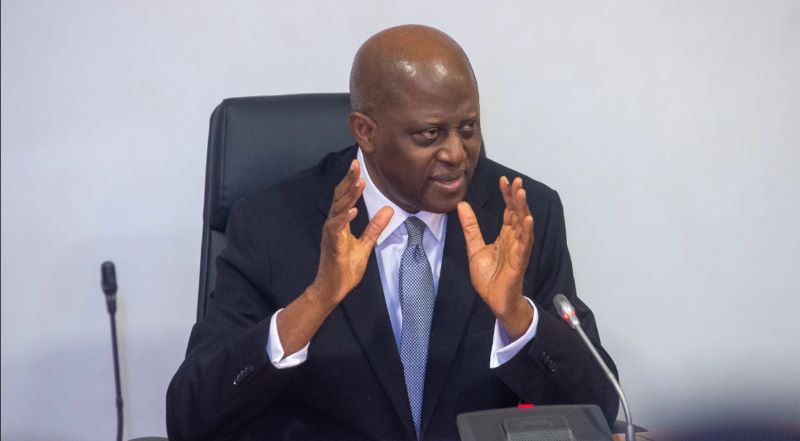
News Point Nigeria reports that the CBN Governor, Olayemi Cardoso, disclosed this on Tuesday during the Monetary Policy Committee briefing in Abuja, saying, “As of February 19, 2026, total verified and approved capital raise stands at N4.05tn.”
This newspaper observed that this figure was nearly double the N2.4tn reportedly raised as of April 2025. Cardoso said N2.90tn of the amount, representing 71.6 per cent, was mobilised domestically, while N1.15tn, equivalent to 28.33 per cent, came from foreign participation.


“In summary, 71.67 per cent is domestic mobilisation and 28.33 per cent is foreign participation. This balance, in my view, represents a mix of domestic and foreign, which signals broad investor engagement and confidence in the sector,” Cardoso said.
He recalled that he had earlier hinted at strong foreign investor appetite for Nigerian banks. “Several MPCs ago, I did mention that when I went abroad, and I met with some of the investor community, they had a very, very strong interest in investing in banks. So, I’m glad that that has come out in a very positive way,” he added.
On compliance status, the governor said, “To date, 20 banks have fully met the new minimum capital requirements, and a further 13 are at the advanced stage of their capital raising processes.”
He expressed optimism that the banks still raising capital would conclude within the stipulated timeframe. Cardoso noted that some institutions under regulatory intervention were operating under specific legal and structural considerations that influenced the sequence of their recapitalisation actions.
“We remain, as a Central Bank of Nigeria, actively engaged with all relevant stakeholders to ensure that they have an orderly and credible outcome while maintaining financial stability,” he said.
He assured depositors that “Depositor funds in these institutions remain secure, and operations continue under close supervisory and regulatory oversight of the central bank.”

In March 2024, the CBN directed banks with international licences to raise their minimum paid-up capital to N500bn, while those with national authorisation are required to meet a N200bn threshold before the March 31, 2026, deadline.
Regional commercial banks and merchant banks are expected to have a minimum capital base of N50bn, while non-interest banks must hold N20bn for national licences and N10bn for regional licences.
The recapitalisation policy is aimed at strengthening the resilience of the banking sector and positioning lenders to better support economic growth and absorb potential shocks.

Beyond recapitalisation, Cardoso highlighted developments in the external sector, stating that Nigeria’s gross external reserves rose to about $50.4bn as of mid-February 2026. “Just a point of correction. These aren’t net reserves, it’s gross reserves. And the gross reserves, as of the middle of February, is about $50.4bn, which is the highest figure that we’ve had in 13 years,” he said.
According to him, the reserve build-up was supported by favourable trade developments, a healthy current account surplus, rising non-oil exports, and increased diaspora remittances.
“There’ll be favourable trade developments. The current account is in a healthy surplus, and of course, the non-oil exports have also gone up. It’s something I talk about all the time, which is the issue of diaspora remittances, which again is going up very strongly indeed,” he said.
He attributed the gains to improved market confidence. “Underpinning all this, quite frankly, is market confidence. Without market confidence, no matter what you do, you’ll find you will significantly sub-optimise,” Cardoso stated.
He added that the CBN had engaged widely with international investors, made commitments, and ensured policy consistency to engender positive market sentiment.
On sustainability, the governor cautioned that risks remained. “There will always be risks to any outlook. We cannot underestimate the potential global shocks that could come our way,” he said, citing uncertainties around oil prices and global tensions.
He also warned that pre-election spending and fiscal deficits could pose risks if not properly managed. “Importantly, pre-election spending, if not properly contained, can destabilise the stability we’ve accomplished,” he said. Nevertheless, Cardoso expressed confidence in the current direction of policy.
On inflation, he dismissed suggestions that the CBN could relax its guard following the Monetary Policy Committee’s decision to cut the Monetary Policy Rate by 50 basis points to 26.5 per cent. “That hasn’t changed, to be frank. Caution is our watchword in the central bank,” he said, stressing that the apex bank remained conservative in order to protect the economy.
He noted that headline inflation, which was about 34 per cent when the current management assumed office, had declined to slightly above 15 per cent. “Inflation at that time, 34 per cent, we’ve brought it down to where it is slightly over 15 per cent. We’re encouraged by that,” Cardoso said, adding that tight monetary policy had been necessary.
He emphasised that sustaining the gains would require collaboration across fiscal and monetary authorities. “It will take a lot of discipline from all the stakeholders. This is not something that will be central bank alone,” he said.
On digital finance, the governor said the CBN recognised the importance of innovation but would ensure that risks to financial stability were properly managed. “We are advancing work already on a very comprehensive framework for digital assets,” he said, noting that the process would involve consultation and scrutiny to ensure transparency and long-term resilience.
He disclosed that there are over 430 licensed fintech operators in Nigeria and described the segment as systemically important, adding that the CBN was strengthening supervisory oversight to address cyber threats and other emerging risks.