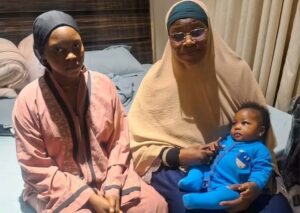
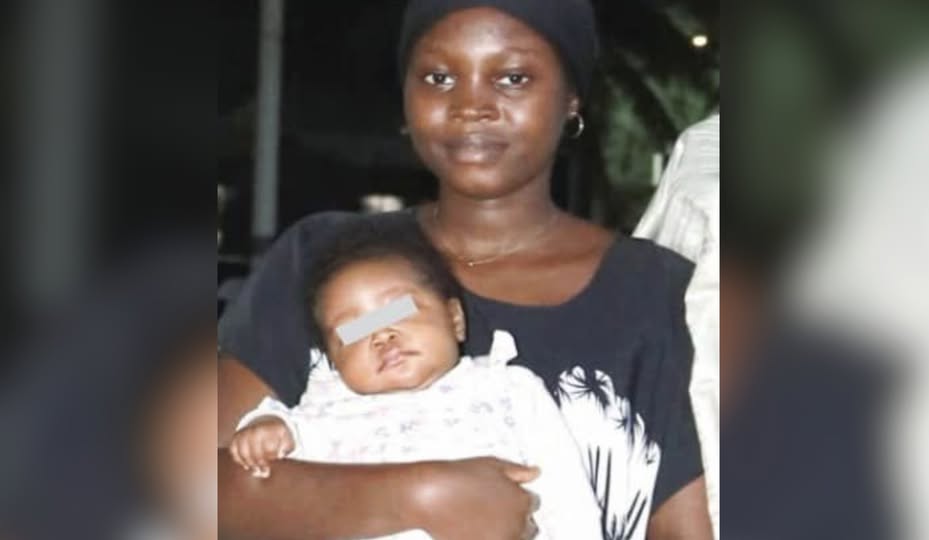
WEDNESDAY night in Abuja delivered a moment that may well redefine one of Nigeria’s most contentious recent cases. Governor Umar Namadi of Jigawa formally took custody of Walida Abdulhadi Ibrahim, marking a decisive turning point in a matter that has steadily grown from a simple missing-person report into a complex legal and human rights battle.

What followed was more than a routine handover. The development injected fresh intensity into a dispute that has tested the resilience of Nigeria’s justice system, provoked constitutional scrutiny, and ignited nationwide debate over child protection safeguards and the powers of security agencies.

Read also: El-Rufai Earmarked $600,000 To Settle EFCC Officials, DSS Witness Tells Court

In this weekend feature, News Point Nigeria traces how the late-night transfer at the Department of State Services headquarters unfolded and examines the legal, constitutional, and welfare questions that continue to cast a long shadow over the case.


Speaking shortly after the formal transfer, Governor Namadi described Walida as “a daughter of Jigawa State” and assured the public that her safety and recovery would be prioritised.
“Our concern is that Walida had been abducted. The matter will be handled by the courts. It is a state matter and will be treated as such,” the governor said.
He clarified that taking her into state custody does not automatically mean she would be transported back to Jigawa immediately.
“Walida will be kept in Abuja for now. She will be provided with adequate security. Her case is a state matter and will be treated as such,” he added.
The governor also confirmed that the baby girl Walida delivered in November 2025 would remain under the custody of the Jigawa State government pending the outcome of legal proceedings.

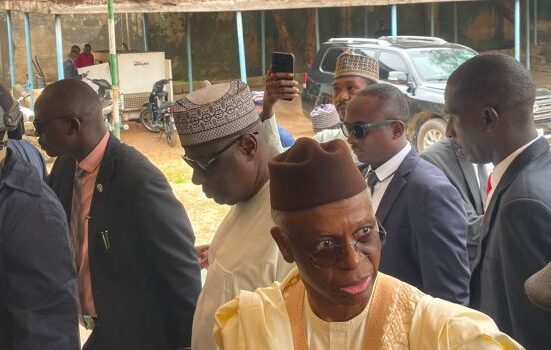
The handover ceremony was attended by senior Jigawa officials, including Speaker of the State House of Assembly Haruna Aliyu; Attorney General and Commissioner of Justice, Barrister Bello Abdulkadir Fanini; Commissioner for Women Affairs, Hajiya Hadiza Abdulwahab; and Commissioner for Environment, Dr. Nura Ibrahim Doka.
The Director-General of the DSS, Adeola Oluwatosin Ajayi, alongside principal officers of the Service, formally handed Walida over. Representatives of the Nigerian Supreme Council of Islamic Affairs (NSCIA), the International Federation of Women Lawyers (FIDA), civil society groups, and members of the media witnessed the transfer.
Notably absent were Walida’s parents, a detail that has only deepened public curiosity about the family’s ongoing role in the unfolding legal process.


Walida went missing in 2023 from Hadejia Local Government Area of Jigawa State. According to her father, Malam Abdulhadi Ibrahim, she was then 16 years old and in Senior Secondary School 2.
He recalled that on the day she disappeared, he had gone to his farm. On returning, no one could account for her whereabouts. The family searched throughout Hadejia without success. Initially, elders discouraged reporting the matter to police, urging prayer instead.
For over two years, the family heard nothing.
Then, in December 2025, a breakthrough came. Malam Ibrahim said he received a phone call after Isha prayers from Abuja. A woman speaking Hausa told him: “Yes, Walida is your daughter, and she is with us in Abuja.”
He was informed that she had given birth to a baby girl and was allegedly to be married to a DSS operative.
The case deepened when allegations emerged that a DSS operative, Ifeanyi Onyewuenyi, had abducted Walida, converted her to Christianity, and kept her in his Abuja residence.
The family, through lawyers under Gamji Lawchain, filed a petition accusing the operative of abduction, unlawful detention, sexual exploitation, and forced religious conversion.
A Magistrate Court in Hadejia ordered the arrest and investigation of the officer and directed that Walida be released to her parents. However, the DSS filed a counter-motion and maintained she was in protective custody.
The Service confirmed that Onyewuenyi had been detained and was under investigation, stressing that such acts, if proven, violated its code of conduct.
In an interview, Walida narrated her experience, stating that she had initially been abducted by a woman named Mariam in 2023 and subjected to abuse before being brought to Abuja.
Read also: DSS Rearraigns Kaigama Over Alleged Boko Haram, ISWAP Links, ₦1.8m Ransom
She claimed she only met Ifeanyi after arriving in the capital and alleged she feared for her safety if returned to her parents.
The DSS, through Deputy Director-General Patrick, said her expressed fear made protective custody necessary.
“Once somebody expresses fear about their safety, it becomes incumbent on the Service to protect that person,” he said.
Her parents, however, strongly rejected claims that she would be harmed, alleging she had been brainwashed.
Central to the controversy is Walida’s age. While her father insists she was 16 at the time of her disappearance, the DSS cited National Population Commission records showing she was born on February 7, 2004, making her 22.
This discrepancy carries enormous legal implications. If she was a minor at the time of disappearance, Nigeria’s child-protection laws would apply in full force.
The DSS also disclosed that the Nigerian Medical Association (NMA) conducted psychological evaluations and found her stable. Critics argue that prolonged captivity can produce trauma responses resembling compliance.
The case has drawn inevitable comparisons to the high-profile 2015–2016 case of Ese Oruru, who was allegedly abducted from Bayelsa and taken to Kano, converted to Islam, and impregnated by Yunusa Dahiru.
Ese’s case sparked the #FreeEseOruru campaign and led to Dahiru’s conviction. Observers now ask whether Walida’s case will receive equal judicial clarity.
DSS Director-General Ajayi himself referenced the Ese Oruru case, warning against inflaming ethnic or religious tensions.
Several groups, including FOMWAN, MURIC, MSO, and Women in Da’awa demanded compliance with court orders and neutral custody.
Barrister Haroun Muhammad of the NSCIA warned the matter could deepen religious divides if mishandled.
Legal experts are divided. Some argue that as an adult, Walida has the right to choose her association and religion. Others insist court orders must be obeyed pending appeal.
A retired security operative, who spoke to News Point Nigeria notes that DG Ajayi has earned a reputation for professionalism. Many now view the Walida case as a defining moment for institutional credibility.
The conflict of interest argument, where the DSS is both custodian and investigator has intensified calls for an independent inquiry and possible involvement of NAPTIP.
Governor Namadi’s intervention signals that Jigawa State is no longer content to remain on the sidelines. By assuming custody, the state has inserted itself directly into the judicial and welfare dimensions of the matter.
He has maintained that all contentious issues age, alleged abduction, custody rights, and related allegations will be resolved in court.
For now, Walida remains in Abuja under Jigawa state government protection. Her baby is also under state custody. The DSS operative remains detained pending investigation.
The Walida Abdulhadi case has become more than a personal tragedy. It is now a national test of due process, institutional accountability, child protection, and the delicate management of religious sensitivities.
If Nigeria is to remain governed by law rather than sentiment, then the standards applied in the Ese Oruru case must equally apply here.
Read also: Appeal Court Dismisses Kwara Government’s Defamation Case Against Ex-Senate President Saraki
Justice, as many stakeholders insist, must not depend on religious identity, political pressure, or public outrage.
What was good for Ese Oruru, they argue, must also be good for Walida Abdulhadi Ibrahim.