

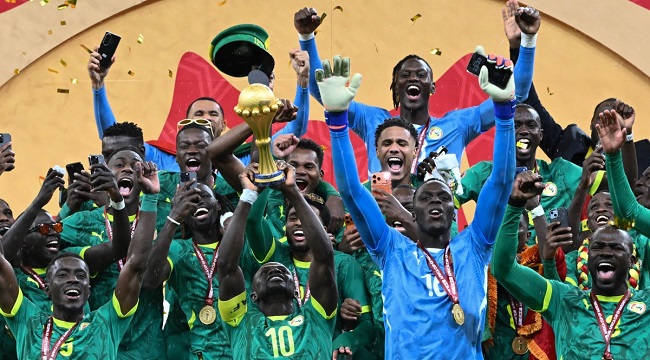
IN what is now one of the most contentious decisions in African football history, the Confederation of African Football (CAF) overturned Senegal’s hard-fought Africa Cup of Nations (AFCON) victory and awarded the title to Morocco, despite Senegal winning the final 1–0 on the pitch.

The ruling has ignited outrage across the continent, raising serious questions about governance, fairness, and the integrity of the game.
The Match That Was Won… Then Taken Away


Senegal defeated Morocco in the AFCON final after extra time, but the match was marred by controversy.
A disputed penalty decision late in regulation time led to a temporary protest, with Senegalese players briefly leaving the pitch. They later returned, completed the match, and secured victory.
However, months later, CAF’s Appeals Board ruled that Senegal had forfeited the match, retroactively awarding Morocco a 3–0 victory.
CAF’s Justification: Articles 82 and 84
CAF based its decision on its competition regulations, particularly:
Article 82 – A team that leaves the field of play without authorization may be deemed to have forfeited the match.
Article 84 – Governs disciplinary consequences, including forfeiture and sanctions for misconduct.

CAF argued that Senegal’s walk-off, even though temporary, constituted a breach serious enough to nullify the result.
Where CAF May Have Breached Its Own Rules
While CAF cited regulations, critics argue the body misapplied and inconsistently enforced them:


1. Referee Authority Was Undermined
According to global football principles under FIFA, the referee has final authority over match events and completion. Senegal returned to the pitch with the referee’s knowledge, and the game was concluded officially.
Reports indicate the match resumed and ended normally.
Therefore, overturning the result later contradicts the long-standing principle that results on the field are final once a match is completed.
2. Timing and Retrospective Punishment
CAF initially upheld the result and issued lesser sanctions, only to reverse itself after Morocco’s appeal.
This creates a dangerous precedent of retroactive alteration of match outcomes, undermining legal certainty in sport.
Even fans and analysts questioned why such a ruling was not made immediately if the violation was clear.
Reddit
3. Interpretation of “Walk-Off” Threshold
Critics, including experienced figures in African football, argue that:
The Senegal players returned within a short timeframe (reportedly under 15 minutes).
No immediate forfeiture decision was made during the match.
This suggests CAF may have selectively interpreted Article 82 rather than applying it consistently.
Allegations of Bias and Governance Concerns
The controversy has been intensified by accusations that CAF favoured Morocco, the host nation, and a future World Cup co-host.
Senegalese authorities described the decision as “illegal and unjust.”
Public discourse has raised concerns about financial influence and political pressure within CAF.
Even CAF’s own president acknowledged broader trust issues within African football governance.
Why This Decision Is Dangerous
1. Erosion of Sporting Integrity
If results can be overturned after full time, it undermines the fundamental principle of football: matches are decided on the pitch.
2. Precedent for Future Manipulation
This ruling opens the door for:
Increased post-match litigation
Strategic protests to influence outcomes
Administrative interference in sporting results
3. Loss of Trust in Institutions
Fans, players, and federations may begin to lose faith in CAF’s neutrality, damaging the credibility of African competitions globally.
Conclusion: A Title Lost Beyond The Pitch
Senegal’s AFCON triumph was not undone by a superior opponent but by a boardroom decision that many believe contradicts both the spirit and letter of football law. While CAF relied on Articles 82 and 84, the timing, interpretation, and selective enforcement of these rules have cast a long shadow over the legitimacy of the ruling.
As Senegal prepares to challenge the decision at the Court of Arbitration for Sport, one thing is clear: this is no longer just about a trophy. It is about the soul of African football.
- Adamu, a public commentator, writes from Kano.