

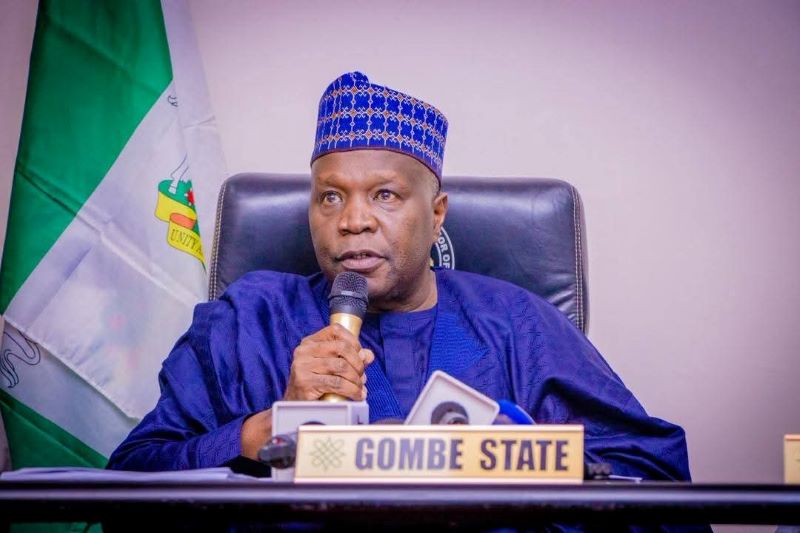
THE resolutions from the recent meeting of the Northern States Governors’ Forum (NSGF) in Abuja, chaired by Gombe State Governor Muhammadu Inuwa Yahaya, CON may well mark a turning point in the North’s response to its long-running security and development crises.
For a region that has spent the better part of the last decade battling insurgency, banditry, kidnapping communal violence and economic disruption, the significance of this renewed collective resolve cannot be overstated.
What stands out in the Forum’s latest deliberations is not just the acknowledgment that the security situation has shown measurable improvement since its last meeting in December 2025, but the insistence that such gains must not breed complacency.


This is perhaps the most important lesson Northern leaders appear to have embraced: insecurity is not defeated by episodic military gains alone, but by sustained political coordination, strategic financing and institutional continuity.
The decision to operationalize the Northern States Security Trust Fund, with each state contributing N1 billion monthly, is arguably one of the boldest regional security financing initiatives in recent Nigerian history.
This Fund could be the game changer as it will provide the North with a dependable mechanism for supporting intelligence gathering, rapid response logistics, surveillance systems and other complementary interventions that federal structures alone have struggled to deliver consistently.
The fact that some states have already begun making contributions sends a strong message that governors appreciate the urgency of moving from declarations to measurable commitments.
Security threats in the North do not respect state boundaries. A weak link in one state often becomes a direct threat to neighbouring territories. This is why the success of the Trust Fund depends on the size of the commitment and the discipline of compliance, as well as the integrity of its governance framework and the transparency of its accountability mechanisms.
Beyond security financing, the Forum’s parallel decision to invest in a permanent secretariat deserves equal attention.

This may seem administrative on the surface, but it is, in reality, a strategic institutional reform. Regional forums in Nigeria often lose momentum because decisions are tied too closely to individuals and political tenures. By building a functional secretariat backed by structured contributions, the NSGF under Inuwa Yahaya is laying the foundation for policy memory, continuity and stronger coordination beyond electoral cycles.
This institutional strengthening is critical because the North’s challenges are too complex for ad hoc politics.
Perhaps nowhere is this clearer than in the Forum’s sustained advocacy for state police, an issue that has moved from abstract constitutional debate to practical necessity.


The North’s security realities have exposed the limitations of an overly centralized policing architecture. Local threats require local intelligence. Communities under siege need security structures that understand their terrain, social dynamics and conflict triggers.
The NSGF’s continued push for state policing therefore reflects a realism grounded in the daily experiences of affected communities.
In this regard, President Bola Ahmed Tinubu deserves credit for engaging the National Assembly on the constitutional reforms required to make this a reality. The President’s willingness to support the legal framework for state policing is quite in line with a growing national consensus that the old model is increasingly inadequate.
Still, the governors are right to look beyond the immediate manifestations of violence. One of the strongest points in the NSGF chairman’s remarks was the recognition that insecurity in the North is inseparable from poverty, illiteracy, unemployment and underdevelopment. This is a truth often repeated but rarely acted upon with the seriousness it deserves.
A region with millions of out-of-school children, high youth unemployment and weak economic opportunities cannot sustainably secure itself through force alone. The social conditions that produce vulnerability to recruitment by criminal and extremist groups must be addressed with the same urgency as military operations.
This is why investments in education, human capital development and youth enterprise are not secondary to security, they are central to it.
The same logic applies to the recurring farmer-herder conflicts that tend to intensify with the onset of the rainy season. By backing the Federal Government’s livestock transformation agenda, Northern governors appear to be embracing a more structural solution to one of the region’s most persistent conflict drivers.
If modern livestock systems, ranching frameworks and improved agricultural value chains are pursued with seriousness, the North could transform a major source of seasonal violence into a platform for rural prosperity.
What the latest NSGF meeting ultimately reveals is a growing recognition among Northern leaders that the region’s problems require a combination of security reform, institutional resilience, economic inclusion and political unity.
For too long, responses to Northern Nigeria’s crises have been fragmented, reactive and overly dependent on federal rescue. But the new posture, championed by Governor Inuwa Yahaya suggests a shift toward shared ownership and regional responsibility.
- Misilli is Director-General ( Press Affairs) Government House, Gombe.