

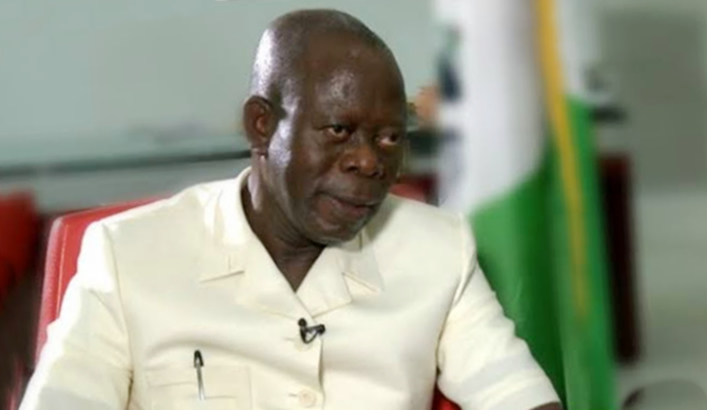
THE senator representing Edo North, Adams Oshiomhole, on Tuesday called for the revocation of licences of South African companies operating in Nigeria, including MTN and MultiChoice, owners of DSTV, following renewed xenophobic attacks against Nigerians in South Africa.
News Point Nigeria reports that the call came as the National Assembly condemned the latest wave of attacks, urging the Federal Government to take immediate diplomatic and protective measures to safeguard Nigerian citizens living abroad.
Speaking during plenary, Oshiomhole said Nigeria must respond firmly to the attacks, invoking the principle of reciprocity in international relations.


“I don’t want this Senate to be shedding tears, to sympathise with those who have died. We didn’t come here to share tears.
“If you hit me, I’ll hit you. I think it is appropriate in diplomacy. It’s an economic struggle,” he said.
The former Edo State governor proposed that Nigeria should nationalise MTN and withdraw its operating licence, arguing that the telecommunications giant repatriates substantial revenue from Nigeria while Nigerians continue to face hostility in South Africa.
“This Senate should adopt a position that MTN, a South African company that is cutting away millions of dollars from Nigeria every day, should have Nigeria nationalise it and withdraw its licence,” he stated.
According to Oshiomhole, such measures would not only serve as a deterrent but also create opportunities for indigenous companies amid what he described as economic and social targeting of Nigerians abroad.
He extended the demand to MultiChoice, urging the Federal Government to revoke DSTV’s operating licence over what he described as exploitative business practices.

“I call on the Federal Government to revoke DSTV, which is also a South African company that is cutting away millions of dollars,” he added.
Oshiomhole linked the recurring xenophobic tensions to internal political developments in South Africa, arguing that anti-immigrant rhetoric had increasingly become part of the country’s politics and was influencing public attitudes toward foreign nationals, including Nigerians.
“When we hit back, the president of South Africa will go on his knees to recognise that Nigerians cannot be intimidated,” he said.


The senator made the remarks while contributing to a motion sponsored by Senator Osita Izunaso and presented on the floor by Senator Aniekan Bassey under Senate rules on matters of urgent public importance.
The motion, titled, “A Call for Urgent National Diplomatic and Humanitarian Action to Defend the Dignity, Safety and Honour of Nigerian Citizens,” highlighted growing concerns over the safety and welfare of Nigerians residing in South Africa.
Also contributing to the debate, Senator Victor Umeh described the situation as deeply troubling, warning that many Nigerians in South Africa were now living in fear.
“It is worrisome. They are hiding for their lives. They can’t move freely. This is a situation where people are paying good with evil,” he said, referencing Nigeria’s historic role in supporting the anti-apartheid struggle.
Umeh called on the African Union (AU) to intervene and impose sanctions on South Africa, insisting that Nigeria could no longer tolerate attacks on its citizens.
“The AU, of which South Africa is a member, should rise now and impose necessary sanctions,” he said, adding that “we cannot allow this to continue.”
Oshiomhole, however, reiterated his call for economic retaliation, insisting that Nigeria must move beyond mere rhetoric.
“I don’t want this Senate to be shedding tears to sympathise with those who have died. We didn’t come here to shed tears. I am not going to shed tears. If you hit me, I hit you. I think it is appropriate in diplomacy. It is an economic struggle,” he repeated.
He further argued that Nigerians should take advantage of opportunities within the local economy currently dominated by foreign firms.
Senator Abdul Ningi also warned South Africa over the continued attacks on Nigerians, threatening that Nigeria could respond decisively if the attacks persist.
“If a crime has been committed under the South African law, they have the right to bring any such person to justice, but to kill our people as if we are helpless, we will not allow that.
“If these things continue, we have alternatives, we have options, and therefore, these words should be sent across South Africa. We know where South Africans are, not only in Nigeria but all over Africa, and we can take this fight to their territory,” he said.
Speaking on the matter, Senate President Godswill Akpabio condemned the attacks and disclosed that the National Assembly would send a joint delegation to engage with the South African parliament.
“This is just not acceptable, this is barbaric, this is cruel, this is unheard of, this is strange behaviour, and we’re not seeing action from the government of South Africa. These are aspects that annoy me,” Akpabio said.
The latest development underscores mounting pressure on the Federal Government to adopt a firmer stance, as recurring xenophobic violence in South Africa continues to strain diplomatic relations and trigger calls for stronger protections for Nigerians abroad, alongside economic countermeasures against South African interests in Nigeria.