

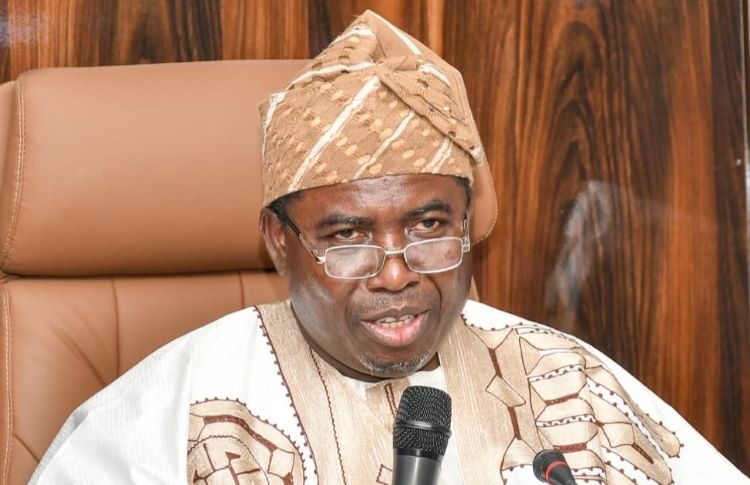
A FRESH wave of religious and political tension has erupted following a declaration by the Supreme Council for Shari’ah in Nigeria (SCSN) that it will not recognise any election conducted by the Independent National Electoral Commission (INEC) under the leadership of its chairman, Prof. Joash Amupitan, a move that has drawn sharp reactions from Christian groups and divided public opinion.
News Point Nigeria reports that the Shari’ah Council made the declaration on Wednesday during its annual pre-Ramadan lecture and general assembly held in Abuja, where it openly called for the immediate removal of Prof. Amupitan, citing what it described as a lack of confidence in his neutrality and integrity.
Speaking at the event, the President of the SCSN, Sheikh Bashir Aliyu Umar, said the Muslim Ummah could not trust the credibility of elections conducted under Amupitan’s leadership, following his past involvement in a controversial legal brief that described Christians in Nigeria as victims of genocide.


According to Umar, the brief, authored by Amupitan—was divisive and damaging to national cohesion, especially coming from someone entrusted with safeguarding Nigeria’s democratic process.
“We demand the immediate removal and prosecution of the INEC chairman and declare that no election conducted under a cloud of compromised integrity can be recognised as credible,” Umar said.
The Shari’ah Council leader argued that Amupitan’s authorship of the legal brief showed clear bias and raised serious questions about his ability to be fair to all religious groups in the country.
Amupitan was listed as a contributor to the 2020 publication Nigeria’s Silent Slaughter: Genocide in Nigeria and the Implications for the International Community, released by the International Committee on Nigeria (ICON) and the International Organisation on Peace-building & Social Justice (PSJ).
He authored an 80-page chapter titled Legal Brief: Genocide in Nigeria, which argued that killings and displacement of Christians by Boko Haram and armed groups met the threshold of genocide under international law and accused the Nigerian government of failing to adequately protect affected communities.
The federal government has repeatedly dismissed claims of genocide in Nigeria, describing them as misleading and capable of inciting division.

Umar insisted that such narratives fuel instability and rejected any suggestion of foreign intervention, including the establishment of foreign military bases in Nigeria.
He further warned against tampering with constitutional provisions guaranteeing Muslims the right to Shari’ah, stressing that Shari’ah applies only to Muslims and does not infringe on Christian rights.
The SCSN disclosed that legal efforts are already underway to challenge Amupitan’s appointment.


“We are an advocacy group and will support any legal effort questioning the veracity of his appointment,” Umar said.
Beyond the INEC controversy, the council also called on the National Assembly to conduct forensic reviews of laws passed since the inauguration of the 10th Assembly and criticised alleged alterations of bills by the executive without legislative oversight.
Lawmakers present at the event, including House of Representatives member Sani Jaji, said the conference was aimed at guiding Islamic scholars ahead of Ramadan amid Nigeria’s growing national challenges.
Efforts to obtain an official response from INEC were unsuccessful, as the chairman’s media aide and the Director of Voter Education could not be reached.
However, an INEC official, speaking anonymously, dismissed calls for Amupitan’s removal as outside the commission’s mandate, stressing that the matter lies solely with the appointing authority.
“He is a Nigerian, he is qualified, and he went through the constitutional screening process. INEC operates as a collegiate body with decisions taken collectively, not by the chairman alone,” the official said.
The source added that the commission remains focused on conducting free, fair, and credible elections and would not be distracted by issues unrelated to its constitutional responsibilities.
Meanwhile, the Christian Association of Nigeria (CAN) in the 19 Northern states and the Federal Capital Territory strongly rejected the Shari’ah Council’s call for Amupitan’s removal, describing it as an attempt to politicise religion and undermine a critical democratic institution.
In a joint statement signed by Northern CAN Chairman, Rev. Joseph Hayab, and Secretary-General, Bishop Mohammed Naga, the association warned that using religion to question the integrity of public officials was dangerous and capable of inflaming sectarian tensions.
“Expressing concern about challenges faced by one’s faith does not amount to bias or disqualification from public service,” the statement said.
Northern CAN questioned the motive behind the campaign against Amupitan and urged the Shari’ah Council to disclose any individuals or interests sponsoring the call.
The group also noted that several Muslims had previously occupied sensitive national offices while being openly associated with religious causes, without facing similar demands for removal.
It recalled that the two immediate past INEC chairmen were Muslims from Northern Nigeria and cautioned against narratives suggesting that leadership of the electoral body should be determined by religious affiliation.
Similarly, the National Christian Alliance for Good Governance in Nigeria (NCAGG) described the call for Amupitan’s removal as undemocratic and ill-advised, especially ahead of the 2027 general elections.
In a statement, NCAGG National President, Dean Rev. Ozumba Nicodemus, said Amupitan’s experience as a constitutional lawyer would strengthen Nigeria’s electoral process rather than weaken it.
“The integrity and independence of INEC must be upheld. It must be allowed to function without undue influence or pressure from any group,” Ozumba said.
Northern CAN warned that framing Nigeria’s democratic future along religious lines could undermine national unity and discourage participation in the political process.
The association urged all groups to prioritise competence, equity, and national cohesion over sectarian considerations, while advising Prof. Amupitan to remain focused on his constitutional mandate.