
NOT long ago, a well-worn phrase began to echo again in Nigeria’s public conversation: “We need more boots on the ground.” It is a phrase that sounds decisive, almost comforting. It suggests movement, resolve, and visible action. In a country where too many communities live under the shadow of fear, the image of more uniforms in the field can feel like an answer in itself.
Over the past two weeks, the President has given concrete form to that sentiment: declaring a state of emergency on insecurity and announcing plans to recruit 20,000 additional police officers and 20,000–25,000 new army personnel. These steps matter. They acknowledge the obvious—that our security architecture is overstretched, and that Nigerians are tired of living with kidnapping, banditry, terrorism, and communal clashes as part of daily life.

Read also: Nigerians’ Mental Health Is Under Siege – By Boma West

Yet beneath the relief lies a more uncomfortable truth: Nigeria has deployed soldiers to villages, patrols to highways, and checkpoints to city streets, yet insecurity persists. To break this cycle, we must look beyond boots on the ground and prioritise holistic, institution-building reforms that address the root causes of instability.


In many parts of the country, particularly rural Nigeria, the state is a distant abstraction. On paper, we operate a three-tier system of government with local governments closest to the people. In practice, too many local councils are hollowed out—politically captured, fiscally weakened, or simply absent. The governance structure exists in law but not in lived reality. For countless Nigerians, the state is not experienced as a functioning clinic, a responsive police station, or a magistrate’s court. It is experienced as a convoy rushing past, a politician’s billboard, a seasonal promise.
Alternative authorities have filled that governance vacuum. Bandit leaders, warlords, criminal gangs, and extremist preachers step into spaces the state has abandoned. They adjudicate disputes, extract taxes, dispense rough “justice,” and provide a form of order—violent and predatory, but order nonetheless. When citizens encounter these non-state actors more reliably than they encounter effective government, insecurity stops being an aberration and becomes the operating system.
The economic foundations of many communities have also been quietly shattered. Farming, once the anchor of local life, has become both dangerous and unviable in too many areas. Farmers are attacked on their fields, displaced from their homes, or priced out of markets they cannot safely reach. In the ruins of this old economy, a darker one has emerged. Artisanal mining, in name, often masks sophisticated illegal operations that devastate the environment while financing arms purchases. In some zones, the line between criminal enterprise and political patronage is blurred. People see illegal mining sites operating with impunity and conclude, not without reason, that powerful actors are shielding the networks that profit from chaos.
Insecurity in such a context is not just the absence of order; it is a business model. Guns are investments. Violence is leverage. Abductions are revenue streams. The logic of this underground economy is simple: the weaker the state, the stronger its shadow rivals.
Overlaid on these structural issues is an erosion of social cohesion that has turned identity into a weapon. In Southern Kaduna, Benue, Plateau and other flashpoints, long-standing grievances over land, political representation, and historical injustice have hardened into interfaith and intercommunal animosities. Communities learn to fear one another, not as neighbours with shared interests, but as existential threats. Political entrepreneurs amplify these anxieties, framing disputes along ethnic or religious lines to build personal relevance. Once that logic takes root, a single incident can ignite years of accumulated bitterness.

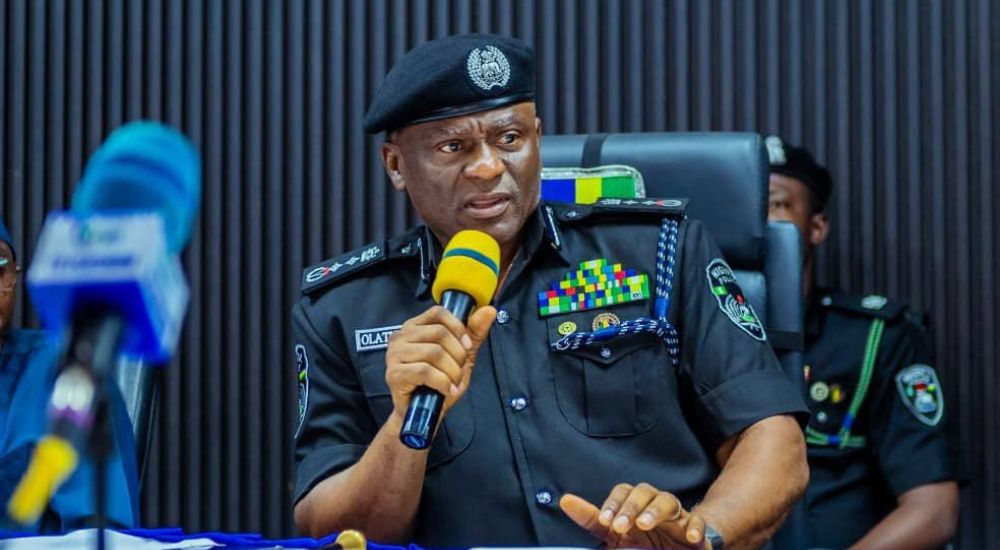
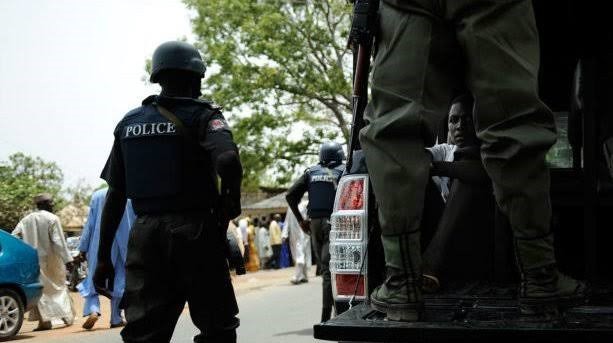
Law enforcement, which should stand between grievance and violence, often fails this test. Community-rooted, accountable policing remains more rhetoric than reality. Too many citizens encounter the police not as protectors of rights, but as “checkpoint police”—officers associated with extortion, harassment, and arbitrary stops. This is a tragic fall from a time when the Nigerian police earned global respect for their professionalism in peacekeeping operations across the world.
The drug crisis has compounded these problems. The Chairman of the NDLEA did not indulge in exaggeration when he described drugs as the “number one problem fuelling conflict in Nigeria.” Narcotics numb conscience and sharpen aggression; they also bankroll crime. Young people with no jobs, no prospects, and easy access to drugs are vulnerable to recruitment by violent networks. The same porous borders that allow light weapons to flow into the country facilitate the movement of hard drugs, counterfeit medicines, and trafficked persons.
All of this unfolds in a broader climate of impunity. Massive corruption and a chronic lack of accountability by political actors have hollowed out public trust. Restoring trust in institutions is crucial, as communities need to believe in the state’s role as a protector, not an instrument of elite resource capture. Without trust, efforts to defend the nation will remain hollow.


Read also: Ex-Imo Governor Rochas Okorocha Arrested At Abuja Hotel After Missing Police Invitation
The absence of basic social services education, healthcare, clean water, functional roads deepens this disillusionment. A child who grows up in a village without a school, a clinic, or any visible symbol of state care receives a powerful message about their value. That child’s first real encounter with government may come through an armed patrol or a tax demand. The social contract is broken long before the first gunshot is fired.
It is against this backdrop that the President’s recent actions must be judged. Declaring a state of emergency on insecurity and planning the recruitment of tens of thousands of police officers and soldiers is, at one level, a necessary response. For too long, Nigeria has used its military as an all-purpose tool, dragging soldiers into roles that properly belong to the police from routine law-and-order management to election security. Strengthening the police, in principle, could allow the army to refocus on its core defence responsibilities and reduce the militarisation of civilian spaces.
But the question is not simply whether we need more personnel. It is the kind of institution we are asking these recruits to join. What values will shape them? What incentives will govern them? What systems will guide and restrain their power? Political will and courage are essential to transform numbers into real security, rather than just multiplying dysfunction.
Recruitment must therefore be about character and competence, not just filling quotas. Training must move beyond basic drills to include intelligence gathering, community engagement, human rights, conflict de-escalation, and the use of technology. Equipment must be modern, reliable, and suited to the terrain and threats. Welfare must be decent enough to insulate officers from the daily temptations of corruption. A police officer who cannot feed their family or a soldier who feels abandoned on the frontlines is not just demoralised; they are a risk to themselves, to their colleagues, and to the civilians they are meant to protect.
For the military, the challenge goes beyond adding “boots on the ground.” Twenty-first-century security threats are fluid, networked, and adaptive. They cannot be overwhelmed by sheer workforce. They require strategic planning, real-time intelligence, inter-agency coordination, and the innovative use of technology—such as drones, surveillance systems, secure communications, and data analysis. They also require something less tangible but equally critical: trust.
Without trust, communities will not share information. Without information, even the best-equipped force is operating in the dark. Building that trust means ensuring that security operations are disciplined, proportionate, and accountable. It means punishing abuses rather than explaining them away. It means recognising that every unjust killing, every arbitrary arrest, every humiliating encounter at a checkpoint is not a minor incident; it is a strategic setback that pushes communities further away from the state.
To his credit, the President has signalled that insecurity is now at the centre of the national agenda. That political signal matters. But symbolism must be matched by substance. The real work lies in addressing the drivers of insecurity: governance gaps, warped political economies, social fragmentation, and the neglect of human development.
The tragedy is not that we lack ideas. We do not. I am aware, for example, that the UNDP, working with Nigerian consultants, developed a comprehensive framework for peace and development in the Northwest at the request of regional governors. That framework recognises what communities have long understood: that you cannot bomb your way to lasting peace in areas where people are poor, excluded, and angry. Security operations must be integrated with programmes that expand access to justice, rebuild livelihoods, invest in education and healthcare, and deliberately mend broken social ties.
But frameworks, no matter how well-crafted, are powerless without courage and political will. Implementation requires leaders prepared to confront entrenched interests that profit from illegal mining, smuggling, diversion of security funds, and the manipulation of communal tensions. It demands transparency in security spending, robust oversight of law enforcement, and an insistence that those who collude with criminal enterprises whether in uniform or in office—face real consequences.
Ultimately, the question before Nigeria is stark: do we want to manage insecurity or to transform the conditions that produce it? Managing insecurity can be done with announcements, deployments, and periodic shows of force. Transformation is slower, less dramatic, and far more demanding. It involves strengthening local governments, so they become genuine centres of service, not mere conduits for patronage.
Read also: ‘I Was Never Arrested, No Bail, No Statement Taken’, Okorocha Denies Police Detention
It consists of reclaiming the rural economy from violence and criminal enterprises so that farming and legitimate trade once again become viable livelihoods. It involves treating drugs not only as a law-enforcement issue but as a public-health and social crisis requiring prevention, rehabilitation, and youth engagement. It consists of repairing the frayed fabric of intercommunal relations through dialogue, justice, and fair access to resources.
More boots on the ground may quieten violence in the short term. But the peace Nigerians long for will only come when the ground itself changes—when the village that once knew only fear begins to see teachers, nurses, judges, and honest local officials as often as it considers armed patrols. When the young man who might have joined a gang finds a better future in a school, a farm, a workshop, or a legitimate mine. When citizens believe, not as an act of faith but from lived experience, that their lives matter to the state.
- Dr Dakuku Peterside is the author of bestsellers, Leading in a Storm and Beneath the Surface. His syndicated column appears on News Point Nigeria newspaper on Monday.