

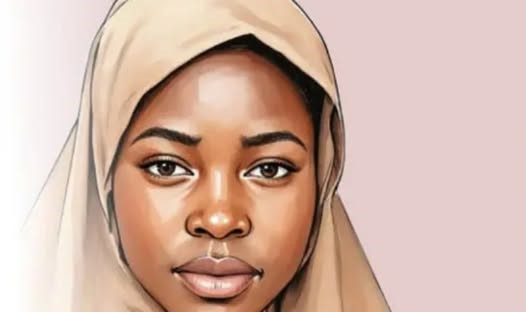
GOVERNOR Umar Namadi of Jigawa State on Wednesday night formally took custody of Walida Abdulhadi Ibrahim, the young woman from Hadejia Local Government Area whose disappearance in 2023 sparked widespread controversy and legal battles.

News Point Nigeria reports that Walida, who had been in the custody of the Department of State Services (DSS), was handed over to the governor at the Service’s headquarters in Abuja at about 10:40 p.m. after weeks of public scrutiny and mounting pressure from civil society groups.
Speaking shortly after the handover, Governor Namadi described Walida as “a daughter of Jigawa State” and assured that the state government would guarantee her safety and recovery from whatever trauma she may have endured.


“Our concern is that Walida had been abducted. The matter will be handled by the courts. It is a state matter and will be treated as such,” the governor said.
He clarified that taking Walida into state custody does not automatically mean she would be transported back to Jigawa immediately.
“Walida will be kept in Abuja for now. She will be provided with adequate security. Her case is a state matter and will be treated as such,” he added.
Namadi further stated that the baby girl Walida delivered in November 2025 would also be under the custody of the Jigawa State government pending the outcome of legal proceedings.
The governor was accompanied to the DSS headquarters by senior Jigawa State officials, including Speaker of the State House of Assembly Haruna Aliyu; Attorney General and Commissioner of Justice, Barrister Bello Abdulkadir Fanini; Commissioner for Women Affairs, Hajiya Hadiza Abdulwahab; and Commissioner for Environment, Dr. Nura Ibrahim Doka.
The Director-General of the DSS, Adeola Oluwatosin Ajayi, alongside principal officers of the Service, formally handed Walida over.

Representatives of the Nigerian Supreme Council of Islamic Affairs (NSCIA), the International Federation of Women Lawyers (FIDA), other civil society organisations, and members of the media witnessed the transfer.
However, Walida’s parents were notably absent during the handover ceremony.
Walida went missing in 2023 from Hadejia LGA. The controversy surrounding her case deepened in December 2025 when her father reportedly received a phone call from a DSS operative, Ifeanyi Onyewuenyi, informing him that Walida was with him in Abuja.


Prior to that, she had allegedly been abducted by a woman identified as Mariam, who was said to have subjected her to sexual exploitation before fleeing.
Walida later surfaced in Abuja, where she moved in with the DSS operative. In November 2025, she gave birth to a baby girl.
After efforts by her relatives to recover her proved unsuccessful, a petition was filed at the DSS headquarters. The family subsequently approached a court in Jigawa State, which ordered that she be released to her parents.
The DSS, however, filed a counter-motion, maintaining that investigations were ongoing and that her continued custody was in line with the law.
The case gained renewed national attention following an exclusive interview published by Weekend Trust on February 21, 2026, in which Walida narrated her experiences.
In the wake of the publication, several religious and civil groups expressed concern over Walida’s continued stay in DSS custody.
On Monday, a coalition including the Abuja chapter of the Muslim Rights Concern (MURIC), the Federation of Muslim Women’s Associations in Nigeria (FOMWAN), the Muslim Students’ Organisation of Nigeria (MSO), and Women in Da’awa addressed a press conference demanding her transfer to neutral custody.
Speaking on behalf of the coalition, Ustaz Yunus Salahudeen said the matter transcended religious sentiments and touched on constitutional order, justice, and human rights.
He revealed that Walida’s disappearance caused her family immense distress, noting that her father, overwhelmed by uncertainty, had performed funeral rites believing she was dead.
The controversy has revolved around allegations of abduction, questions about her age, religious conversion claims, and custodial authority.
In his remarks, DSS Director-General Ajayi defended the agency’s handling of the case.
“It is unfortunate that people don’t learn from history in Nigeria. Our major concern is about the safety and the future of Walida,” he said.
“She is a young woman who has the right to live, and we have the responsibility to ensure she is safe while investigations are ongoing.”
Ajayi disclosed that the investigation was inter-agency, involving the police, Civil Defence, FIDA, and the Federal Ministry of Women Affairs. He added that the Nigerian Medical Association (NMA) had also been invited to assess Walida’s mental health status.
He confirmed that the DSS operative, Ifeanyi Onyewuenyi, remains in custody and would face disciplinary and legal consequences if found culpable.
“He will face the music when found wanting. We have rules guiding our operations,” Ajayi said.
The DSS chief recalled his experience during the alleged abduction case of Ese Oruru in Bayelsa State, warning against inflaming ethnic or religious tensions.
Barrister Haroun Muhammad, representing the NSCIA, said the council intervened to prevent the matter from escalating into a wider religious crisis.
“The matter is capable of throwing the country into chaos. It can deepen the unfortunate existing division between Muslims and Christians,” he warned.
He emphasized that how the case is handled would send a significant signal to society about justice, fairness, and national unity.
Governor Namadi maintained that contentious issues including her age, alleged abduction, custody, and related allegations would ultimately be resolved by the courts.
With Walida now under the custody of the Jigawa State government, attention shifts to the judicial process that will determine the legal and factual questions surrounding one of the most sensitive and widely debated cases in recent times.