

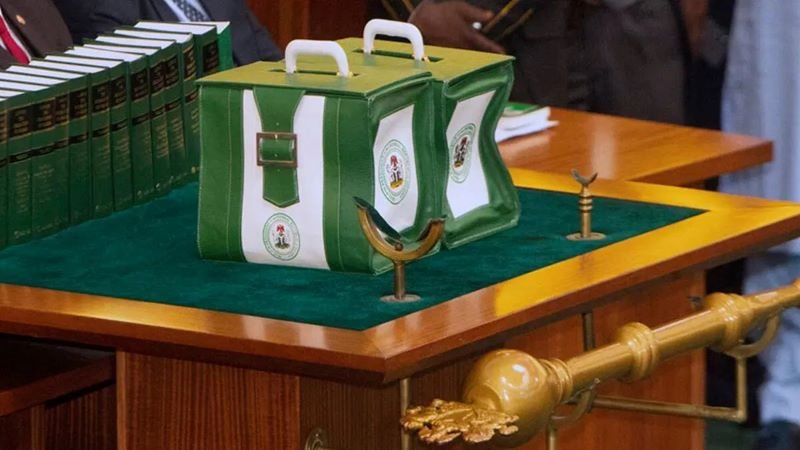
NIGERIA is set for a challenging fiscal year in 2026 as the Federal Government on Wednesday unveiled a proposed N54.43tn spending plan under the newly approved Medium-Term Expenditure Framework and Fiscal Strategy Paper (MTEF/FSP), with debt servicing alone projected to gulp N15.91tn representing 29.2 per cent of the entire budget.

The deficit, estimated at N20.10tn, is now N2.78tn larger than the country’s entire 2022 national budget, marking a historic surge that analysts say could push Africa’s largest economy into deeper fiscal distress if not managed prudently.
This year’s proposed deficit is also more than double that of 2025, rising by 118 per cent, and is equivalent to borrowing over one-third of all expected government spending in 2026.


Briefing State House correspondents after the Federal Executive Council meeting, Minister of Budget and Economic Planning, Atiku Bagudu, said the 2026–2028 MTEF/FSP would be sent to the National Assembly on Monday.
The government expects N50.74tn in federation revenue next year, of which the Federal Government will receive N22.60tn, states N16.30tn and local governments N11.85tn. Total federal revenue from all sources is projected at N34.33tn, including N4.98tn from government-owned enterprises.
The figures mark a 16 per cent decline from the 2025 revenue estimate, despite a projected economic growth rate of 4.68 per cent.
Bagudu said the framework was built on a cautious oil price benchmark of $64.85 per barrel and an exchange rate of N1,512/$, adding that for the first time, two crude production numbers were adopted, an industry target of 2.06 million barrels per day and a budget benchmark of 1.8 million barrels per day.
The minister said the dual benchmark provides a “12.6 per cent safety buffer” in case of output disruptions.
He also warned that 2026 being a pre-election year could heighten political spending and put renewed pressure on the exchange rate.

Statutory transfers are estimated at N3tn, while non-debt recurrent spending stands at N15.27tn. But it is the N15.91tn debt service projection, a 299 per cent increase from the N3.98tn spent in 2022, that has triggered widespread concern.
Recurrent expenditure has more than doubled in four years, rising from N7.11tn in 2022 to N15.27tn for 2026, while capital expenditure growth has remained comparatively sluggish.
Economists and fiscal analysts who spoke to this newspaper warned that Nigeria may be drifting into a debt trap, with a deficit that violates fiscal rules and threatens macroeconomic stability.


Dr. Muda Yusuf, CEO of the Centre for the Promotion of Private Enterprise, described the N20.10tn deficit as “deeply concerning,” warning that excessive borrowing could “choke the fiscal space” and reverse recent gains in price and currency stability.
He said, “We need to worry about debt sustainability. High deficits and rising debt can quickly lead to a vicious circle once we lose the fragile recovery we’ve achieved, inflation and exchange rate pressures will escalate again.”
Yusuf urged the government to leverage improved revenue performance to shrink the deficit instead of expanding it.
Olabisi Onabanjo University professor of economics, Sheriffdeen Tella, criticised the timing and foundation of the 2026 budget, arguing that the 2025 budget has barely begun implementation.
“There is no basis for these projections,” he said. “They just started implementing the 2025 budget in December, so how can 2026 be premised on nonexistent performance indicators? It means figures are being cooked up.”
Tella warned that Nigeria is at risk of running “multiple budgets in the same year,” which he called a sign of deep fiscal disorder.
National President of the Nigerian Economic Society, Professor Adeola Adenikinju, said Nigeria is again drifting from the January–December budget cycle, creating unpredictability for investors and policymakers.
He reminded the government that the Fiscal Responsibility Act limits budget deficits to 3 per cent of GDP, adding that a deficit of this scale violates the law.
Adenikinju warned that borrowing heavily from domestic markets would crowd out businesses and increase interest rates, worsening investment declines and economic hardship.
He also expressed concern about the effectiveness of government spending, noting that capital releases often come too late in the year to have any meaningful impact.
Bagudu said President Tinubu had secured the National Economic Council’s support for closer alignment between monetary and fiscal policies, investments in security infrastructure, and stricter monitoring of revenue leakages in oil, gas, and solid minerals.
He also highlighted plans for renewed infrastructure spending under the “Renewed Hope” programme, alongside measures to boost productivity and domestic manufacturing.
The MTEF/FSP, which sets the parameters for the 2026 Appropriation Bill reflects, according to Bagudu, the “collective aspiration” of ministries, agencies, experts, and stakeholders consulted during the drafting process.
But with debt service accelerating faster than revenues and deficits widening at a record pace, concerns remain high that the 2026 fiscal year may test Nigeria’s economic resilience more severely than any year since 2016.