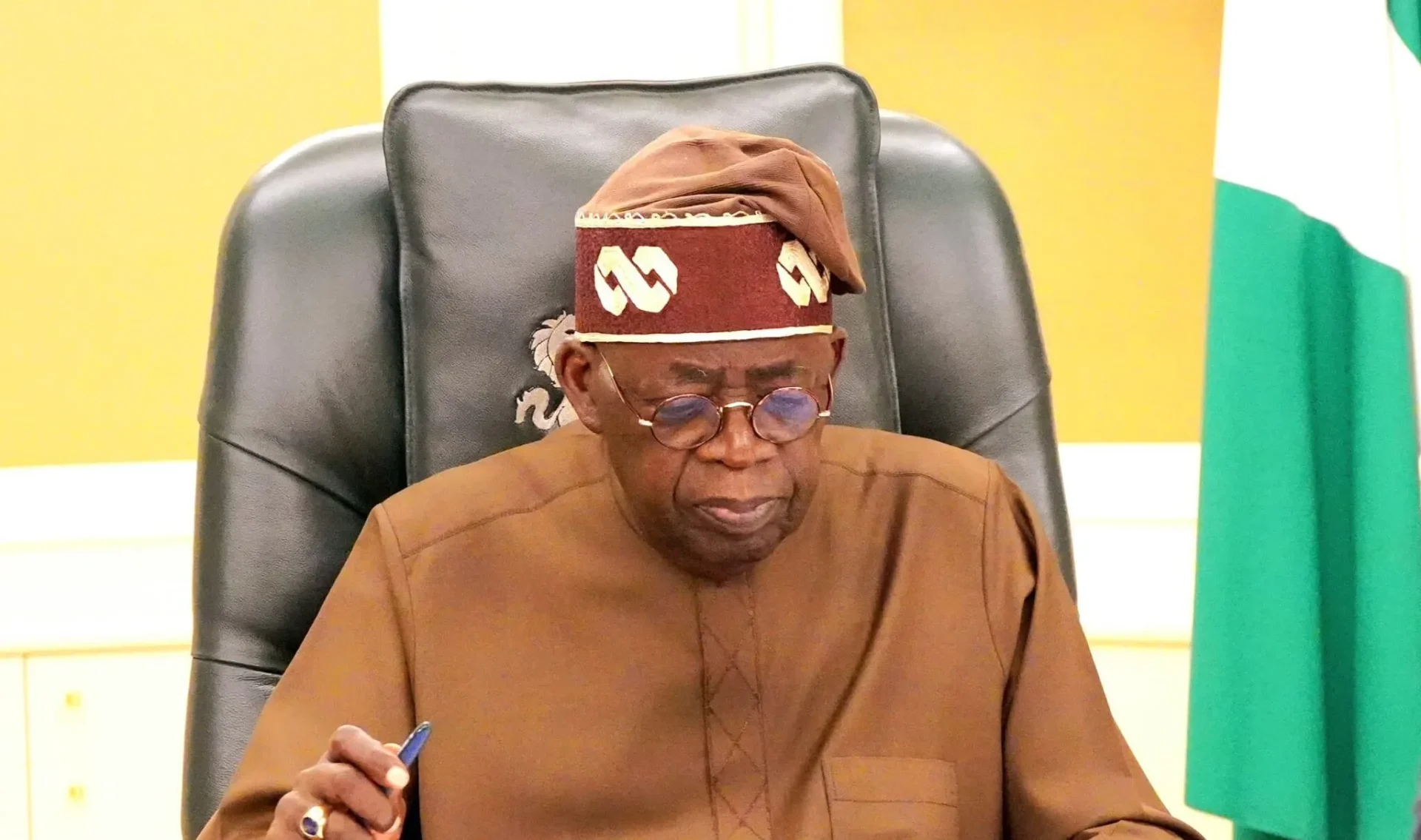

PRESIDENT Bola Tinubu has filed a legal challenge in a United States court seeking to prevent the U.S. Department of Justice, Federal Bureau of Investigation (FBI) and Drug Enforcement Administration (DEA) from releasing records linked to allegations of drug trafficking involving him.

News Point Nigeria reports that the records are being sought by American transparency activist Aaron Greenspan, who filed a Freedom of Information Act (FOIA) lawsuit against several U.S. government agencies, seeking documents relating to investigations involving Tinubu.

Read also: Double Jeopardy: Ex-Power Minister Mamman Asks Court to Quash EFCC’s Nine-Count Charge
Greenspan’s requests include the FBI’s entire file on Tinubu, as well as FBI Form 302 interview records concerning the period between 1992 and 1993.
The case also involves an alleged record connected to a 1993 civil forfeiture proceeding in the United States involving about $460,000 linked to Tinubu.
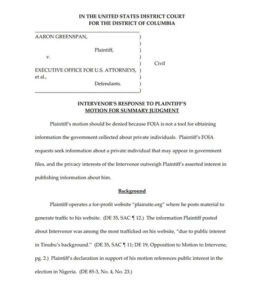
According to 16-page court documents shared with Channels Television by Tinubu’s lawyer and legal team — Christopher W. Carmichael, Victor P. Henderson and Oluwole O. Afolabi on Saturday, the President argued that releasing the records could infringe on his privacy.
The legal team maintained that the information submitted in the forfeiture proceeding did not reveal details of a possible criminal investigation, or its outcome, involving Tinubu.

“Submitted in that proceeding, did not reveal the details of a possible criminal investigation (or its results) involving Intervenor. Other than by speculation or labels, Plaintiff does not point to an existing public record that contains details of a governmental criminal investigation or findings about Intervenor,” the lawyers argued.
They said Greenspan’s application was intended to obtain information that was not already publicly available.

“The purpose of Plaintiff’s motion is to obtain such information because it is not public. Moreover, Plaintiff’s argument that the limited disclosures in connection with the forfeiture negates all privacy interests is not consistent with precedent,” the legal team stated.
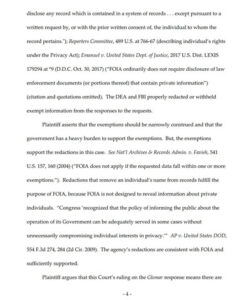
The lawyers cited a decision of the U.S. Supreme Court, arguing that an individual retains a privacy interest in an entire file or document even where “scattered” disclosures from the same file have previously been made public.
“The Supreme Court explained that an individual retains a privacy interest in an entire file or document being produced, even where there are ‘scattered’ disclosures of information from that same file,” the document stated, citing Reporters Committee, 489 U.S. at 764-67.


The lawyers further argued that the Supreme Court had recognised privacy interests in withholding certain information even where such information might have been publicly available at an earlier time.
“While some information may appear in portions of public records, an individual still retains a privacy interest in the details that remain undisclosed,” they argued.
They also cited Judicial Watch, Inc. v. United States Department of Justice, 898 F.Supp.2d 93, 104-05 (D.D.C. 2012), arguing that a person could retain a privacy interest even if they had previously been publicly associated with criminal activity.
According to Tinubu’s legal team, other judicial decisions had similarly distinguished between the fact that an individual was investigated and the contents of the investigative files.
“Other decisions have likewise described the fact someone was under investigation as ‘distinct’ from the contents of the investigative files,” the lawyers said.
Read also: Immigration Crackdown: US Releases Names, Photos Of 24 Nigerians Arrested Over Alleged Crimes
They cited Electronic Privacy Information Center v. United States Department of Justice, 18 F.4d 712, 719 (D.C. Cir. 2021), noting that individuals whose names appeared in public portions of a report could still retain a privacy interest in avoiding disclosure of the details of an investigation.
“Regardless of the prior disclosure in the forfeiture proceeding, Intervenor retains a privacy interest in potential disclosure of the investigative files sought by Plaintiff,” the document read in part.
The President’s legal team also challenged several other arguments raised by Greenspan in his lawsuit.
“Plaintiff’s motion critiques the FBI’s search efforts, the DEA’s Vaughn Index, segregability, document specific withholdings, and the applicability of exemptions to deceased individuals and confidential sources,” the lawyers said.
They argued that Greenspan’s other complaints should be considered within the broader objective of his lawsuit.
“All of Plaintiff’s other critiques should be viewed in the context of Plaintiff’s overarching goal,” they stated.
According to the lawyers, Greenspan’s filings demonstrated that his “singular focus” was obtaining documents bearing Tinubu’s name.
“Plaintiff’s filings, overwhelmingly, demonstrate that his singular focus is obtaining documents with Intervenor’s ‘name on them.’”
The legal team argued that other issues raised by Greenspan should not provide him access to documents that would otherwise be withheld or redacted under Exemption 7(C) or the Privacy Act.
“Any other issues should not allow Plaintiff to access documents that should otherwise be withheld or redacted under Exemption 7(C) or the Privacy Act,” they said.
The lawyers further argued that if the court determined that FOIA could not be used to “mine information” from government files about a private individual, Greenspan should equally not be allowed access to documents simply because Tinubu’s name appeared in them.
“If this Court finds that Plaintiff cannot use FOIA to mine information in government files about a private individual, he should not be able to access documents with Intervenor’s ‘name on them,’” the legal team argued.
In their conclusion, Tinubu’s lawyers urged the court to reject Greenspan’s application for summary judgment and allow the redactions or withholding of records by the FBI and DEA to remain in place.
“Conclusion: For all the foregoing reasons, Intervenor requests that the Court deny Plaintiff’s motion for summary judgment and allow the redactions or withholdings made by the FBI and DEA to stand,” Tinubu’s legal team further argued.
The legal challenge therefore centres on whether records held by U.S. government agencies relating to past investigations and proceedings involving Tinubu should be released under FOIA, or whether privacy protections and applicable exemptions should prevent their disclosure.
Read also: Tinubu Welcomes World Bank Report, Says Economic Reforms Are Delivering Results