

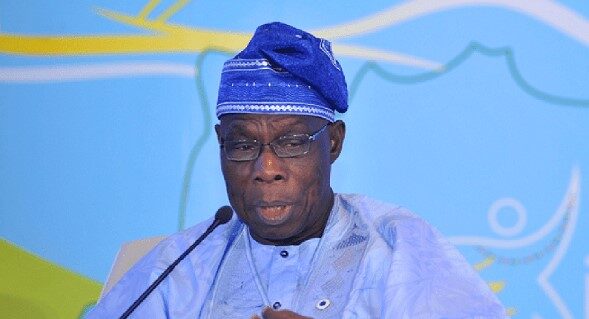
FORMER President Olusegun Obasanjo has revealed that Nigeria’s labour movement was once deeply entangled in Cold War politics, with rival labour factions allegedly funded by the United States’ Central Intelligence Agency (CIA) and the Soviet Union’s KGB, a situation he said posed a serious threat to the country’s sovereignty.
News Point Nigeria reports that Obasanjo made the disclosure in Abuja while speaking at the 85th birthday celebration and book launch of former Nigeria Labour Congress (NLC) President, Hassan Sunmonu, an event that drew labour leaders, senior politicians, and civil society figures from across the country.
According to the former president, the labour reforms he initiated during his tenure as military head of state were deliberately designed to dismantle foreign influence and establish a labour movement that was organised, controlled, and funded solely by Nigerians.


“One labour faction was being financed by the KGB that is the truth and the other was being financed by the CIA that was also the truth,” Obasanjo said.
“And then I came on the scene. I needed a Nigerian labour union organised by Nigeria, controlled by Nigeria, financed by Nigeria.”
He explained that the growing influence of foreign intelligence agencies within Nigeria’s labour unions compelled his administration to embark on sweeping reforms of the trade union structure, which eventually led to the formation of the Nigeria Labour Congress (NLC).
Obasanjo said he appointed Justice Adebiyi to head the reform process, despite resistance from labour leaders at the time, including Sunmonu himself.
“Hassan was one of those at the forefront asking, ‘What do I know about labour that I’m asking for reform? What is my business?’” he recalled.
He noted that once the reform committee completed its work and the legal framework establishing the NLC was put in place, the government deliberately stayed out of the leadership selection process.

“When Justice Adebiyi finished his job and we reformed the labour and trade union laws establishing the NLC, what happened? Without the government’s hand, they elected their leader, and Hassan became the first leader they elected. I felt comfortable with that,” Obasanjo said.
The former president also revealed that he encouraged Sunmonu to maintain a public posture of independence by openly criticising government policies when necessary, even after holding private discussions with him.
“I told him, after we have met privately, go out and abuse me publicly so that workers will know you are independent,” Obasanjo said.


He added that the introduction of a compulsory check-off system, through which union dues were deducted directly from workers’ salaries, ensured stable funding for labour unions and permanently cut off dependence on foreign financial support.
“Of course, I don’t know anything about labour, but I know that I wanted a Nigerian labour organisation organised by Nigeria, headed by Nigeria, and funded by Nigeria,” he said.
The event also featured remarks from Senator Adams Oshiomhole, a former NLC president, who pledged lifelong loyalty to organised labour.
“I will be with labour till the end of my life,” Oshiomhole said, urging unions to remain proactive. “Organise, don’t agonise.”
Current NLC President, Joe Ajaero, used the platform to criticise key government policies, particularly recent tax reforms, which he said were anti-worker and worsened poverty.
“Tax laws that tax the national minimum wage impose heavier burdens on workers and the poor, and worsen excruciating poverty,” Ajaero said, describing the policies as regressive rather than progressive.
He accused the federal government of sidelining organised labour in policy formulation, especially by excluding it from the Presidential Committee on Tax Reforms.
“Workers were meant to be on the menu,” Ajaero said, warning that bypassing labour in decision-making processes undermined trust, stability, and democratic engagement.
He also expressed concern over Nigeria’s rising debt profile and called for structured and sincere engagement between the state and the trade union movement.
Human rights lawyer Femi Falana, SAN, urged present-day labour leaders to emulate Sunmonu’s principled leadership, noting that about 62 per cent of Nigerians are classified as multidimensionally poor.