

“The North is one, and shall ever remain one. We must have unity in diversity so that our nation may have peace and prosperity.” – Sir Ahmadu Bello, Sardauna of Sokoto

BY any measure, Northern Nigeria today is at a defining crossroads. The region is confronting a convergence of crises, including worsening insecurity, mass abductions, entrenched poverty and the collapse of rural livelihoods. Yet it is also a time that calls for leaders who can rise above politics, speak hard truths, and chart a clear path forward.
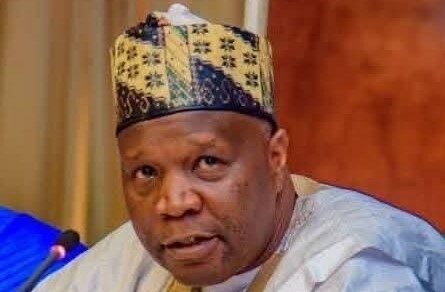
In Kaduna this week, at the joint meeting of the Northern States Governors’ Forum (NSGF) and the Northern Traditional Rulers’ Council, Governor Muhammadu Inuwa Yahaya of Gombe State stepped confidently into that role. His opening speech as Chairman of the Forum read like a mirror held up before the North; honest about its pains, unflinching about its failures, yet firm in its belief that the region can reclaim its promise.


With a resolute tone, he reminded his colleagues that insecurity in the North has gone beyond isolated incidents. It has become “a national and existential threat” capable of undermining everything from education to food production.
Unlike the familiar political speeches that skirt uncomfortable realities, Governor Inuwa Yahaya confronted them head-on. He began with a sombre acknowledgment of the tragedies that have engulfed several states; from the mass abductions in Kebbi, Kwara, Kogi, Jigawa, Kano, Niger and Sokoto to the renewed Boko Haram attacks in Borno and Yobe.
But he went further, striking a note that is rarely heard in political spaces: accountability. He stated plainly that the insecurity tearing through the North is rooted in years of neglect, underdevelopment and the failure to provide opportunities for millions of young people. It was a reminder that beyond soldiers, technology and surveillance, the North must repair the foundations on which peace is built.
One of the most far-reaching decisions taken at the meeting was the establishment of a Regional Security Trust Fund. Under Governor Inuwa Yahaya’s leadership, the Forum unanimously agreed that each state would contribute N1 billion monthly, creating a sustainable financing pipeline for security operations, intelligence gathering and rapid response capabilities across the region.
This is indeed a decisive move to finally take ownership of a crisis that has long outpaced traditional mechanisms.
Governor Inuwa Yahaya also placed the issue of out-of-school children, whis is arguably the North’s deepest and most defining crisis squarely at the centre of the conversation. He described the condition of millions of children roaming the streets instead of being in classrooms as “a stain on our collective conscience.”
For a region that once prided itself on learning and scholarship, this is both a painful truth and a necessary wake-up call. The Governor urged his colleagues and traditional rulers to move beyond rhetoric and take coordinated action to ensure that every Northern child is in school.

His emphasis on human capital development echoes the reforms already celebrated in Gombe across education, health and social protection, but this was a call to scale such progress across the entire region.
Reiterating a long-held position of the NSGF, the Governor stressed the North’s support for the establishment of state police, arguing that the complexity of Nigeria’s current security challenges demands local, contextual solutions crafted by people who understand the terrain, culture and conflict dynamics.
With President Tinubu now aligning with this position and urging the National Assembly to expedite the necessary constitutional amendments, the North is well positioned to help shape a policing framework that truly reflects its unique realities.


Another critical resolution was the Forum’s call for a six-month suspension of mining activities across the North to stem illegal operations that have enriched criminal networks, degraded the environment and intensified resource-based conflicts. The temporary halt, pending a comprehensive audit, was pragmatic and urgently needed.
Governor Inuwa Yahaya’s address also carried a powerful moral appeal. He urged traditional rulers, religious leaders, politicians and ordinary citizens to embrace collective responsibility, warning against divisive narratives that exploit ethnicity or religion which are fault lines that criminals deliberately manipulate to widen distrust.His message was unmistakable: the enemies of the North thrive on division; its salvation lies in unity.
In many ways, Inuwa Yahaya’s leadership reflects a quiet but steady determination to restore the lost glory of the Northern region, especially its legacy of scholarship, agricultural excellence, commercial dynamism and cultural dignity.
He reminded the gathering that history will not judge leaders by the number of projects they commission, but by whether they leave behind a region where people can move freely, learn safely, farm in peace and pursue their livelihoods without fear.
Whether this moment becomes a true turning point depends on implementation. But the Kaduna meeting demonstrated clearly that the North has found in Governor Muhammadu Inuwa Yahaya a chairman capable of steering conversations away from sentiment and towards solutions.
His leadership style which is largely consultative, firm and grounded in empathy may be exactly what the region needs in this difficult time.
If the resolutions agreed upon are faithfully executed, Northern Nigeria may one day look back on this meeting as the moment it began its journey back to stability and progress.
And if that happens, it will be in no small part due to the steady, purposeful hands guiding the process.
- Misilli is Director-General (Press Affairs), Government House, Gombe.