

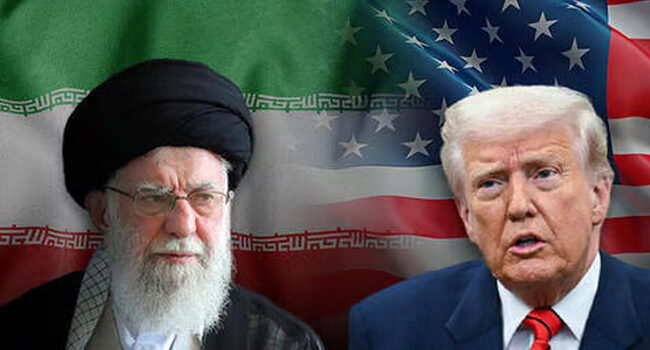
IRAN’s foreign minister says the Iranian armed forces are ready to “immediately and powerfully” respond to any possible attack by the United States, hours after US President Donald Trump reiterated a threat to take military action against the country.

“Our brave Armed Forces are prepared with their fingers on the trigger to immediately and powerfully respond to ANY aggression against our beloved land, air, and sea,” Abbas Araghchi wrote on social media on Wednesday evening.
Araghchi said Iran had learned “valuable lessons” from Israel’s days-long military assault on the country in June of last year, which also saw the Trump administration launch its own attacks on Iranian nuclear sites.


“The valuable lessons learned from the 12-Day War have enabled us to respond even more strongly, rapidly, and profoundly,” the Iranian foreign minister said.
Araghchi’s comments come just hours after Trump revived a threat to launch a military attack against Iran, which has been under growing pressure from Washington over a recent crackdown on antigovernment protests.
“A massive Armada is heading to Iran,” Trump said in a lengthy post on his Truth Social platform, adding that the fleet is “ready, willing, and able to rapidly fulfill its mission, with speed and violence, if necessary”.
The US president added that “hopefully Iran will quickly ‘Come to the Table’ and negotiate a fair and equitable deal – NO NUCLEAR WEAPONS – one that is good for all parties. Time is running out, it is truly of the essence! As I told Iran once before, MAKE A DEAL!”
Trump referred to nuclear weapons despite repeatedly claiming that last year’s US attacks “obliterated” the Iranian nuclear programme.
In an apparent reference to the US bombing of three of Iran’s nuclear facilities in June, the US president also warned that should Tehran fail to agree a deal, the next attack would be “far worse”.

Trump has repeatedly indicated that he is considering ordering military action in response to Tehran’s crackdown on antigovernment protests this month, raising tensions across the region.
Araghchi had said earlier this month that Iran was ready for war if Washington wanted to “test” it.
The situation appeared to calm after the demonstrations were quelled and Trump said Iran had pledged not to carry out any planned executions of demonstrators.


But tensions reignited again this week after the Trump administration moved the USS Abraham Lincoln aircraft carrier to the region, spurring fears of a military confrontation.
Adnan Hayajneh, a professor of international relations at Qatar University, said deploying the aircraft carrier was a “show of power” by Washington intended to send a message to Tehran “that if you cannot follow exactly what we want, we will let the missiles fly”.
He said it remained to be seen whether the US would choose the path of diplomacy or military action but the threats were “the American way of convincing [Iran] to come to the table”.
Washington wants to put a halt to the Iranian nuclear and missile programmes, which pose a challenge to Israeli hegemony in the region, and is seeking to do so while Tehran is weak domestically, regionally and internationally, Hayajneh said.
Tehran insists its programme has strictly civilian purposes and it has the right to carry out the enrichment of uranium. The whereabouts of the country’s highly enriched uranium have remained unknown since the June attacks.
‘US armada big enough to serve as a deterrence to force Iran into negotiations’
On Tuesday, Iranian President Masoud Pezeshkian hit out against the latest US “threats”, saying they were “aimed at disrupting the security of the region and will achieve nothing other than instability”.
Araghchi, the foreign minister, also said earlier on Wednesday that Iran would not restart negotiations on the nuclear file while it is being threatened with an attack.
“There was no contact between me and [US envoy Steve] Witkoff in recent days, and no request for negotiations was made from us,” Araghchi told state media.
“Our stance is clear: Negotiations don’t go along with threats, and talks can only take place when there are no longer menaces and excessive demands,” he told state media.