

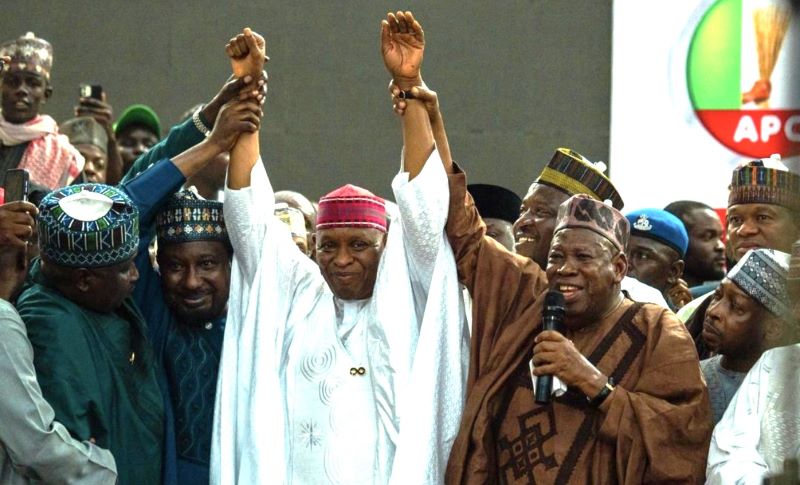
IN the order of human affairs, constancy of purpose does not always require constancy of position. Leadership, like life itself, unfolds through phases, each shaped by circumstance, responsibility and the demands of the moment. Governor Abba Kabir Yusuf’s decision to align with the All Progressives Congress should therefore be understood not as a moral failure or political treachery, but as a deliberate choice rooted in reflection and duty.
Politics is often judged emotionally, yet it functions best when approached with reason. Movement is frequently mistaken for betrayal, but history shows that progress rarely emerges from rigidity.
The Qur’an reminds humanity that days and conditions are alternated among people, a quiet lesson that change is woven into the fabric of existence. What remains constant is intention. When intention stays anchored in service to the people, a change of political path does not negate loyalty; it reinforces responsibility.


There are moments when leaders must part ways with familiar political companions, not out of hostility, but in pursuit of broader effectiveness. Such moments are rarely celebrated, yet they are often necessary. Separation in politics does not automatically translate into enmity. Wisdom teaches restraint, patience and perspective, especially when decisions are taken in the interest of the wider public.
Kano’s political history offers clear guidance on this matter. Abubakar Rimi moved beyond his early political associations. Rabiu Musa Kwankwaso charted a different course from Musa Gwadabe. Ibrahim Shekarau separated politically from Muhammadu Buhari. These were not acts of ingratitude, nor attempts to erase shared struggles. They were acknowledgements that political growth sometimes requires new alignments in order to remain effective and relevant.
In each of these moments, no political actor had reached the end of the road. Power did not collapse; it evolved. Influence did not disappear; it adapted. These transitions were part of a broader political rhythm that recognizes leadership as a living responsibility, not a frozen arrangement. Kano survived, adapted and moved forward, as it always has.
Governor Abba Kabir Yusuf’s realignment should therefore be seen through this historical and philosophical lens. Political parties are vehicles, not destinations. They are instruments through which governance is pursued, not identities to which leaders are eternally bound.
When a leader concludes that a particular platform offers greater capacity to engage constructively, attract cooperation and deliver tangible outcomes, the decision becomes one of stewardship rather than defiance.
Governance in a complex federation demands access, dialogue and collaboration. Sentiment alone does not build infrastructure, strengthen institutions or improve livelihoods.

The Qur’an cautions against burdening oneself beyond capacity, a reminder that leadership must operate within reality, not nostalgia. Effectiveness often requires adjustment, not stubborn attachment to form.
This experience is not peculiar to Kano. Across Nigeria, political realignments have occurred as leaders respond to shifting national dynamics. These changes have neither diminished democracy nor weakened governance. On the contrary, they have demonstrated that adaptability, when guided by purpose, is a strength rather than a flaw.
At this moment, reconciliation matters more than accusation. Political families may disagree on strategy, yet they remain connected by shared history and common constituencies. Difference of approach need not erase mutual respect. Public discourse benefits when disagreement is managed with civility and maturity, not suspicion or hostility.


In the final analysis, history does not judge leaders by the platforms they stand on, but by the outcomes they produce. Governor Abba Kabir Yusuf’s decision is not a rejection of the past, but an engagement with the present and an investment in the future. When intention remains steady and service remains central, change becomes not a betrayal, but a necessary step in the continuing journey of leadership.
May this moment encourage greater political maturity, where dialogue is preferred over suspicion and cooperation over conflict. May leaders rise above personal differences to place the public good at the centre of every decision, and may institutions be strengthened through mutual respect and responsible engagement.
Above all, may Kano continue on a path of stability, purposeful governance and shared progress, guided by the collective will of its people and a commitment to the common good.
- Lamara Garba Azare a veteran journalist writes from Kano.