MOROCCO’s governing allies are trading accusations, politicians are switching camps and a leaked recording has exposed tensions at the top of the ruling coalition – all before the official campaign begins on September 10.
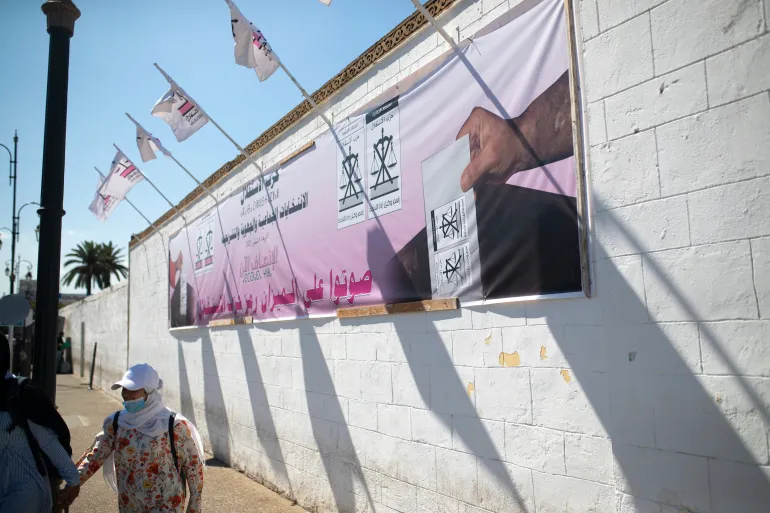
Moroccans are due to vote for a new parliament on September 23, with candidate nominations opening on August 31. By the afternoon of the first day, 702 candidate lists from 27 political parties had been submitted, according to the Interior Ministry.
Read also: Guinea Ex-Magistrate, Lamine Bangoura Sentenced To Seven Years In Prison
About 15.8 million voters are registered for the election, according to the Interior Ministry, in a country of 36.8 million people, according to the 2024 census. The voting-age population is estimated at roughly 25 million, according to the High Commission for Planning (HCP).

The political contest is already under way, as parties finalise candidates, sharpen their messages and position themselves for a battle that will determine who has the strongest hand in forming the next government.
Moroccans will elect members of the House of Representatives, the lower house of parliament.


The party that comes first will have the strongest claim to lead the process of forming the next government. Under Morocco’s Constitution, the king appoints the head of government from the party that comes first in elections to the House of Representatives.
But coming first does not mean governing alone.
Morocco’s multi-party system means the winning party needs to negotiate with other parties and build a coalition capable of securing parliamentary support.

That makes the size of each party’s parliamentary group important, including the parties that are already governing together.
The National Rally of Independents (RNI), the Authenticity and Modernity Party (PAM) and the Istiqlal Party currently form the governing coalition.
Read also: Exiled Critic Of Rwandan President, Robert Kabera Found Beheaded In Uganda

They are partners in government, but they are also rivals competing for votes, candidates and influence.
The latest dispute has brought those tensions into the open.
A leaked audio recording attributed to House of Representatives Speaker Rachid Talbi Alami, a senior RNI figure, has exposed tensions between the RNI and PAM over budget minister and senior government figure, Fouzi Lekjaa. The recording circulated after the RNI accused PAM of attracting its elected officials and candidates.
Lekjaa is a high-profile politician in Morocco. He has headed the Royal Moroccan Football Federation since 2014 and is widely known for his role in Moroccan football, including the national team’s historic run to the 2022 World Cup semifinals and its quarterfinal appearance this year. He is also the minister delegate in charge of the budget.
In the recording, the voice attributed to Talbi Alami appears to criticise Lekjaa without naming him directly and warns against allowing him to obtain the economy and finance portfolio in a future government.
The recording has since prompted public responses from RNI President Mohamed Chouki and Head of Government, Aziz Akhannouch. He defended internal party discussions as part of political debate and said the focus should be on winning the election rather than distributing government posts in advance.
Lekjaa also responded, rejecting the idea of dividing government posts before the election, saying that “dividing up the spoils without having hunted them” was not his concern.
The issue is bigger than a dispute between two politicians.
If senior figures in governing parties are already discussing who should hold key government positions after the election, it raises a question for voters: how much of the next government is being negotiated before they have even cast their ballots?
Read also: Kenya Cult Leader Who Told Parents To Starve Children Guilty Of 191 Murders
That does not mean the election outcome is predetermined. But it shows how parties are already positioning themselves for the government that will follow the vote.
The controversy also illustrates the tension at the heart of the governing coalition. RNI, PAM and Istiqlal are partners in government today, but they are competing against one another for candidates, seats and influence.