FIVE Palestine Action activists in the United Kingdom are set to learn whether a “terrorist connection” will be attached to their criminal damage convictions, a decision that could result in terrorism-linked offences being considered during their sentencing.
Brendon O’Hagan, 28; Amanda Kelly, 31; Hmeera Atiqnisar, 31; Mohammed Malik, 28; and Alma Yaniv, 70, were convicted of causing £212,000, about $290,000, in damage during a direct action against a Barclays Bank branch in Burnley, Lancashire, in August 2024.

Read also: Trump Calls On Ukraine To Replace Zelenskyy Amid Clash Over Russia Deal
The activists had targeted the bank while protesting against Barclays’ shareholdings in the Israeli defence company, Elbit Systems.
Preston Crown Court is expected on Friday to determine whether the five activists, who are scheduled to be sentenced on September 4, should face terrorism-linked sentencing after their criminal damage convictions.
According to leading criminal lawyer Raj Chada of Hodge Jones & Allen, a law firm that has been involved in defending a number of Palestine Action activists, laws relating to a “terrorist connection” have existed for years but appear to have been applied only recently and solely in cases involving Palestine Action.
“Certainly, in our experience, using the law like this is very, very unusual and appears to be being used to target Palestine Action activists whose offence predates the banning of the group,” Chada said.

At the time the five activists were convicted, Palestine Action had not been proscribed as a terrorist group. Neither the defendants nor the jury were aware during the trial that terrorism-linked sentencing could later become an issue.
However, after the verdicts were delivered, trial judge Philip Parry informed the defendants’ legal team that he intended to consider whether the offences carried a “terrorist connection”.

Parry took a similar step after circulating a ruling from a case in June involving four Palestine Action activists who were convicted of criminal damage at Elbit Systems’ Filton site near Bristol.
Those activists were sentenced as terrorists at Woolwich Crown Court in London nearly two years after their protest.
Read also: ICE Agent Shoots Man In Car With Five-Year-Old Child In New York


“To the best of our knowledge, the only time this law was used was in relation to direct action protest groups was against those convicted at Filton,” Chada said, explaining that the laws were being used by prosecutors to target the offence itself rather than the individual or organisation responsible for carrying it out.
The case has also triggered questions from supporters of the activists over Robert Altham, the judge expected to decide whether a “terrorist connection” should be attached to the criminal damage convictions.
Altham had previously sentenced environmental protesters in September 2018, but that sentencing was later found by the Court of Appeal to have been “manifestly excessive”.
Huda Ammori, a co-founder of Palestine Action, described Altham’s involvement in the current case as “shocking”.
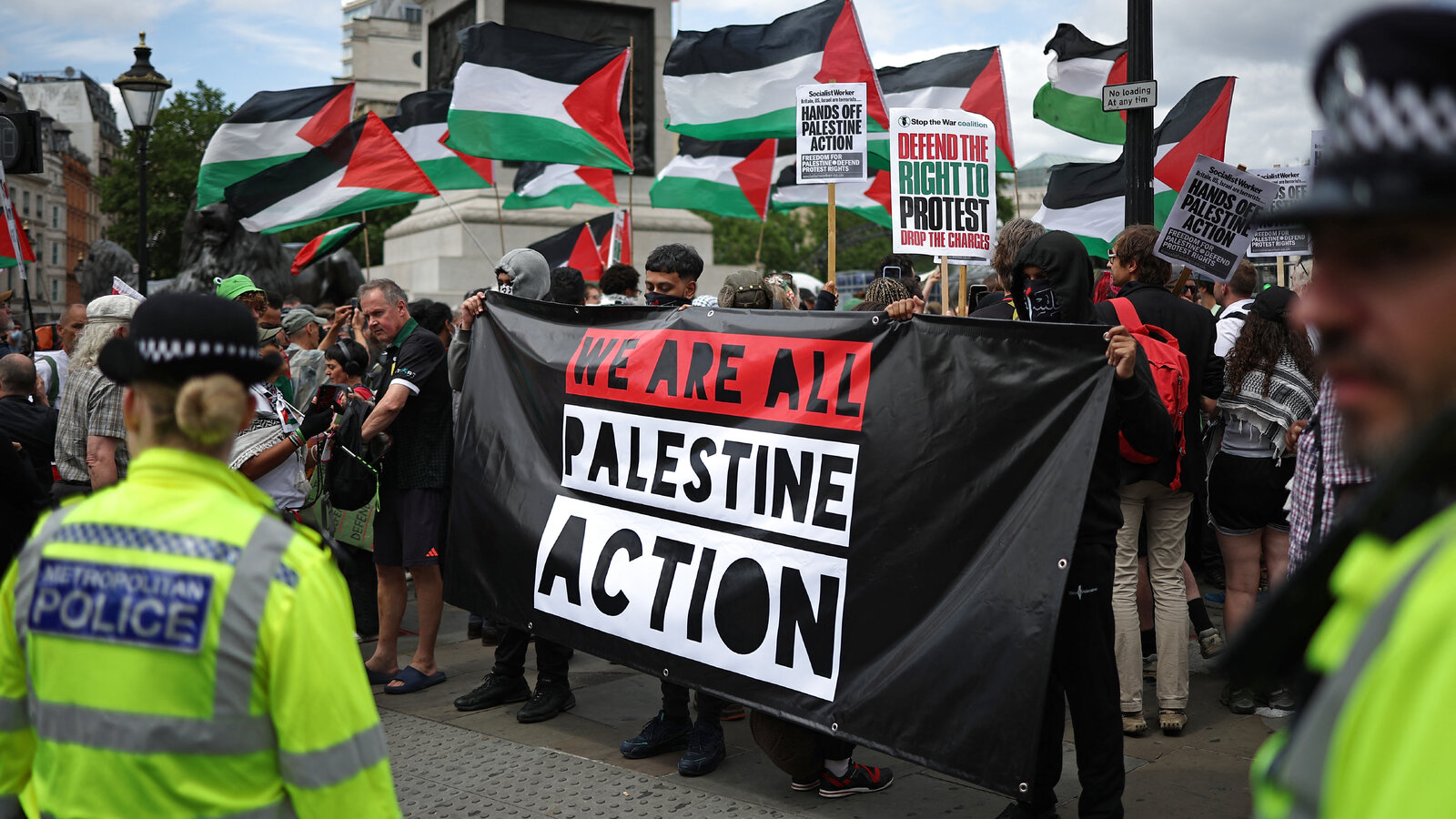
Meanwhile, the rights group, Defend Our Juries, said more than 3,500 people, many of them over the age of 60, had been arrested for expressing support for Palestine Action since lawmakers proscribed the group in July 2025, placing it on the same legal footing as al-Qaeda and ISIL.
Many of the arrests, according to the group, followed repeated mass sit-ins at Parliament Square in central London, where protesters displayed signs reading: “I oppose genocide, I support Palestine Action.”
Defend Our Juries said a group of what it described as “peaceful people” would gather outside Preston Crown Court on Friday to demonstrate solidarity with the five activists, popularly referred to as the “Barclays 5”.
The group said the demonstration was intended “to show solidarity with the ‘Barclays 5’, who Judge Parry moves to sentence as terrorists for spray-painting a bank.”
“This is despite them facing no terrorism charges, and the jury and the defendants being unaware of potential terrorist sentencing during trial,” it added.
Read also: Trump Announces Russian Diesel Deal Amid Soaring US Fuel Prices
The group further argued that the actions and motivations of the protesters should not be equated with terrorism.
“Seeking to prevent the loss of life is not terrorism. Opposing genocide is not terrorism,” Defend Our Juries said.