

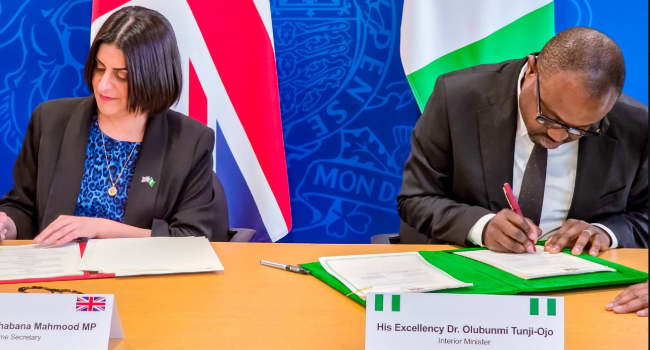
THE Presidency has clarified the scope of a recently signed migration agreement between Nigeria and the United Kingdom, stating that the arrangement applies strictly to Nigerian citizens residing illegally in the UK and does not include foreign nationals.

News Point Nigeria reports that the clarification comes amid widespread public concern and speculation suggesting that Nigeria had agreed to accept deported individuals from other countries.
Reacting to the reports, the Senior Special Assistant to the President on Media and Publicity, Temitope Ajayi, said the claims were misleading and required urgent correction.


In a statement posted on X on Friday, Ajayi explained that the agreement signed during the state visit of President Bola Ahmed Tinubu is limited to Nigerians who do not have legal status to remain in the UK.
“For clarity, it is important to state that the agreement… only relates to Nigerians who do not have legal status to live and remain in the UK,” he said.
He further stressed that Nigeria has not agreed to accept non-citizens under the deal.
“The Nigerian government is not taking back non-Nigerians. The UK government is not compelling Nigeria to take those who are not our citizens,” Ajayi added, attributing contrary claims to misinformation.
The migration pact was formalised on Thursday between Nigeria’s Minister of Interior, Olubunmi Tunji-Ojo, and the UK Home Secretary, Shabana Mahmood, during President Tinubu’s official visit to the United Kingdom.
According to the UK Home Office, the agreement is designed to facilitate the return of individuals who have no legal right to remain in the UK, including failed asylum seekers, visa overstayers, and convicted offenders who are Nigerian citizens.

In a separate statement, Nigeria’s Ministry of Interior said the deal provides a structured framework for the safe, orderly, and dignified return of affected individuals.
The ministry explained that the process will involve secure travel documentation, case-by-case identity verification, and safeguards for vulnerable persons, including potential victims of human trafficking.
Authorities also noted that returnees will retain their rights under Nigerian law and will be treated with dignity upon their return.


Ajayi added that Nigerians who are returned under the agreement may still be eligible to re-enter the UK in the future if they meet immigration requirements.
The agreement introduces administrative measures aimed at streamlining the deportation process.
One of such provisions is the acceptance of “UK letters”—alternative identification documents issued to individuals without valid passports—to facilitate their return to Nigeria.
Officials say this measure is intended to reduce delays often caused by the lack of proper identification documents.
Beyond deportation, the agreement outlines broader areas of cooperation between both countries, including information sharing, capacity building, training, and joint research on migration management and border security.
The deal is seen as part of ongoing efforts by both governments to strengthen bilateral relations while addressing irregular migration and enhancing border control systems.
The Presidency’s clarification is expected to calm public anxiety, particularly amid fears that Nigeria could become a destination for deportees from other countries.
Officials insist that the agreement respects Nigeria’s sovereignty and applies strictly to its citizens, while also aligning with international standards on migration and human rights.