

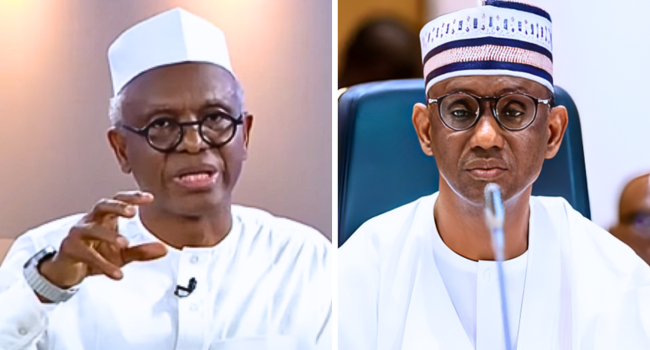
A FRESH controversy has erupted in Nigeria’s political landscape following allegations of illegal wire-tapping made by former Kaduna State Governor, Nasir El-Rufai, during a televised interview.
The Special Adviser on Information and Strategy to President Bola Tinubu, Bayo Onanuga, has called for a thorough investigation into the claims, describing them as a potential admission of unlawful surveillance.
News Point Nigeria reports that speaking on ARISE TV Prime Time on Friday, El-Rufai alleged that the National Security Adviser, Nuhu Ribadu, ordered his arrest following what he described as a failed attempt to detain him at the Nnamdi Azikiwe International Airport on Thursday.


According to the former governor, the Independent Corrupt Practices and Other Related Offences Commission (ICPC) used operatives of the Department of State Services (DSS) to execute the operation.
“We found out that it was the ICPC that procured the DSS to abduct me and then hand me over to them,” El-Rufai alleged.
He further claimed that the anti-corruption agency had increasingly become a “personal tool” of the NSA.
“Nuhu made the call and made the order that I must be in custody yesterday,” he said.
When pressed during the interview on how he knew Ribadu had authorised the action, El-Rufai responded with a remark that has since generated widespread debate.
“He made the call because we listened to their calls. The government thinks that they are the only ones that listen to calls. But we also have our ways,” he stated.

Reacting swiftly on social media platform X, Onanuga described the statement as a confession to illegal wire-tapping and urged security agencies to investigate.
“El-Rufai confesses to wire-tapping Nigeria’s NSA on TV,” Onanuga wrote.
He questioned whether the former governor and his associates possessed unauthorised surveillance facilities and insisted that the matter should not be treated lightly.


“This should be thoroughly investigated and punishment meted out. El-Rufai is not too big to face the wrath of the law,” the presidential aide added.
The statement has intensified political tensions, with observers noting that allegations involving unlawful interception of communications strike at the heart of national security concerns.
Meanwhile, prominent human rights lawyer and activist, Deji Adeyanju, offered a different perspective on the unfolding drama.
Adeyanju described the reported attempt to arrest El-Rufai as “karma,” suggesting it may reflect political consequences catching up with the former governor.
However, he also expressed skepticism about claims that there was a concrete plan to arrest him.
According to Adeyanju, Nigeria’s legal framework provides clear procedures for arrest — either through a court-issued warrant or on the basis of probable cause as allowed under existing laws.
“If authorities intended to detain him, there are established legal mechanisms to do so,” he maintained, questioning the narrative of an attempted abduction.
At the time of filing this report, neither the ICPC nor the DSS had issued an official statement addressing El-Rufai’s allegations.