

THE Federal Government has confirmed the disbursement of ₦152 billion to contractors for what it described as fully verified contracts, even as protests by indigenous contractors over outstanding payments continue to disrupt activities around key government institutions.

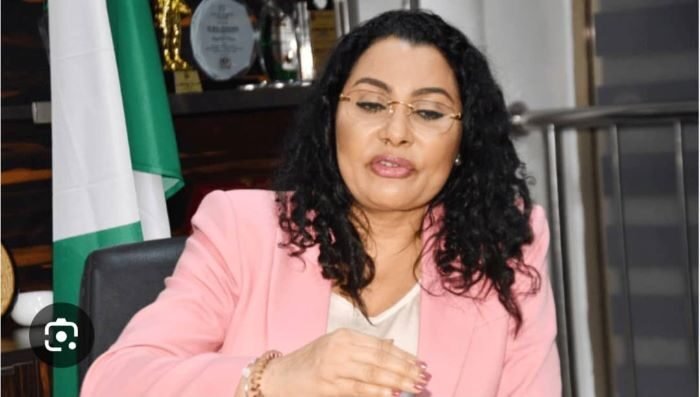
The confirmation was contained in a statement issued on Thursday by the Minister of State for Finance, Mrs Doris Uzoka-Anite, and sent to News Point Nigeria, the minister said the payments were made after a thorough verification process in compliance with existing financial laws and regulations.
Uzoka-Anite acknowledged the financial difficulties faced by contractors due to delayed payments and assured that the government remained committed to clearing all legitimate obligations.


“I wish to confirm that the Federal Ministry of Finance has disbursed a total of ₦152 billion to contractors for verified contracts,” the minister stated.
“Every payment undergoes rigorous verification in accordance with extant laws and regulations, ensuring the protection of taxpayers’ funds while upholding accountability and transparency,” she added.
The minister noted that the ministry was aware of the financial strain prolonged payment delays had placed on contractors and pledged sustained engagement to resolve the disputes.
“The Ministry acknowledges the financial pressures that delays in payment may have placed on contractors. We remain committed to continuous dialogue and engagement, seeking effective resolutions to all conflicts,” the statement said.
Despite the payments, protests by local contractors have continued since 2025, driven by what they describe as a growing backlog of unpaid bills for projects executed for the Federal Government.
Under the umbrella of the All Indigenous Contractors Association of Nigeria (AICAN), the contractors have repeatedly staged demonstrations, at various times blocking the entrances to the Federal Ministry of Finance and the National Assembly Complex in Abuja to demand immediate settlement of outstanding claims.

In response to the escalating dispute, President Bola Tinubu in December 2025 inaugurated a multi-ministerial committee to examine and resolve the contractors’ claims, which were estimated at about ₦1.5 trillion at the time.
Members of the committee include the Minister of Finance and Coordinating Minister of the Economy, Wale Edun; the Minister of Budget and Economic Planning, Atiku Bagudu; the Director-General of the Budget Office, Tanimu Yakubu; the Minister of Works, Dave Umahi; the Minister of Housing and Urban Development, Ahmed Dangiwa; and the Chairman of the Federal Inland Revenue Service (FIRS), Zacch Adedeji.
The Senate had also waded into the matter, with a committee inviting Edun to explain the circumstances surrounding the delayed payments to contractors.


Tensions flared again on Monday when protesting contractors blocked the gate of the Federal Ministry of Finance, preventing Uzoka-Anite from gaining access to the complex.
The situation reportedly degenerated into a scuffle between protesters and security operatives attached to the minister. Witnesses said a gunshot was heard as security personnel attempted to disperse the crowd, further heightening concerns over the handling of the dispute.
Amid the protests, News Point Nigeria reports that the Federal Government has made significant budgetary provisions to address the backlog of unpaid contractor liabilities.
The 2026 Appropriation Bill earmarks ₦1.7 trillion for the settlement of outstanding debts owed to contractors for capital projects executed in 2024. The amount is captured under a specific budget line titled “Provision for 2024 Outstanding Contractor’s Liabilities,” signalling official acknowledgement of the delayed payments.
In addition, the government allocated ₦100 billion under a separate line item tagged “Payment of Local Contractors’ Debts/Other Liabilities.” This provision is expected to cover legacy debts, smaller contract claims, and obligations that were not fully verified in the current audit cycle.
The combined ₦1.8 trillion allocation forms part of the ₦23.2 trillion capital expenditure proposed in the 2026 fiscal plan, which aims to accelerate infrastructure development while simultaneously addressing outstanding financial obligations inherited from previous years.