

FOR years, Nigeria’s security architecture was like an orchestra without a conductor—each agency playing its own tune, each refusing to follow a shared path. The military, police, DSS, and paramilitary outfits operated in silos, hoarding intelligence and guarding jurisdiction like jealous gatekeepers. It was a house with too many doors and no master key. The result was confusion, inefficiency, and too often, bloodshed. Terrorists thrived in this vacuum, kidnappers exploited the disjointed response mechanisms, and communities bore the brunt of institutional dysfunction.

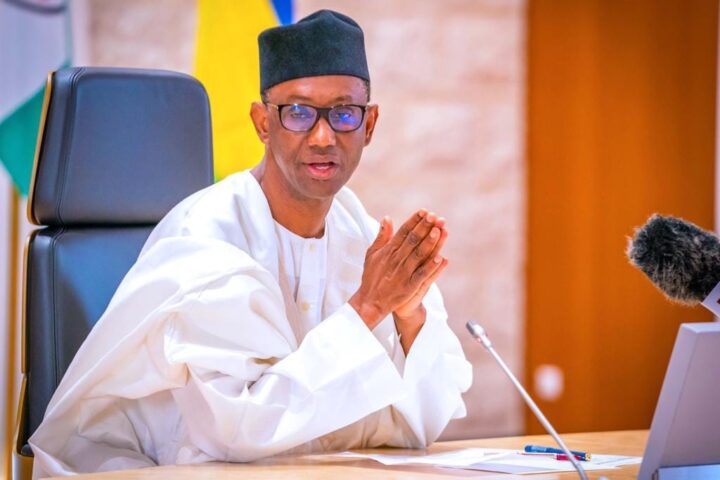
The turning point came in 2023. The appointment of Mallam Nuhu Ribadu as National Security Adviser marked the beginning of a subtle yet seismic shift in how Nigeria approached internal security. While others predicted political aspirations and conjured hypotheticals about 2027, Ribadu got to work. His style was not flamboyant; he didn’t dominate headlines.
Ribadu’s history as former EFCC head gave him more than anti-corruption credentials—it earned him moral authority. This proved essential in restoring trust between rival agencies. His leadership was rooted in respect, not fear; in unity, not hierarchy. And the effect was immediate.


Agencies that once refused to share intelligence began to collaborate. Military and police commands operated with mutual purpose. The DSS moved from the shadows into alignment with broader national efforts. Nigeria’s fragmented security architecture was being stitched back together—deliberately, strategically, and without ego.
This shift wasn’t cosmetic. It translated into real-world victories that began to change the national narrative. Within the first 18 months of President Tinubu’s administration and Ribadu’s stewardship, over 13,500 terrorists and criminals were neutralized, while more than 17,000 suspects were arrested across various theaters.
In the Northeast, particularly Borno State, the heartland of Boko Haram, 102,000 insurgents and their families surrendered. This mass capitulation wasn’t accidental—it was the result of combined pressure, both military and psychological, backed by soft-power interventions. Over 11,000 weapons were recovered, significantly weakening insurgent capability and sending a clear message that the tide was turning.
In the North-West—Zamfara, Kaduna, Katsina—states once gripped by kidnapping and banditry, more than 11,000 kidnapped victims were rescued through joint operations. These missions were no longer hampered by poor coordination. They were surgical, timely, and built on real-time intelligence sharing. Notably, the elimination of notorious bandit kingpin Ali Kachalla marked a psychological and tactical victory that had eluded security forces for years.
The Niger Delta, long plagued by oil theft and environmental degradation, saw one of the most aggressive anti-crude theft campaigns in decades. In just over a year, 1,978 illegal refineries were dismantled, along with 3,849 dug-out pits and more than 3,700 cooking ovens. This crackdown didn’t just secure infrastructure—it revived the economy.
Nigeria’s daily crude oil production, which had plummeted to under one million barrels in 2022, surged to 1.8 million barrels by mid-2025. Oil operations in Ogoniland also resumed under this new, secure atmosphere.

In the Southeast, where separatist agitators had declared disruptive “sit-at-home” orders. More than 50 police stations abandoned due to threats have been reopened. The population, long skeptical of state authority, is regaining faith in the institutions meant to protect them.
All of this progress stems from one core change: unity. For the first time in over a decade, Nigeria’s security agencies are operating not only together, but as one. The previous era of turf wars and information hoarding is giving way to a culture of synergy. The NSA’s office has transformed from a passive observer into a dynamic coordination hub.
This transformation did not happen by accident. It is the product of Ribadu’s strategic vision. He recognized early that Nigeria’s greatest security threat was not just the armed gunman in the bush but the bureaucratic silence between agencies. He understood that technology without trust would fail, and firepower without coordination would falter. His eight-pillar strategy, though not shouted from rooftops, touches all aspects of modern security—from intelligence sharing and joint operations to cyber forensics and institutional reform.


Under Ribadu’s guidance, Nigeria has frozen dozens of cryptocurrency accounts linked to terror financing and begun developing one of the country’s most advanced cyber-forensics labs in Abuja. These moves signify a decisive leap from reactive counterterrorism to anticipatory governance.
Yet, amid these gains, distractions persist. Rumors about Ribadu’s potential 2027 ambitions—gubernatorial or vice-presidential—have surfaced. These speculations, pushed by political actors and amplified by opportunistic commentators, are not only baseless but dangerous. They risk derailing momentum at a time when Nigeria can least afford it. Who benefits from a weakened NSA? Not the rural farmer in Zamfara or the schoolgirl in Borno. The real beneficiaries are the same elements that profited during the era of confusion—the enemies of a coherent security strategy.
It is important, therefore, to separate noise from necessity. Ribadu is not running a political campaign. He is running a national security campaign. His mission is to dismantle silos, build bridges, and bring coherence to a system long teetering on dysfunction. While others speculate, he strategizes. While critics draft op-eds, he’s rebuilding trust between institutions that once refused to speak.
To understand the magnitude of this achievement, one must remember how broken the system once was. Senior officers used to bypass one another, field commanders acted without clear mandates, and multiple agencies responded to the same incident without coordination. The result was not just inefficiency—it was carnage. Attacks that could have been averted with timely intelligence became mass tragedies. Communities became cemeteries of unlearned lessons.
But that is changing. Slowly, yes. Imperfectly, of course. But undeniably. Today, there is communication across commands. Strategic alignment between the DSS and military. Police operations are no longer undermined by other agencies acting in parallel. The symphony is still tuning itself, but it is no longer noise—it is beginning to sound like music.
In a country as complex as Nigeria, no security solution is perfect. Threats are evolving, and the road ahead is long. But for the first time in a long time, Nigeria is facing these challenges not with fragmentation, but with focus. Not with bravado, but with strategy.
Ultimately, the true measure of Ribadu’s impact is not in media mentions or political forecasts. It is in the confidence of field officers who now know their intelligence will be acted on. It is in the relief of communities that can sleep without fear. It is in the quiet dignity of a government putting national interest above institutional ego.
Critics will come. So will speculation. But Nigeria’s security architecture is finally learning to stand upright. Let us not tear it down just as it begins to hold.
- Mahmud writes from Jabi, Abuja.