

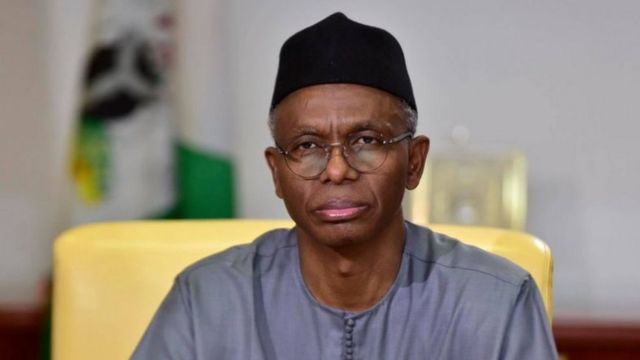
THE Presidency has strongly criticised former Kaduna State governor, Nasir El-Rufai, over his allegation that the Office of the National Security Adviser (ONSA) planned to procure a highly toxic chemical substance, describing his actions as politically motivated and misleading.
News Point Nigeria reports that the controversy began after El-Rufai, in a letter dated January 30, 2026, addressed to the National Security Adviser, Nuhu Ribadu, sought clarification over what he described as information available to opposition figures regarding the alleged procurement of approximately 10 kilograms of thallium sulphate from Poland.
He later posted a copy of the letter on his official X account, stating that his inquiry was made in good faith to ensure transparency and public safety.


In the letter, El-Rufai described thallium sulphate as a highly toxic and tightly regulated substance and called for reassurance regarding its intended purpose, quantity, storage arrangements, regulatory approvals, and coordination with relevant agencies such as NAFDAC and the Nigeria Centre for Disease Control (NCDC).
“I am writing as a concerned citizen to seek clarification and reassurance,” he stated, emphasising that openness would strengthen public trust in national institutions.
He also questioned whether public-health risk assessments and hazard-mitigation plans had been developed in light of the compound’s toxicity.
Reacting to the development, the Senior Special Assistant to the President on Media and Publicity, Temitope Ajayi, accused the former governor of deliberately attempting to create political tension.
In a statement posted on X, Ajayi insisted that El-Rufai was aware that there had been no procurement or importation of thallium sulphate by ONSA.
“Mallam Nasir El-Rufai is playing games and, in his typical fashion, also playing to the gallery. He knew there was no government procurement or importation of thallium sulphate into Nigeria from Poland through the Office of the National Security Adviser,” Ajayi said.

He further claimed that El-Rufai had already received a formal reply from ONSA and challenged him to make it public.
“El-Rufai certainly got a reply to his letter from the NSA’s office, and he should be honourable enough to release it just as he mischievously released his own letter,” he added.
Ajayi alleged that El-Rufai’s actions were aimed at creating fear and unrest, as well as diverting attention from corruption allegations he faces in Kaduna State.


He referenced a petition reportedly endorsed by members of the Kaduna State House of Assembly calling for investigations by the EFCC and ICPC over alleged financial misconduct amounting to hundreds of billions of naira.
According to the Presidency, the former governor should focus on responding to those allegations rather than escalating political tensions.
Meanwhile, a coalition of concerned Nigerians addressed journalists in Kaduna, describing El-Rufai’s claim as reckless and capable of causing unnecessary public panic.
Spokesperson Victor Bobai said the allegation lacked credible evidence and risked undermining public confidence in security institutions.
“At a time when our security agencies are battling terrorism and organised crime, it is irresponsible for any public figure to circulate unverified claims capable of creating fear,” he said.
Another member of the coalition, Hamisu Malumfashi, stressed that national security matters should not be reduced to political theatre, while Adeosun Olayinka urged Nigerians to critically assess public claims before accepting them.
While El-Rufai insists his inquiry was made in good faith and in the interest of public safety, the Presidency maintains that the allegation is baseless and politically motivated.