

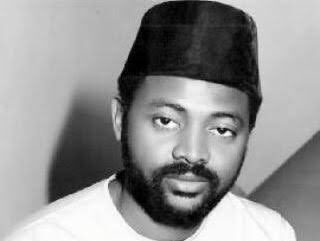
THIRTY years after the tragic plane crash that claimed the life of Ibrahim Sani Abacha, eldest son of Nigeria’s former military Head of State, General Sani Abacha, the incident remains one of the most haunting and controversial tragedies in Nigeria’s modern history.
As Nigeria marks three decades since the disaster, News Point Nigeria, revisits the events of January 1996, a moment that froze the nation in shock, ignited rumours of sabotage, and left behind unanswered questions that still linger in the country’s political memory.
On Thursday, January 18, 1996, newspapers across Nigeria carried the same grim headline: Ibrahim Abacha is dead.


Ibrahim, just 29 years old, had died when a presidential jet conveying him and others crashed near Kano. All passengers and crew onboard perished. Preliminary reports at the time pointed to an engine fire as the likely cause.
The death occurred against the backdrop of a tense political climate under military rule, making the tragedy more than a personal loss for the Abacha family, it became a national event.
Front pages reflected the gravity of the moment, describing the crash as sudden, devastating, and symbolic of the uncertainty that defined Nigeria at the time.
While many Nigerian newspapers reported the crash as occurring on January 18, 1996, several international wire reports, including the Associated Press, placed the crash on January 17, 1996, stating that Ibrahim Abacha and 13 others were killed.
Despite discrepancies in dates, there was no dispute over the outcome: no survivor emerged from the wreckage.
According to a family source who spoke to News Point Nigeria, the aircraft departed Lagos at about 6:15 pm, carrying Ibrahim Abacha, his longtime girlfriend Julie Osholukoya, friends, aides, and security personnel.

Earlier that day, the jet, part of the presidential fleet had flown to Makurdi. The aircraft had also recently returned from maintenance in Switzerland, raising expectations that it was airworthy.
Ibrahim had been in Kano, where he reportedly met his father during a condolence visit to the Emir and concluded a property deal.
Among those onboard were notable figures, including: Bello Dangote, brother of Aliko Dangote, Abdullahi Ibrahim, Abu Ali Ahmed, Audu Baba, Sani Abdullahi, Saleh Gambo, Abubakar Mohammed, David Effiong, Garba Bashir and several security operatives.


As the aircraft approached Kano around 8pm, disaster struck. With less than 25 nautical miles to land, one of the aircraft’s engines caught fire.
The pilot described in some reports as experienced, though others labelled him inexperienced alerted the control tower. But events unfolded too quickly.
Residents of Dausayi village, about 20 kilometres from the airport, later told reporters they saw flames in the sky, followed by two loud explosions.
By the time emergency responders arrived, the aircraft wreckage had been completely engulfed in fire.
Only six bodies were initially recovered, including the pilot, who was reportedly found strapped to his seat. The remaining passengers, including Ibrahim Abacha, were burnt beyond recognition.
Investigators recovered pistols, rifles, and ammunition from the scene and security items believed to have intensified the inferno.
General Sani Abacha was informed shortly after the crash and the late Head of State reportedly broke the news to his wife, Inna Maryam himself.
Days later, a previously unknown group calling itself, the United Front for Nigeria’s Liberation claimed responsibility for the crash in statements to Reuters and other international media.
The group controversially described the incident as part of a campaign to rid Nigeria of Abacha’s government “by any means.” However, pro-democracy figures, including Kayode Fayemi, dismissed the claim as propaganda, citing lack of evidence.
The tension deepened when reports emerged of another explosion at Kano airport, believed to involve a possible bomb, though no casualties were recorded. In Kaduna, a separate blast at the Durbar Hotel reportedly killed a man believed to have planted the device.
Authorities examined three major theories: Engine failure, pilot error and poor airport infrastructure.
Some reports alleged the pilot was inexperienced and that the aircraft was overloaded. Others, including a military source who spoke to News Point Nigeria, leaned towards engine malfunction, while also noting that business rivalries, especially in oil contracts, may have made Ibrahim a target.
Despite widespread speculation, no suspects were arrested, and no conclusive evidence of sabotage was officially established. Investigative panels were set up, but their findings never fully settled public doubts.
Beyond politics and power, Ibrahim Abacha was remembered by those close to him as full of life, generous, and deeply loyal to people he trusted.
One such person was Ibikunle Amosun, then a young chartered accountant. Ibrahim was said to be impressed by Amosun’s brilliance and entrusted him with key projects.
Another source told this newspaper that Amosun, who would go on to become Governor of Ogun State got his early financial breakthrough from work he handled for the late Ibrahim Abacha.
It was no surprise that Ibrahim was widely regarded as a symbol of goodwill, generosity, and administrative benevolence. Despite his affluent background, his humanity, kindness, and compassion never waned.
Decades later, Ibrahim’s sister, Gumsu Abacha, wrote an emotional remembrance: “Ibrahim Sani Abacha… 30 years today. Allah ya jikan ka da rahama. Amin… u will never be forgotten… I remember so well the last time I saw u and u were giving Inna a goodbye hug… not knowing it was actually gonna be The Last Goodbye.”
Three decades on, the crash that killed Ibrahim Abacha remains a symbol of loss, power, mystery and unresolved truth. Was it a tragic accident? A mechanical failure? Or something more sinister? Nigeria may never fully know.
But as history turns another page, the memory of Ibrahim Abacha’s final flight continues to hoverlike flames once seen in the Kano sky reminding the nation that some stories never truly end.