

PRESIDENT Bola Ahmed Tinubu’s recent visit to Plateau State has quickly become a flashpoint of national discourse, igniting strong reactions and drawing a clear line between supporters and critics across the country. While some defend the President’s cautious handling of the trip, others argue it fell short of the empathy expected in the wake of tragedy.
In this weekend feature, News Point Nigeria explores how what began as a condolence visit after the Jos killings has transformed into a defining conversation about leadership, security, and public trust in moments of national grief.
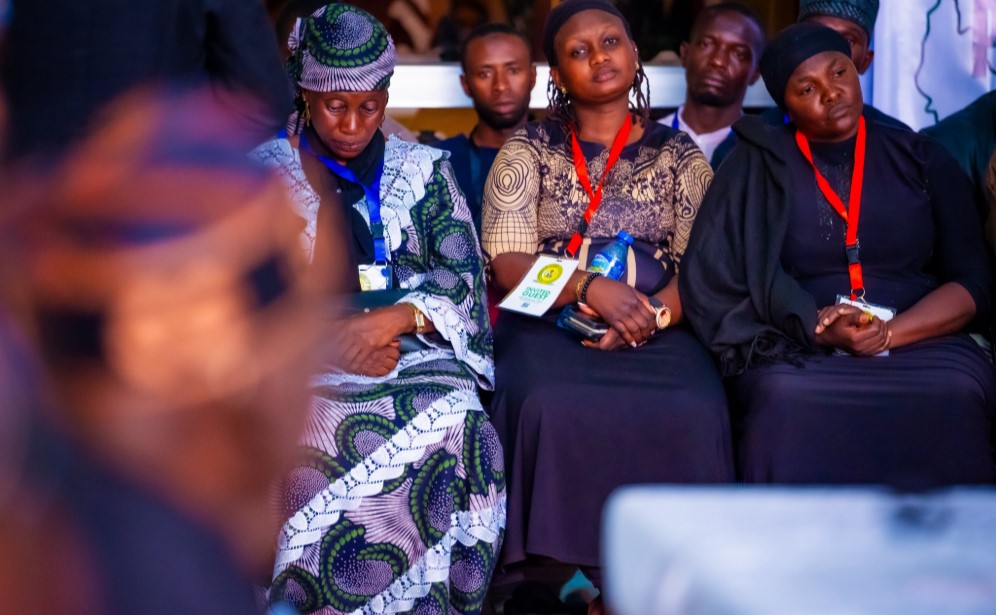
The Presidency had on Wednesday announced that President Tinubu would visit Jos, the Plateau State capital, as part of a four-state tour. The visit was intended to commiserate with victims of the Palm Sunday attack in Angwan Rukuba and surrounding communities, where over 28 lives were lost and many others injured.


The trip itself came after the President postponed an earlier engagement in Iperu, Ogun State, signaling what officials described as a prioritisation of national security concerns and solidarity with grieving communities.
Upon arrival at the Yakubu Gowon Airport, the President held a town hall-style meeting with stakeholders, including political leaders, traditional rulers, and selected victims.
During the meeting, Tinubu issued strong directives to security chiefs, ordering the immediate arrest of perpetrators and the strengthening of security architecture in the state. He also announced plans to deploy 5,000 surveillance cameras to enhance intelligence gathering and rapid response capabilities.
According to Presidential spokesman Bayo Onanuga, the decision to hold the engagement at the airport rather than proceed into the city was influenced by a mix of logistical and security constraints.
The President’s schedule had already been compressed following a high-level meeting with Mahamat Idriss Déby Itno, which delayed his departure to Jos. By the time he arrived, limitations at the airport including the absence of night landing facilities made it impractical to travel into the city and return safely before dusk.
The Presidency insisted that the visit was not merely symbolic but a “strategic engagement,” bringing together key actors to address the root causes of Plateau’s long-standing conflict.

Security experts have also backed this position. Kaduna-based analyst Dr. Basheer Inuwa Ahmed argued that such decisions are often based on classified intelligence not available to the public, stressing that caution in volatile environments is a hallmark of responsible leadership.
He said; “While some have questioned why the President did not leave the airport during the visit, it is important to recognise that decisions of this nature are often based on sensitive security briefings not available to the public. Nigerians may not be privy to the full scope of intelligence at the disposal of security agencies at the time, and such caution is typically exercised to prevent further escalation of already volatile situations.
“It is also crucial to emphasise that prioritising security does not in any way diminish the President’s empathy for victims of the attacks. By making the trip to Jos, even under constrained circumstances, President Tinubu demonstrated solidarity with the people of Plateau State, while ensuring that his presence did not inadvertently create additional risks for residents, security personnel, or critical infrastructure.


“Globally, world leaders routinely adjust, postpone, or scale down engagements due to security and logistical concerns. From Donald Trump to Emmanuel Macron and even King Charles III, there have been numerous instances where planned visits were altered based on real-time intelligence assessments. Such decisions are not signs of weakness or indifference, but rather reflections of responsible leadership in the face of potential threats.
“Ultimately, governance requires a delicate balance between visibility and prudence. In situations where security agencies advise caution, adherence to such counsel is not only necessary but expected. What remains paramount is the commitment to addressing the root causes of insecurity and ensuring that affected communities receive the support and protection they deserve”, Ahmed concluded.
Despite these explanations, criticism has been swift and widespread.
Residents of Jos expressed disappointment that the President did not visit the affected communities or hospitals where victims are receiving treatment. Many viewed the airport meeting as detached from the realities on ground.
Opposition figures were even more direct. Former Vice President Atiku Abubakar described the visit as a troubling indication of a disconnect between leadership and citizens’ suffering.
He argued that what was presented as an “on-the-spot assessment” amounted to little more than a brief stopover.
Similarly, Labour Party’s 2023 presidential candidate Peter Obi criticised the approach, saying true leadership requires physical presence in places where pain is most deeply felt.
According to Obi, addressing victims from an airport tarmac risks deepening feelings of abandonment among communities already grappling with repeated cycles of violence.
A faction of the PDP also joined the criticism, describing the visit as “performative,” and arguing that the President’s inability to leave the airport underscored the severity of insecurity in the state.
At the heart of the debate lies a fundamental tension: the balance between visible leadership and prudent decision-making.
Critics contend that leadership is as much about perception as it is about policy. For many Nigerians, the inability of the Commander-in-Chief to move freely within a crisis hit area raises troubling questions: if the President cannot feel safe, what does that mean for ordinary citizens?
Public commentator and Professor of Law, Peter Agaba, based in Benue, argued that if security concerns were so severe that the President could not safely leave the airport, then the visit itself may have been ill-advised.
For many residents, he noted, the optics have been troubling: if the Commander-in-Chief is unable to move freely within the state capital, it raises uncomfortable questions about the overall security situation. The perception created, he added, is one of vulnerability, leaving citizens to wonder, if the President does not feel safe, then who truly is?
He further observed that the situation is compounded by reports of heightened security measures around other top officials, including the state governor, whose heavily guarded public appearances have also drawn attention. Such imagery, rather than reassuring the public, risks reinforcing a narrative of fear and instability, particularly in a state already grappling with recurring violence.
Agaba also warned that these developments could send the wrong signal to criminal elements. The impression that even the highest levels of government are constrained by security threats may embolden perpetrators, who could interpret it as a sign of weakness or diminished state control. In conflict-prone environments, he stressed, perception can be as powerful as reality, making public confidence a critical factor.
While acknowledging the complexities of security management, he maintained that presidential visits to crisis zones should be carefully calibrated to inspire confidence, not uncertainty. In this instance, he said, the outcome has sparked debate about whether the approach truly reassured victims or inadvertently amplified their fears.
The Jos visit has ultimately become more than a condolence mission, it is now a defining moment in Nigeria’s ongoing conversation about leadership in times of crisis.
While the Presidency insists that meaningful engagements took place behind the scenes, many Nigerians remain focused on what they saw: a visit that stayed at the airport, far from the communities most affected.
As debates continue, one thing is clear, beyond the politics and the optics, Nigerians are demanding not just presence, but impact. In a country battling persistent insecurity, citizens are looking for reassurance not only in words, but in visible, decisive action that restores both safety and confidence.
Whether this visit will mark a turning point in addressing Plateau’s long-standing crisis or remain a symbol of missed expectations may ultimately depend on what follows in the days and weeks ahead.