

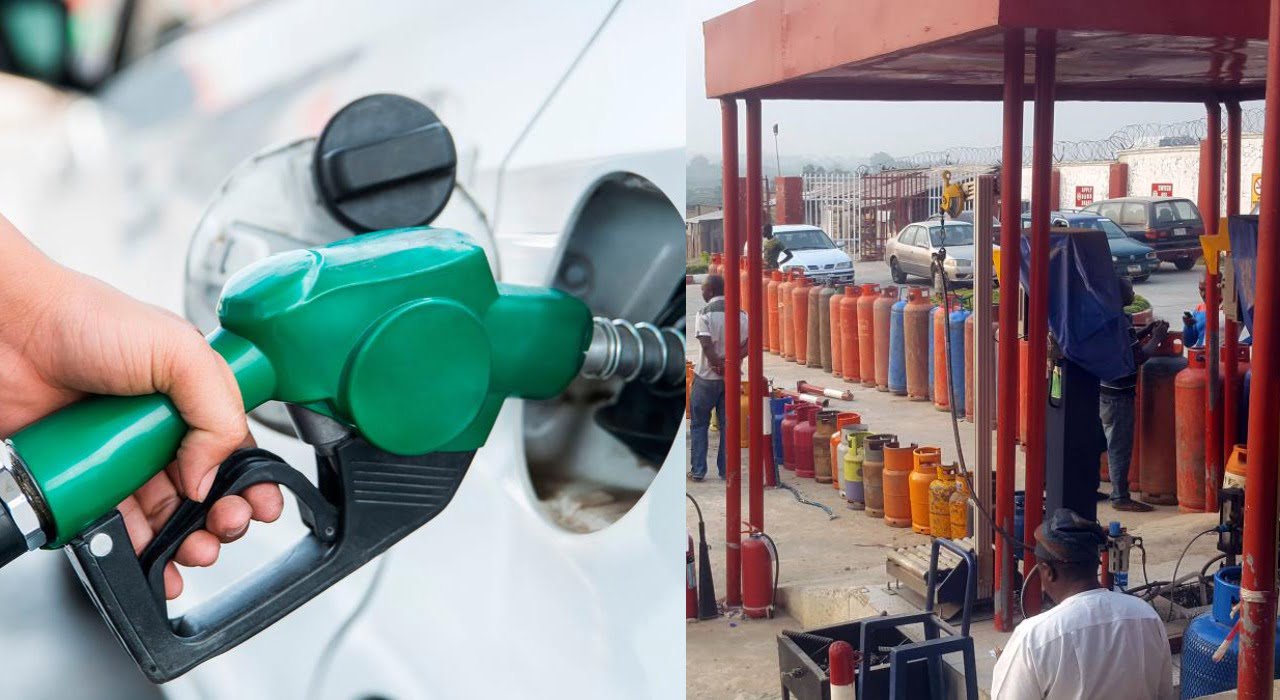
DEPOT owners across Nigeria have raised the price of liquefied petroleum gas (LPG), commonly known as cooking gas, by an average of N100 per kilogram, as geopolitical turmoil in the Middle East sends shockwaves through global energy markets and into Nigerian households.

News Point Nigeria reports that major distributors have already adjusted their price boards. Nipco Plc is now selling LPG at N950 per kilogram. Navgas Limited has moved to N900 per kilogram, while Techno Oil Limited is dispensing at N885 per kilogram.
The increases mark a sharp rise from the previous market average of around N800 per kilogram and reflect the immediate pass-through of international crude oil prices into Nigeria’s deregulated downstream market.


The price spike follows coordinated US–Israel airstrikes on Iran, which triggered retaliatory attacks and disruptions across the Persian Gulf region. Tanker traffic through the Strait of Hormuz — the critical chokepoint for nearly one-fifth of global oil shipments has slowed dramatically.
Nigeria’s benchmark export grade, Bonny Light, climbed to $80 per barrel from $70, its highest level since July 2025. Global benchmark Brent crude surged above $83 per barrel in intraday trading, with some projections warning of further spikes if hostilities continue.
Energy analysts say Nigeria’s vulnerability stems from its heavy reliance on imported refined petroleum products and global pricing parity mechanisms. Any shock in crude markets feeds directly into pump prices and household energy costs.
“Every time there is a crisis in the Middle East, we feel it here in Lagos,” said a retailer on Lagos Island. “We adjust prices because replacement costs are higher.”
The domestic shock intensified after the 650,000-barrel-per-day Dangote Petroleum Refinery suspended petrol loading operations at midnight on March 2 as crude prices surged past $80 per barrel.
By Tuesday morning, the refinery raised its ex-depot price of Premium Motor Spirit (PMS) to N874 per litre, up from N774, a N100 increase.

The ripple effect was immediate. Several private depot owners suspended petrol sales amid uncertainty over replacement costs. Retail prices climbed to between N925 and N970 per litre across major cities.
At an MRS filling station in Abuja, managers confirmed that new pricing took effect within hours.
The refinery also raised its ex-depot price of Automotive Gas Oil (diesel) by N170, from N880 to N1,050 per litre, resetting the benchmark across Nigeria’s industrial fuel market.


Market checks showed diesel had already been firming around N1,150 per litre at private depots even before the official adjustment.
For manufacturers, hospitals, cold chain operators, and logistics firms dependent on diesel-powered generators, the surge represents renewed cost pressure just as inflation had begun to ease.
Nigeria entered the latest shock after a rare period of relief. Annual inflation had fallen to 15.10 percent in January 2026, the lowest since November 2020 marking ten consecutive months of moderation.
Food inflation had dropped to 8.89 percent, while core inflation slowed to 17.72 percent.
But economists warn that higher fuel prices could quickly reverse those gains.
“With deregulated pricing, higher international crude costs translate directly into rising petrol, diesel and aviation fuel prices,” said Muda Yusuf, chief executive of the Centre for the Promotion of Private Enterprise. “Transportation, food distribution and manufacturing costs will rise, intensifying inflationary pressures.”
Transportation and food account for a dominant share of Nigeria’s consumer basket, meaning any movement in petrol prices cascades across the economy.
For many Nigerians, the shock is already personal.
Taiwo Adeyemi, a 34-year-old logistics driver in Lagos, watched petrol jump to N970 per litre from N860 within days.
“I cannot absorb this,” he said. “Everything I earn goes into the tank.”
Marketers warn that prices could climb further. Chinedu Ukadike, spokesperson of the Independent Petroleum Marketers Association of Nigeria, projected pump prices in the Federal Capital Territory could rise to between N980 and N1,000 per litre depending on logistics costs.
Economist Paul Alaje cautioned that if the conflict persists, petrol could exceed N1,000 per litre by the end of April.
“If PMS is N1,000, imagine what diesel will be. Imagine flight tickets,” he said during an appearance on Channels Television.
International financial institutions have also issued stark warnings.
JPMorgan analysts said a conflict lasting more than three weeks could exhaust Gulf storage capacity and potentially push Brent crude to $120 per barrel.
Bank of America projected that prolonged disruption in the Strait of Hormuz could add between $40 and $80 per barrel to oil prices. Goldman Sachs flagged that liquefied natural gas prices in Europe and Asia could spike sharply if Middle East instability continues.
For Nigeria, the implications are clear: a distant war has become a domestic economic threat.
With cooking gas rising to N950 per kilogram, petrol approaching N1,000 per litre, and diesel climbing past N1,100 in some depots, households and businesses alike are bracing for another round of inflationary strain driven not by local policy, but by geopolitics thousands of miles away.