VENZUELA’s devastating twin earthquakes have killed nearly 3,000, official figures showed on Saturday, as international rescue teams began winding down search operations for survivors in the rubble.


Fatalities jumped by more than 300 from Friday to 2,954, following the June 24 disaster that left thousands homeless in the streets and shelter camps.

Read also: Gaza Ceasefire ‘Exists In Name only’, More Than 100 NGOs Say



Tens of thousands more are still missing.


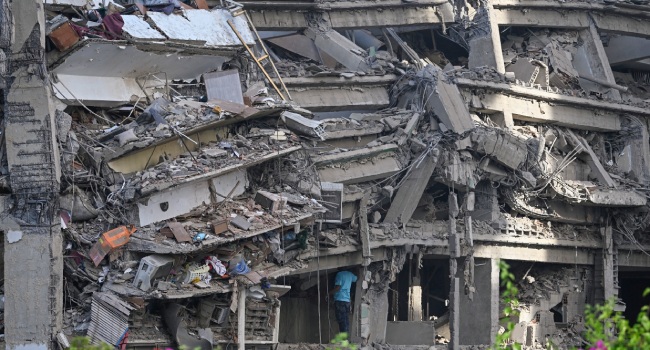
One of Latin America’s worst earthquake disasters hit hardest in the coastal La Guaira area north of the capital Caracas, where scores of residential complexes were flattened.


Ten days after the 7.2 and 7.5 magnitude double shocks, rescue teams are starting to wrap up searches for survivors while families still try to recover bodies of loved ones from the rubble.
The critical window for rescues in disasters like earthquakes usually ends after 72 hours, though a few people have been found alive this week.

In an apparent sign that rescue missions were closing up, interim President Delcy Rodriquez held a ceremony to hand out medals to international teams, including some to their dogs.
Venezuela is experiencing “a profound grief gripping our people, where families still hold out hope of finding loved ones alive, people who have lost everything,” Rodriquez said.

International disaster teams, including some US squads, and some South American teams were starting to finish up rescue operations, their members said on Saturday.
The Los Angeles County fire department rescue team is closing up its operations after latest searches showed no signs of life, and teams from Florida and Virginia were packing up to leave this weekend, their teams said.
Many Venezuelans have expressed anger at what they see as their government’s slow response to the disaster, saying families spent initial hours digging out loved ones themselves before international teams arrived.


Rodriguez has defended her government’s response, saying thousands of troops and officials had been dispatched.
In La Guaira, workers with heavy machinery on Saturday were starting to knock down collapsed structures while in others families were still trying to remove bodies of loved ones for funerals.
“We’re still working, still searching for bodies. We’re still going. It hasn’t been easy,” said Venezuelan volunteer Francisco Sasquia helping dig out a collapsed residence.

“We found two bodies that have already been released to their families.”
Read also: Trump Announces Russian Diesel Deal Amid Soaring US Fuel Prices
Many are now homeless; more than 16,000 Venezuelans have lost their residences in the quakes. Hospitals are stretched, with experts warning of the risk of disease outbreaks.
For Víctor Colivert, the most important thing is staying by the side of his nephew’s body, recovered from a building’s wreckage and now in a black body bag.
He fears losing it in the chaos. His family prevented forensic workers from taking the body away.
“If I have to go to China, to wherever, but I’m not leaving him alone,” he said. “I’m going with him.”
Meanwhile, with little hope of finding loved ones alive, frustrated families of those affected by Venezuela’s double earthquakes clamoured for help to recover their loved ones’ bodies Friday as uncertainty grew over the death toll from the tragedy.
Authorities on Friday reported a total of 2,645 deaths and more than 12,000 wounded from the 7.2 and 7.5 magnitude earthquakes that struck the country last week, with most fatalities in the coastal town of La Guaira, where scores of residential complexes were flattened.
Officials have avoided estimating the number of missing, though the UN has put that figure at as many as 50,000.
Many survivors who were left homeless, meanwhile, are sleeping in the streets or in makeshift shelters set up in parks and public spaces.
Nine days after one of Latin America’s worst earthquake disasters, rescue teams were beginning to wind down search operations for survivors, although many relatives still clung desperately to any sound from the rubble as a sign of life.
In front of the Tahiti building in the Caraballeda sector of La Guaira, one rescuer reported hearing shouts from an adult in the early morning hours on Friday.
Reports also emerged that a 9-year-old boy had been found alive, but foreign rescuers told AFP there was no trace of any survivors.
Outside Tahiti, frustrations boiled over as families trying to recover bodies shouted at others wanting to clear the way for a potential rescue.
“Until I recover the bodies, I won’t be at peace,” said Jose Francisco Liendo, who was trying to dig out the remains of his father and sister.
Read also: How Israel’s Genocide In Gaza Pulled Britons Into The Palestine Movement
“Don’t let the machines come and take them away like garbage.”